Contributing a Zephyr Sensor Driver: Best Practices and Common Pitfalls
Learn best practices and avoid common pitfalls when contributing your first Zephyr sensor driver to the open source community. Gain insights into maintainer expectations.
Developing Wildlife Camera Traps with Zephyr RTOS
Explore wildlife monitoring using Zephyr RTOS for flexible, low-power camera traps. Learn about hardware abstraction, cross-platform development, and optimizing for constrained devices in conservation projects.
Zephyr LPWAN Connectivity Options and When to Choose Them
Explore LPWAN technologies supported by Zephyr, comparing their advantages and trade-offs for power, range, and reachability. Learn to choose the best option for your IoT project.
Zephyr Network Subsystem Status and Overview
Explore the current status and overview of Zephyr's network subsystem, focusing on connectivity features and stack implementation.
Open Source Fleet Management in Zephyr
Explore open-source fleet management for Zephyr, enabling safe OTA updates and coordinated firmware management across diverse embedded systems with RDFM framework.
Exploring the Potential of Zephyr in Automotive and Software Defined Vehicles
Discover Zephyr's potential in automotive applications, exploring integration challenges, compatibility with industry standards, and opportunities for wider adoption in vehicle software development.

Real Time Operating Systems - Nate Graff
Explore real-time operating systems: their necessity, functionality, and implementation for building responsive systems. Learn about scheduling, priorities, and inter-task communication.
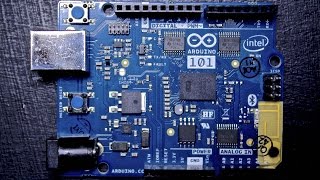
Arduino 101 with Intel Curie - Hardware Walkthrough Part 1
Detailed walkthrough of Arduino 101 board featuring Intel Curie module, covering hardware specs, components, and schematic analysis. Insights for electronics enthusiasts and makers.
Implementing Network Protocols in Zephyr Project
Explore network protocol implementation in Zephyr RTOS, focusing on DNS, HTTP, MQTT, and NATS. Learn optimization techniques for constrained devices in IoT and legacy networks.
Asymmetric/Heterogeneous MultiProcessing - Mainline Linux and Zephyr in Unison
Explore AMP/HMP with Linux and Zephyr, covering code launch options, inter-processor communication, and libraries. Includes real-life demo on NXP i.MX systems using open-source stacks.
Interfacing Sensors with Zephyr for IoT Devices
Explore sensor interfacing in Zephyr RTOS for IoT devices. Learn to add support for new sensors, interact with various types, and see demonstrations of temperature, pressure, and fingerprint sensors.
Setting Up a Software Product Line Architecture Based on Zephyr
Learn to set up a Software Product Line Architecture using Zephyr, covering adoption strategies, core asset support, best practices, and multi-project integration challenges for efficient embedded systems development.
New USB Device Class API Introduction for Zephyr RTOS
Introduction to Zephyr RTOS's new USB device stack, focusing on the common API for class implementations and management functions. Covers implementation of multi-instance functions and key features.
Provisioning in Zephyr - Methods for Secure Device Setup
Learn efficient device provisioning techniques for Zephyr, focusing on Nordic nRF9160. Explore shell and settings APIs, and discover methods to streamline the process for seamless product deployment.
Reworking the Zephyr Clock Control Subsystem
Exploring Zephyr's clock control API unification, addressing fixed and dynamic clocks, and proposing improvements inspired by Linux's clock subsystem for enhanced driver compatibility.
Zephyr Accelerates Tools for Testing External Display Support
Explore Chameleon, an open-source monitor emulator for automated display testing, and learn how Zephyr and Pigweed RPC libraries enhanced its development and functionality.
System Devicetree Support in Zephyr
Explore system devicetree specification in Zephyr, addressing AMP SoC support issues. Learn about its extensions, benefits for heterogeneous SoCs, and ongoing implementation in Zephyr's build system.

Practical Tips to Boost Productivity When Using Zephyr
Discover practical tips for efficient embedded development using Zephyr RTOS. Learn about emulation tools, CI/CD setup, SBOM usage, and helpful VS Code extensions to enhance productivity and build robust applications.
Porting an AI-Powered Wearable Health Monitor to Zephyr on Open Hardware
Explore the challenges and solutions in porting a wearable health monitor to Zephyr RTOS, integrating AI on FPGA, and leveraging open hardware for enhanced functionality and performance.

How I Fell in Love with Zephyr - A System Architect's Tale
Discover how Zephyr revolutionizes system architecture for medical devices, improving collaboration and reducing risks through innovative technologies like Kconfig and Device tree.
Going West - Developing and Maintaining a Zephyr-based Microcontroller SDK
Explore the development and maintenance of a Zephyr-based microcontroller SDK, focusing on challenges, opportunities, and Nordic Semiconductor's contributions to open-source RTOS for MCUs.