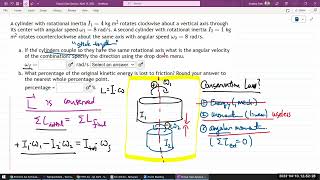
Physics 4A - OpenStax University Physics Vol 1, Chapter 11, Problem 54
Explore problem-solving techniques for advanced physics concepts, focusing on a specific challenge from OpenStax University Physics Vol 1, Chapter 11.
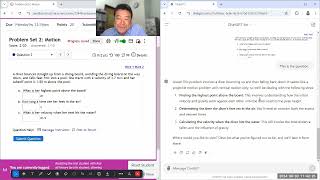
Physics 4A - Problem Solving with ChatGPT - Set 2
Enhance problem-solving skills in physics using advanced AI tools. Learn to leverage ChatGPT for complex calculations and conceptual understanding.
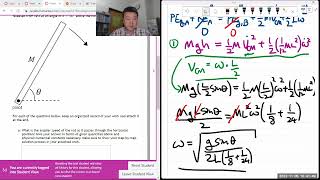
Physics 4A - Rotation Freeform Timed Assessment: Swinging Rod
Tackle a challenging rotation problem involving a swinging rod in this timed assessment, designed to test and enhance your physics problem-solving skills.
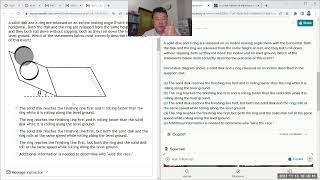
Physics 4A: Rotation Multiple Choice Timed Assessment - No. 2
Timed assessment on rotational physics concepts, featuring multiple-choice questions and GPT-4 integration for enhanced learning and problem-solving.
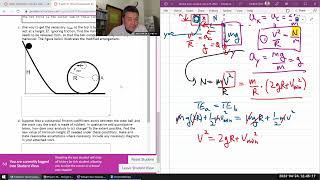
Physics 4A - Rotation Freeform Timed Assessment: Loop-the-Loop
Explore rotational physics through a Loop-the-Loop problem, utilizing ChatGPT for enhanced problem-solving and understanding of complex concepts.

Physics 4A - Rotation Multiple-Choice Timed Assessment Demo
Timed assessment demo on rotation concepts, featuring multiple-choice questions and ChatGPT integration for enhanced learning in physics.
Torque - Definition and Problem Solving in General Physics
Explore torque's definition, calculation, and application through demonstrations and problem-solving. Learn how force and lever arm affect rotational motion in various scenarios.
Angular Momentum and Rotational Kinetic Energy - General Physics
Explore angular momentum and rotational kinetic energy, including conservation principles, work-energy theorem, and practical applications through solved problems and comparisons.
Physics: Rotations - Chapter 10 Lecture
Explore key concepts of rotational physics, including angular kinematics, rotational energy, moment of inertia, and torque in this comprehensive lecture review.
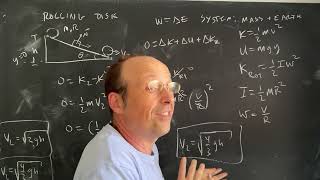
Velocity of a Disk Rolling Down an Incline Without Slipping - Physics Problem
Solve a physics problem involving a disk rolling down an incline, calculating its velocity using energy conservation and rotational motion principles.
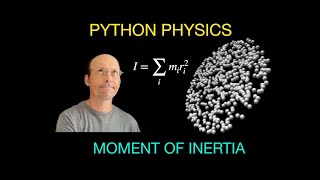
Python Physics: Understanding and Calculating Moment of Inertia
Explore the concept of moment of inertia in physics, using Python to calculate it for a disk through Monte Carlo simulation and plausibility arguments.
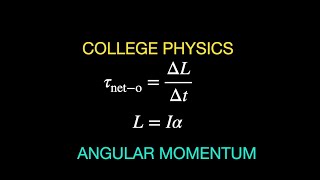
Physics Summary: Rotational Motion and Angular Momentum
Explore rotational motion concepts: kinematics, velocity, acceleration, inertia, torque, and angular momentum. Gain insights into fundamental principles of circular motion and conservation laws.
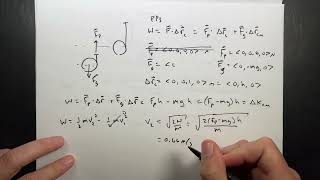
Calculating the Speed and Angular Velocity of a Yo-Yo
Explore yo-yo physics: calculate velocity, angular velocity, and motion duration using principles of mechanics and energy conservation.
Lagrange Multipliers - Force of Constraint for a Yo-Yo
Explore Lagrange Multipliers to determine string tension in a released disk, applying principles of classical mechanics to real-world scenarios.
Physics Problem: Apparent Weight on a Ferris Wheel
Solve a physics problem involving apparent weight on a Ferris wheel, applying concepts of circular motion and forces.
Physics Problem: Angular Velocity for Artificial Gravity
Calculate angular velocity for artificial gravity in a rotating space station, exploring centripetal acceleration and its application in space environments.
Velocity and Rotational Speed of a Sliding Yo-Yo
Explore the physics of a sliding yo-yo, calculating its velocity and angular velocity using concepts of force, motion, and rotational dynamics.
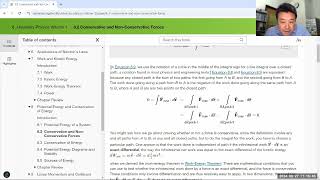
Physics 4A - Chapter 8 Overview
Explore fundamental concepts of physics in Chapter 8, covering key principles and their applications in real-world scenarios.
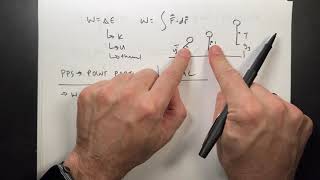
Matter and Interactions Physics - Translation, Rotational, and Vibrational Energy - Chapter 9
Explore center of mass, momentum, kinetic energy types, angular velocity, and moment of inertia in particle systems. Gain insights into translational, rotational, and vibrational energy concepts.
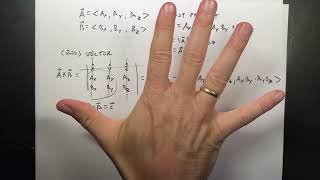
Angular Momentum in Physics - Lecture Chapter 11
Explore angular momentum principles, torque, cross products, and related concepts in physics through clear explanations and examples.
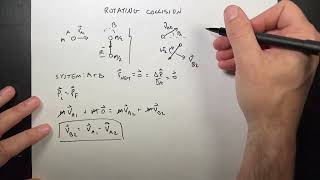
Collision Between a Mass and a Rod: Conservation of Momentum and Angular Momentum
Analyze collisions between masses and rods using conservation of momentum and angular momentum principles. Develop problem-solving skills in physics.