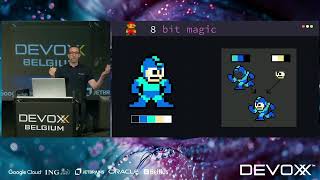
Squeezing Mushrooms into Bytes - Mario's NES Memory Magic
Explore ingenious techniques used in classic video games to overcome severe hardware limitations, from Super Mario Bros. to Quake III.
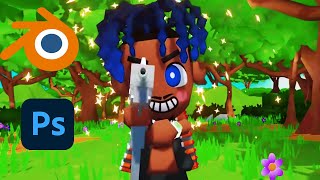
Create Animated 3D Pixel Visualizers - Music Videos - Retro SNES Style in Blender
Learn to create animated 3D pixel visualizers and retro SNES-style music videos using Blender. Master character design, animation, and pixelation techniques for unique, nostalgic visual content.
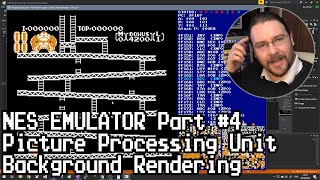
NES Emulator - PPU Background Rendering - Part 4
Explore NES emulator development, focusing on PPU background rendering, including pixels, palettes, nametables, and video memory addressing for a comprehensive understanding.
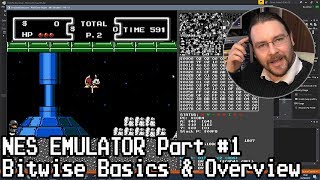
NES Emulator Development - Part 1: Bitwise Basics and Overview
Learn to build an 8-bit console emulator from scratch, covering bitwise operations, data structures, and NES hardware components in this comprehensive tutorial.

DOSBox Retro Gaming - PC & Pi
Learn to set up and use DOSBox for retro gaming on Windows and Raspberry Pi, including installation, configuration, game acquisition, and gamepad setup.
Stereoscopic 3D on the Sega Master System with Segascope 3D Glasses - Z80 Lesson P57
Explore stereoscopic 3D on Sega Master System using Segascope 3D Glasses. Learn Z80 assembly to create full-color 3D effects on 8-bit hardware with CRT TVs.
Bitmap Functions on the SNES / Super Famicom - Learn 6502 Lesson P7
Explore SNES bitmap functions, including memory-mapped PPU control, 16-color tiles, and screen setup. Learn practical techniques for tile definition, memory buffering, and bitmap testing.
Preserving Arcade Games - Techniques and Challenges
Explore techniques for preserving classic arcade games, including emulation, reverse engineering, and digital archiving. Learn about challenges and solutions in game preservation.
Reconstructing Game Footage from a Game Boy's Memory Bus
Explore how to capture Game Boy footage using an adapter cartridge that analyzes the memory bus, reconstructs game state, and streams video in real-time without modifying original hardware.
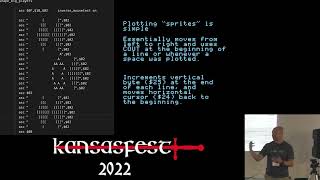
Creating a Head-to-Head Action Game Using VidHD Text Modes
Explore game development using VidHD text modes for Apple II. Learn about Xslinger HD, challenges in assembly language, and innovative uses of retro hardware for modern game creation.
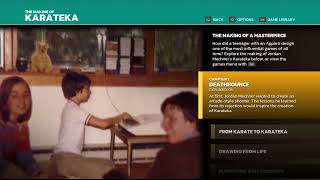
Digital Eclipse: Game History and Interactive Documentaries
Explore groundbreaking Apple II game history through an innovative interactive documentary, blending video, gameplay, audio, and archival materials.
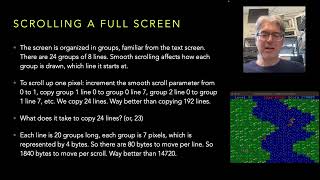
Apple III Arcade: Vertical Scrollers - Design and Implementation
Explore Apple ///'s smooth scrolling for retro game development. Learn 6502 assembly, memory management, and graphics techniques to create vertical scrolling games.
Retro Game Room in Blender - 3D Modeling Process
Learn to create a nostalgic retro game room in Blender with this 3D modeling tutorial. Master low-poly techniques and isometric rendering to bring pixelated memories to life in stunning detail.
Tilemap Graphics on the Gameboy and Gameboy Color - GB Z80 Assembly Lesson 9
Learn to display text and bitmaps on Gameboy/Gameboy Color screens using tilemaps in GB Z80 assembly. Covers memory layout, commands, and tile manipulation techniques.
Learn 65C02 and 6280 Assembly for Retro Consoles - Lesson A1
Learn advanced 65C02 and 6280 assembly programming for retro game development, covering special commands, memory management, and bit-level operations for various 8-bit systems.
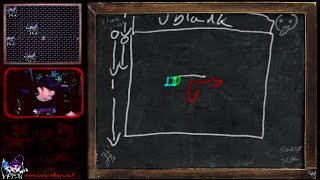
Splitscreen Scrolling and Sprite 0 Hit on the NES - Lesson P43
Explore splitscreen scrolling and Sprite 0 Hit techniques for NES game development, including line IRQ interrupts and midscreen scroll changes for advanced visual effects.
Code-It-Yourself: Retro Arcade Racing Game in C++
Learn to create a retro arcade racing game using simple C++ and math, covering track design, car mechanics, and game logic in this hands-on programming tutorial.
Extra Lives - The World's First Audience RPG Live Experience
Immersive Audience RPG blends narration, visuals, and live music with audience choices, creating a nostalgic gaming experience with multiple storylines and endings.
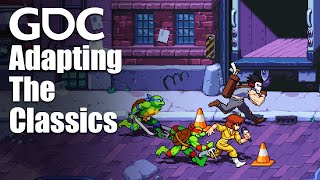
Adapting Classics for Teenage Mutant Ninja Turtles: Shredder's Revenge - Design Philosophy
Explore design philosophies for adapting classic games, balancing nostalgia with innovation. Learn key strategies for reimagining beloved franchises while maintaining their essence and appeal.
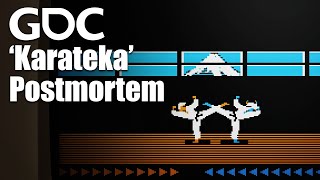
Classic Game Postmortem - Karateka
Jordan Mechner explores the creation of his groundbreaking 1984 game Karateka, discussing innovative techniques in storytelling, animation, and music that pushed Apple II technology limits and launched his career.
How to Setup RetroPie on Raspberry Pi 4
Comprehensive guide to setting up RetroPie on various Raspberry Pi models, covering hardware, emulation basics, and step-by-step installation process for retro gaming enthusiasts.