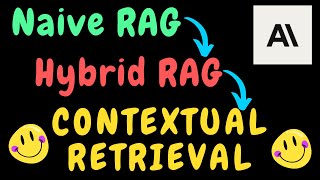
Improving RAG Pipelines with Contextual Information Retrieval
Master advanced RAG techniques by exploring hybrid approaches combining semantic embeddings with TF-IDF and BM25, plus learn about Anthropic's Contextual Retrieval method for enhanced performance.
DSPy for In-Context Learning and RAG Classification - Code Explained
Explore state-of-the-art extreme multi-label classification using DSPy's Infer-Retrieve-Rank program, combining frozen retrieval with in-context learning for optimal results.
LLama 2 and PEFT Documentation - Building Interactive LLM with Retrieval Augmented Generation
Master building a RAG-enhanced LLM system using Llama 2 through hands-on coding. Learn web scraping, embedding generation, vector indexing, and semantic search to create an AI that leverages external knowledge sources.
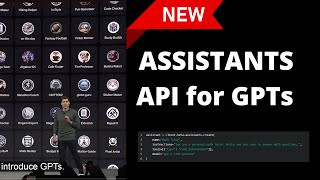
Creating GPTs with OpenAI's Assistants API - A Practical Guide
Discover how to leverage OpenAI's Assistants API to build custom GPTs with code interpretation, function calling, and knowledge augmentation through RAG and retrieval capabilities.

Anthropic's Improved Contextual RAG System - Implementation Guide and Performance Analysis
Discover how to implement Anthropic's improved RAG system with contextual retrieval, featuring cBM25, prompt caching, and reranking techniques - applicable across all LLM platforms for enhanced performance.
Agentic AI: Understanding Advanced Function Calling and RAG Systems
Delve into the advanced concepts of agentic AI systems, exploring function calling, RAG integration, and future world models for enhanced AI planning and decision-making capabilities.

AI Phone: From Voice Assistants to Advanced AI Integration and Reasoning
Explore the revolutionary concept of AI Phone technology, from LLM quantization to advanced reasoning systems, and discover how AI-centric devices could transform mobile computing and human interaction.
Exploring COHERE's CORAL: RAG-Enabled AI Systems and Playground Demo
Explore COHERE's new CORAL RAG implementation through hands-on demonstrations in their AI playground, featuring real-time experimentation with their latest LLM capabilities.

Building a RAG Movie Recommendations Chatbot with Qdrant and n8n - No-Code Tutorial
Learn to build a personalized movie recommendation chatbot using RAG technology, Qdrant Cloud, and n8n's AI starter kit - no coding needed. Create custom filters for genres, themes, and preferences.

Building Search and RAG for OpenAPI Specifications
Discover how to implement vector search and RAG capabilities for OpenAPI specifications, focusing on code summarization, metadata management, and practical UI development techniques.

Building a RAG Chatbot with LangChain, OpenAI, and Groq
Learn to build a RAG-powered chatbot from scratch using LangChain, OpenAI's GPT-3.5-turbo, and Qdrant vector database for enhanced knowledge retrieval and response generation.
Getting Started with DSPy - Building LLM Programs Tutorial
Discover how to build robust LLM programs using DSPy framework, from basic concepts to creating retrieve-then-read RAG systems with optimized instructions and structured data handling.
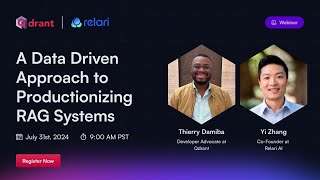
A Data-Driven Approach to Productionizing RAG Systems
Discover practical strategies for deploying RAG applications effectively, focusing on data-driven methods and optimization techniques for enhanced performance and reliability.
Building RAG Systems: From Vector Embeddings to Self-Reflective CRAG - 5 Python Notebooks
Explore practical RAG implementations through 5 Python notebooks, from basic text embeddings to advanced self-reflective systems using LlamaIndex, Ollama, and ReAct Agent frameworks.

Graph Inspired Veracity Extrapolation (GIVE) - Integrating LLMs with Knowledge Graphs
Discover how GIVE framework enhances LLM reasoning by combining knowledge graphs with internal model knowledge, enabling more accurate responses through structured, step-by-step logical inference processes.
Challenges in Using LLM-as-a-Judge for Production Evaluations
Explore key techniques and challenges in using LLMs as evaluation tools for AI applications, with insights on improving RAG-based systems and implementing production-grade assessments.
Flow Engineering and Agentic RAG with LangGraph
Explore advanced RAG agent development using LangGraph for reliable control flow, and learn debugging techniques with LangSmith to enhance GenAI applications for your organization.
Introducing Open Platform for Enterprise AI
Explore OPEA: an open platform for creating multi-provider, robust GenAI solutions. Learn about its mission, implementations, partners, and how to contribute to this innovative project.

Building AI Agents - Simplifying Development with Meta Prompting and LangSmith
Master AI agent development with meta prompting, structured outputs, and LangSmith observability. Learn to create versatile, goal-oriented systems like Jar3d for efficient problem-solving and collaboration.
Hugging Face LLMs with SageMaker - RAG with Pinecone
Learn to build LLM + RAG pipelines using Hugging Face models on AWS SageMaker. Implement semantic search with MiniLM and Pinecone for enhanced AI applications.
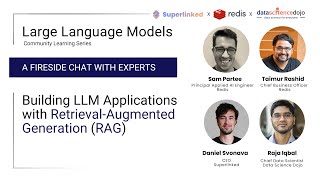
Supercharge Your LLM Applications with RAG
Explore Retrieval-Augmented Generation (RAG) for LLM applications, covering design patterns, knowledge embedding, vector databases, and practical insights for technical architects and business leaders.