Hackademia - The 2018 Literature Review
Explore cutting-edge cybersecurity research, from USB vulnerabilities to compiler techniques, with insights on emerging trends like citizen developers and domestic violence apps.

Could a Citizen Scientist Win a Nobel Prize? - Jessica Richman - TEDMED - 2013
Explore the potential of citizen science and its impact on scientific discovery, focusing on the human microbiome and democratizing research.
Introducing the Smartphone Penetration Testing Framework
Comprehensive framework for assessing smartphone security in organizations, covering various attack vectors and providing tools for penetration testing across multiple platforms.
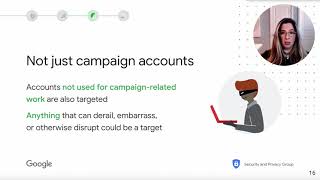
Security & U.S. Political Campaigns - A Study & Expert Roundtable
Exploring security vulnerabilities in U.S. political campaigns, offering insights and recommendations to protect democratic processes from cyber threats and data breaches.
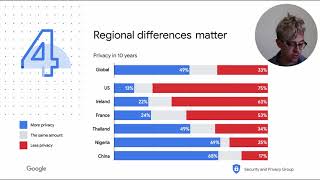
Privacy, Measurably, Isn't Dead
Explore global privacy attitudes through data from 90,000+ respondents across 25+ countries. Discover key findings on current and future privacy perceptions, regional variations, and actionable insights for privacy advocates.

Reversing Web Applications
Explore web application reverse engineering techniques, from information gathering to active testing, to understand behavior, analyze code, and improve security assessments.
Do Certain Types of Developers or Teams Write More Secure Code?
Explore factors influencing secure code development, including developer experience, team dynamics, and work environment. Learn how human and environmental elements impact software security.
Image Representations Learned With Unsupervised Pre-Training Contain Human-like Biases
Explore how unsupervised pre-training in image representations can lead to human-like biases, examining methods, results, and implications for AI fairness and ethics.
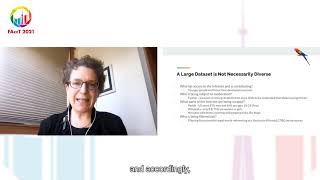
On the Dangers of Stochastic Parrots - Can Language Models Be Too Big?
Explore the risks and ethical concerns of large language models, including data management, research implications, and potential mitigation strategies for AI development.
You Can't Sit With Us - Exclusionary Pedagogy in AI Ethics Education
Explores exclusionary practices in AI ethics education, highlighting methodological dogmatism, lack of co-creation, and siloed citations. Proposes ideas for more collaborative and inclusive pedagogical approaches.
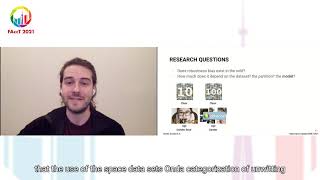
Fairness Through Robustness - Investigating Robustness Disparity in Deep Learning
Explore robustness disparity in deep learning, its impact on fairness, and potential mitigation strategies for more equitable AI systems.
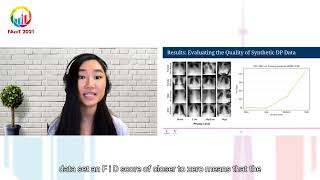
Can You Fake It Until You Make It? - Impacts of Differentially Private Synthetic Data on Downstream Classification Fairness
Explore the impact of differentially private synthetic data on classification fairness, examining its potential for preserving privacy while maintaining data utility in machine learning.
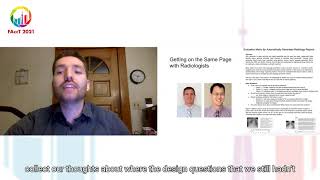
A Pilot Study in Surveying Clinical Judgments to Evaluate Radiology Report Generation
Explore a pilot study on evaluating AI-generated radiology reports through clinical judgments, examining methodologies, results, and implications for healthcare technology.
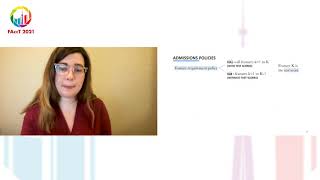
Standardized Tests and Affirmative Action - The Role of Bias and Variance
Explore the impact of bias and variance in standardized tests on affirmative action policies, examining their role in shaping educational opportunities and social equity.
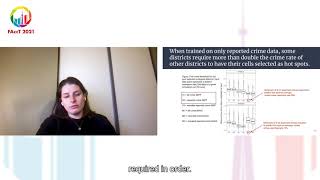
The Effect of Differential Victim Crime Reporting on Predictive Policing Systems
Explore how differential victim crime reporting impacts predictive policing systems, analyzing models, synthetic data, and hotspot prediction to improve fairness in law enforcement.

Planning a Virtual Experience Research Accelerator - VERA
Exploring the vision for a Virtual Experience Research Accelerator to revolutionize VR research by improving scale, representativeness, and resource sharing among scholars and practitioners.

Building Dusty Robotics
Explore the future of construction with robotics and automation, focusing on efficiency, safety, and cost reduction. Learn about Dusty Robotics' journey and vision for transforming the industry.
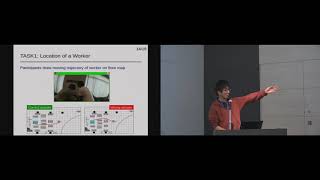
Browsing Group First-Person Videos with 3D Visualization
Innovative 3D visualization interface for analyzing group activities from first-person videos, enhancing understanding of spatial relationships and collaborative dynamics in complex workspaces.
Effects of VE Transition Techniques on Presence, Illusion of Virtual Body Ownership, Efficiency, and Naturalness
Exploring virtual environment transition techniques' impact on presence, body ownership, efficiency, and naturalness in VR, with surprising findings for researchers and game designers.
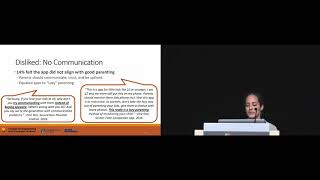
Safety vs. Surveillance - What Children Have to Say about Mobile Apps for Parental Control
Explores children's perspectives on parental control apps, revealing concerns about privacy invasion and restrictive features. Suggests design improvements for balancing safety and autonomy in mobile online safety tools.
Rigor, Relevance and Impact - The Tensions and Trade-Offs Between Research in the Lab and in the Wild
Explore tensions between lab and field research in HCI, discussing scientific rigor, real-world relevance, and impact. Experts debate diverse research practices to enhance mutual understanding within the CHI community.