Information Flow and Deep Representation Learning
Explore information bottleneck analysis in deep learning, gaining insights into representation learning, nuisance insensitivity, and disentanglement for advanced understanding of neural networks.
Visual Perception and Navigation in 3D Scenes
Exploring 3D scene understanding and visual navigation for robotics, bridging computer vision and robotics. Discusses representation learning, 3D perception, and future research directions in these intersecting fields.
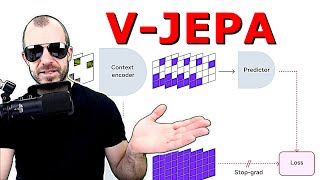
V-JEPA: Revisiting Feature Prediction for Learning Visual Representations from Video
Explore V-JEPA, an unsupervised learning method for video data using latent representation prediction. Learn about its architecture, concept, and performance in various visual tasks.
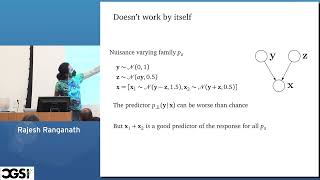
Out of Distribution Generalization
Explore out-of-distribution generalization techniques, focusing on nuisance-induced spurious correlations and invariant risk minimization. Gain insights into robust neural networks and counterfactual invariance.
Unsupervised Learning of Group Invariant and Equivariant Representations
Explore unsupervised learning of group invariant and equivariant representations. Gain insights into symmetry in data, practical examples, and results for graphs and various symmetries.
Additive Decoders for Latent Variables Identification
Explore additive decoders for latent variable identification and out-of-support image generation in representation learning. Gain insights into nonlinear ICA and object-centric representation learning.
Identifiable Deep Generative Models via Sparse Decoding
Explore sparse VAE for unsupervised learning, uncovering identifiable latent factors in high-dimensional data. Discover theoretical guarantees and practical applications in various domains.
Learning Representations on Biological Data with Weakly Supervised Learning
Explore weakly supervised learning for biological data representations. Discover PeML method for improved similarity metrics in perturbational experiments, enhancing mechanism of action identification and downstream analysis tasks.
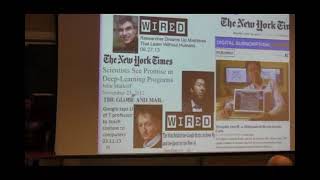
Deep Learning of Generative Models - 2014
Explore generative models in deep learning with Yoshua Bengio, covering motivations, applications, and fundamental challenges in AI and machine learning.
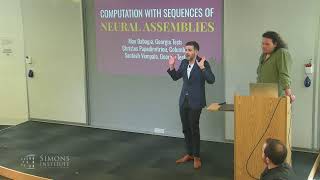
Language Models as World Models? - Understanding Representations and Semantic Control
Explore how language models encode world knowledge, their limitations in semantic accuracy, and techniques for improving their representations and controllability.
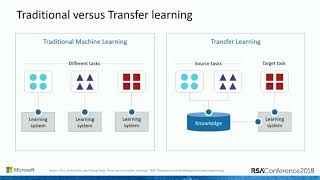
Transfer Learning - Repurposing ML Algorithms from Different Domains to Cloud Defense
Explore innovative ML applications in cybersecurity through transfer learning, leveraging algorithms from other domains to enhance cloud defense and tackle emerging threats.
Remaining Challenges in Deep Learning Based NLP
Explores remaining challenges in Deep Learning-based NLP, including data limitations, performance metrics, robustness issues, representation problems, and lack of interpretability, despite recent advancements and media hype.
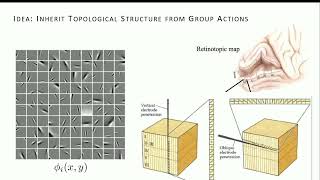
Group Equivariant Sparse Coding
Explore group equivariant sparse coding techniques and their applications in data analysis and machine learning.

Is There a Place for Representation Learning in Generative AI?
Explore the intersection of Deep Learning, Representation Learning, and Generative AI, examining their relationships and potential synergies in advancing AI technology.
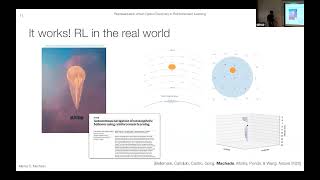
Representation-driven Option Discovery in Reinforcement Learning
Explore representation-driven option discovery in reinforcement learning, enhancing temporal abstraction and continual learning for intelligent agents.
AutoML Towards Deep Learning: Optimizing Neural Architectures and Hyperparameters
Explore advances in AutoML for Deep Learning, focusing on joint optimization, efficiency, and robustness. Learn about the future of automated neural architecture and hyperparameter optimization.
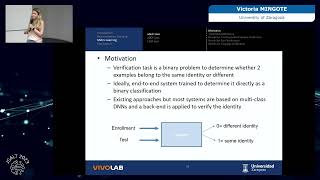
Representation and Metric Learning Advances for Face and Speaker Biometric Systems
Explore advances in representation and metric learning for face and speaker biometric systems, enhancing accuracy and efficiency in identity verification.
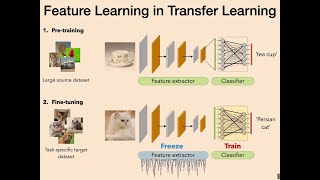
Foundations for Feature Learning via Gradient Descent
Explore the theoretical foundations of feature learning in modern machine learning models, focusing on gradient descent's role in extracting useful features and representations from data.
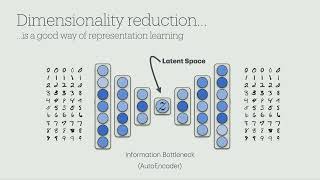
Representation Learning for Quantum Systems
Explore advanced techniques for representation learning in quantum systems, focusing on cutting-edge approaches and their applications in condensed matter physics.
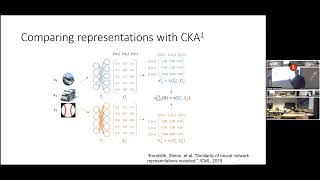
Comparing Representations Learned by Neural Networks - Deconfounded Similarity Measures
Explore improved methods for comparing neural network representations, addressing data structure confounding and enhancing functional similarity identification in transfer learning and out-of-distribution scenarios.

The Role of Machine Learning in Facilitating Fusion Energy Research
Explore machine learning applications in fusion energy research, including turbulence simulation speed-ups and predicting rare events. Gain insights into ML's potential to accelerate progress towards clean, abundant fusion energy.