Unifying and Improving Test Regression Reporting and Tracking in Kernel CI Systems
Exploring strategies to enhance kernel CI systems for better regression detection, analysis, and reporting. Discusses standardizing workflows, improving data processing, and addressing challenges in regression tracking.
Delivery and Debugging MariaDB Docker Official Images - Challenges and Solutions
Explore container-specific challenges, CI/CD benefits, and debugging strategies for MariaDB Docker images. Learn to avoid pitfalls and enhance database performance in containerized environments.
Building a Boards Farm: Continuous Integration and Remote Control
Explore the creation of a boards farm for kernel continuous integration, contributing to KernelCI, and implementing remote board control using LAVA infrastructure.
Linux Kernel Functional Testing (LKFT) on Devices - Keeping Up with LTS
Explore Linux Kernel Functional Testing on devices, covering infrastructure, experiences with test suites, tracking LTS, and community involvement for catching regressions in embedded systems.
Testing the Media Subsystem: Compliance Tests and Virtual Drivers - Mentorship Session
Explore media API testing challenges and solutions using compliance tests and virtual drivers for diverse hardware, enabling effective regression testing without physical devices.
Reporting and Handling Linux Kernel Regressions - Mentorship Session
Learn effective strategies for reporting and managing Linux kernel regressions, including identifying, communicating, and resolving issues to maintain system stability and performance.
Safeguards in the Stable Kernel Process
Learn about kernel tree safeguards, stable kernel processes, and testing strategies to ensure robust and reliable Linux kernel releases. Gain insights into Microsoft's approach to kernel development.
Kubernetes SIG Scalability - Introduction and Deep Dive
Explore Kubernetes SIG Scalability's efforts in defining scalability, driving performance improvements, and maintaining testing infrastructure. Learn about recent achievements, challenges, and inter-SIG cooperation.
Keeping Zephyr Apps Regression Free with Advanced CI Techniques
Explore advanced CI techniques for maintaining regression-free Zephyr applications across multiple SoCs, ensuring low technical debt while adapting to rapid upstream changes in this emerging RTOS.
Seecomp: Understanding Linux Kernel Security Features
Explore Seecomp, a tool for enhancing Linux kernel security through system call filtering. Learn about its architecture, testing, and key features for improved security and logging.
Qemu Performance Regression CI
Explore automated performance testing for QEMU, including regression detection, bisection, and reporting processes. Learn about setup, current coverage, and future plans.
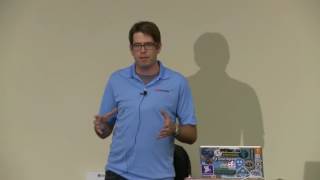
Rugged Driven Development with Gauntlt
Explore Gauntlt, an open-source framework for automated security testing in DevOps. Learn how it bridges the gap between security, development, and operations teams, enabling continuous validation of cloud infrastructure.
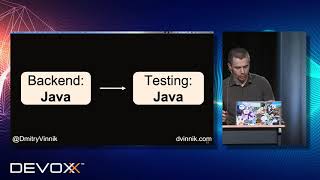
Gauge + Taiko - BDD for Web Revived
Explore BDD revival with Gauge and Taiko frameworks, focusing on effective communication, web testing, and overcoming common challenges in software development practices.
How We Migrated 3.8 Million Lines of Python 2 Without Interrupting Development
Learn strategies for migrating large Python 2 codebases to Python 3 without disrupting development, including tools, techniques, and patterns for minimizing regressions and ensuring smooth rollout.
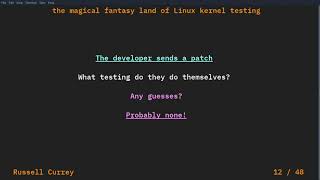
The Magical Fantasy Land of Linux Kernel Testing
Explore automated Linux kernel testing methods, from CI to hardware tests, aiming for a bug-free, efficient development process in this comprehensive overview.
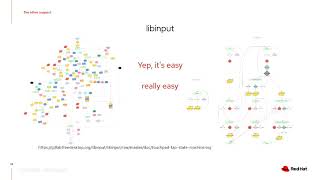
How to Make Kernel and User Space CI for Input Devices
Explore CI techniques for kernel and user space input devices, covering regression testing advancements and strategies to ensure compatibility across various hardware configurations.
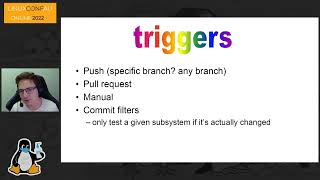
Abusing GitHub Actions for Building and Testing Kernels
Explore GitHub Actions for efficient kernel building and testing, covering technical aspects, platforms, optimizations, and real-world applications in Linux development.

Lessons Learned About Testing and TDD
Insights on testing and TDD from Sardinia Radio Telescope development. Explores functional, integration, and unit tests, best practices, and lessons learned for robust software production.
Python Descriptors for Better Data Structures
Explore Python descriptors for creating better data structures, inspired by Django models. Learn to improve code readability, implement efficient validation, and enhance declarative programming techniques.
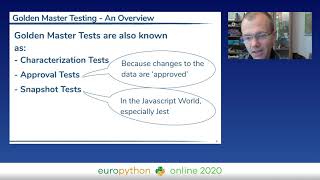
Tests That -Almost- Write Themselves
Explore Golden Master Testing for legacy systems and data processing programs. Learn techniques to implement, process outputs, and identify relevant differences in Python.
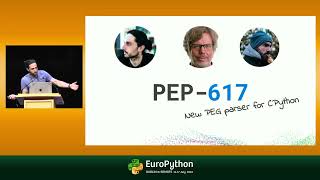
Making Python Better One Error Message at a Time
Explore Python 3.10's improved error messages and upcoming 3.11 enhancements. Learn about implementation challenges, user benefits, and how to contribute to future improvements.