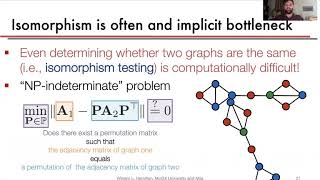
Graph Mining Hamilton
Learn graph representation techniques for node classification, link prediction, and graph classification. Explore deep learning on graphs, GNNs, and their applications in drug repurposing and recommender systems.

Build a Spotify-Like Music Recommender System in Python
Create a Spotify-like music recommender system using Python, collaborative filtering, and Alternating Least Squares. Learn about music recommendation types, Spotify's architecture, and implement artist suggestions with the 'implicit' library.

Building a Recommender: Best Practices with Apache Mahout and Solr - Emerging Technologies 2014
Building a recommender system using Apache Mahout and Solr: best practices, data selection, co-occurrence analysis, and deployment techniques for rapid, production-ready recommendations.

Are LLMs the Future of Recommender Systems?
Explore the potential of Large Language Models in revolutionizing recommender systems, discussing their advantages, challenges, and future implications for personalized content delivery.
Building a Winning Deep Learning Recommender System - Grandmaster Series Episode 5
Learn how Kaggle Grandmasters built a winning Deep Learning Recommender System for Booking.com, using matrix factorization, ensemble models, and data augmentation techniques. Gain insights into GPU-accelerated recommender systems.
Applied Deep Learning in Speech Recognition and Collaborative Filtering - Session 5
Explore cutting-edge AI applications in speech recognition and collaborative filtering systems, featuring NVIDIA Research insights from NeurIPS 2018.
Boosted Trees and Deep Neural Networks for Better Recommender Systems
Explore GPU-accelerated boosted trees and deep neural networks for building winning recommender systems, featuring insights from Kaggle Grandmasters on the ACM RecSys Challenge.

NeurIPS 2023 Research Highlights - Circuits, Collaborative Filtering, Clustering, and Privacy
Overview of NeurIPS 2023 poster presentations covering graph neural networks, collaborative filtering, semi-supervised learning, and privacy assessment in image reconstruction, with insights on cutting-edge machine learning research.

Artificial Intelligence and Machine Learning - Keynote Panel
Explore AI and machine learning insights from industry leaders, covering advancements, applications, and future trends in technology and business.

Introduction to KubeFlow: Using and Use Cases
Explore KubeFlow for machine learning on Kubernetes, covering components, use cases, and a practical recommender system example with collaborative filtering and TensorFlow.
Accelerating AI and ML: Architectures and Systems for Efficient Computing
Exploring domain-specific accelerators for AI/ML, focusing on high-performance computing solutions and innovative frameworks to optimize large-scale distributed deep learning systems.

Adversarial Validation and Training in Stock Market Price Prediction
Explore adversarial validation and training for stock market prediction, focusing on recommender systems, graph-based models, and their impact on user satisfaction and revenue growth in e-commerce and streaming services.
Hands on Data and Algorithmic Bias in Recommender Systems
Explore data and algorithmic bias in recommender systems through real-world examples, practical use cases, and mitigation techniques. Gain hands-on experience with Jupyter notebooks using data from actual platforms.
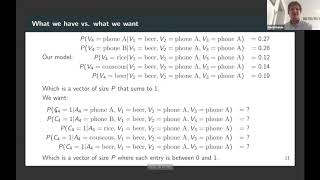
A Gentle Introduction to Recommendation as Counterfactual Policy Learning
Explore cutting-edge recommender systems through counterfactual policy learning. Learn theoretical frameworks, algorithms, and practical applications using RecoGym simulation environment.
Content Distribution
Exploring algorithmic biases in content distribution, including microtargeting, truth perception, polarization control, and recommender systems' effects on online news environments.
Popularity and Demographic Biases in Recommender Systems
Exploring popularity and demographic biases in recommender systems, their impact on evaluation and effectiveness, and strategies for ensuring equitable recommendations across diverse user groups.

Prediction of Music Pairwise Preferences from Facial Expressions
Innovative approach to predict music preferences using facial expressions, outperforming traditional methods. Explores personality influences and adapts models accordingly, balancing accuracy with privacy considerations.
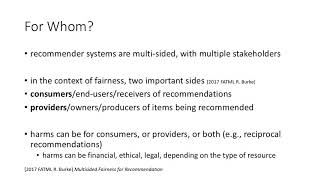
Building User Trust in Recommendations via Fairness and Explanations
Explore techniques to enhance user trust in recommender systems through fairness and explanations, addressing ethical concerns and promoting transparency in AI-driven decision-making.
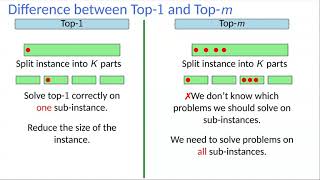
Collaborative Top Distribution Identifications with Limited Interaction
Explore collaborative learning strategies for efficient multi-armed bandit problem-solving, focusing on top-m identifications with limited interactions and error reduction techniques.
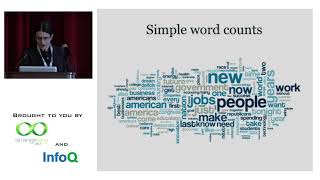
How Does Text Become Data
Explore concept-based text understanding and its applications in NLP. Learn to build models of human thinking for search engines, recommender systems, and classifiers using practical examples and code.
Machine Learning and Link Prediction
Explore how combining machine learning with graph data structures enhances prediction accuracy by incorporating contextual information and relationships, demonstrated through academic collaboration analysis.