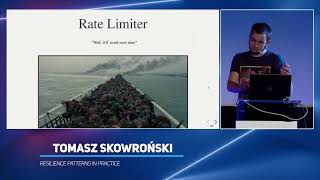
Resilience Patterns in Practice
Explore fault tolerance concepts for distributed systems, including bulkhead, rate limiter, circuit breaker, retry, and fallback patterns. Learn to build resilient software that stays responsive in the face of failure.
An Asio Based Flash XML Server
Build an Asio-based server for reactive systems, utilizing Boost libraries to handle asynchronous resources, route data streams, and communicate with Flash displays via XMLSocket.
Akka Present and Future
Explore Akka's current capabilities and future developments in distributed systems, focusing on its role in building scalable and resilient applications.
Building Reactive GraphQL Apps with Apollo
Explore reactive GraphQL app development using Apollo, focusing on real-time updates, database integration, and simplified data management for collaborative applications.
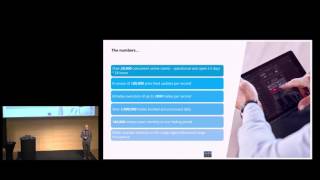
Patterns for Scalability and Availability in Trading Systems
Explore architectural patterns for high-availability, high-throughput trading systems. Learn approaches to balance performance, scalability, and reliability in millisecond-critical environments.
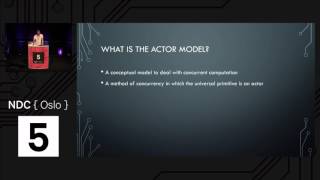
Getting Realtime with Akka.NET, React and Redux
Introduction to actor model for building reactive, scalable systems. Demonstrates Akka.NET backend with ASP.NET Core, React+Redux frontend, and real-time updates using distributed actors, including on Raspberry Pis.

Serverless Architectural Patterns
Explore serverless architectural patterns using AWS Lambda, including pub-sub, cron, push-pull, saga, and decoupled invocation. Learn to choose the right event source for your reactive systems.
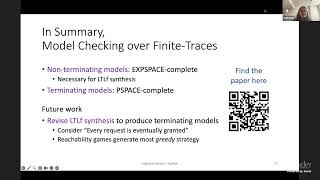
Synthesis and Verification of Finite Horizon Tasks
Explore finite horizon task synthesis and verification techniques, focusing on model and system creation for time-bounded objectives in computational systems.
Pipit: Reactive Systems in F★ for Safety-Critical Control Systems
Explore Pipit, a reactive language embedded in F★ for verifying and executing control systems. Learn about its verified translation and automatic safety property proofs.
Efficient Loops in Arrowized Functional Reactive Programming - Haskell 2023
Explore efficient loop optimization in Arrowized Functional Reactive Programming, improving performance through novel program transformations while maintaining correctness in Haskell.
Succeeding at Reactive Architecture
Explore principles and patterns for building reactive systems, focusing on message passing to achieve isolation, resilience, and elasticity. Learn key design concepts for successful reactive programming.
The Return of Stream I/O
Exploring the resurgence of Stream I/O in frontend development, its benefits, drawbacks, and comparison with other I/O models like Monads and Continuations.
Reacting to the Future of Application Architecture
Explore the future of application architecture through the lens of bee colonies, drawing parallels between reactive systems and nature's efficient organizational structures.
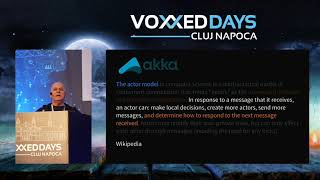
Building Stateful Clustered Microservices with Java, Actors, and Kubernetes
Explore building stateful clustered microservices using Java, actors, and Kubernetes. Learn about the actor model, resilient systems, and practical implementation in a Kubernetes environment.
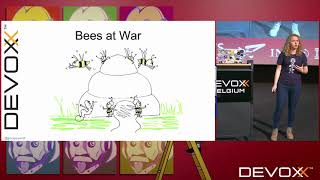
Reacting to the Future of Application Architecture
Explore reactive architecture principles inspired by honeybee behavior, learning to build more responsive and resilient software solutions through nature-inspired design patterns.
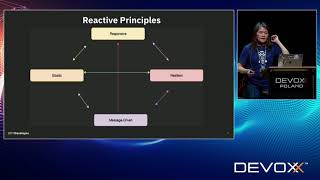
Reactive for the Impatient - A Gentle Intro to Reactive Programming and Systems
Explore Java-based reactive frameworks like RxJava, Spring Reactor, Akka, and Vert.x to tackle asynchronicity challenges. Learn reactive programming basics and see real-world applications in microservices.

Succeeding at Reactive Architecture
Explore principles and patterns for building reactive systems. Learn how message passing enables isolation, resilience, and elasticity in modern software architectures.
Understanding Asynchronous Communication in Distributed Systems
Explore the nuanced meanings of asynchronous communication in distributed systems, clarifying misconceptions and examining its implementation across different architectural contexts.

Akka Cluster and Akka Typed Deep Dive
Explore Akka clusters through four Java projects, from basic setups to advanced features like cluster singletons and sharding. Gain hands-on experience with downloadable examples and visualize cluster dynamics using web dashboards.
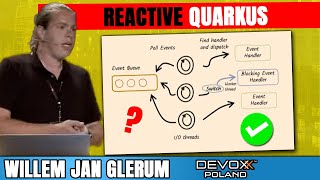
Reactive Quarkus - Building Reactive Applications with Java
Explore reactive programming with Quarkus and Java to build efficient, scalable applications. Learn key concepts and best practices for modern software development.
Business Event-Driven Architecture and Governance in Action
Implement Event-Driven Architecture effectively with a Center of Excellence. Learn from real-life experiences in large industries to set up strong foundations, define designs, and guide development teams.