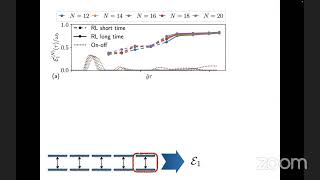
Reinforcement Learning Optimization of Charging a Dicke Quantum Battery
Explore reinforcement learning optimization for Dicke quantum batteries, enhancing energy extraction and charging precision beyond standard methods.
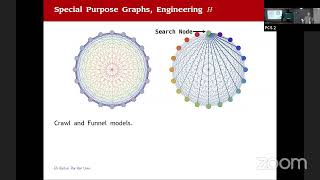
Fast and Slow Quantum First Hitting Times for Target Search
Explore quantum first hitting times for target search, examining fast and slow processes in quantum mechanics and their implications for search algorithms.
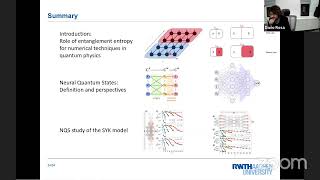
Neural Quantum States Approach to Volume Law Ground States
Explore neural quantum states for representing volume law ground states, focusing on limitations and applications in computational quantum physics.
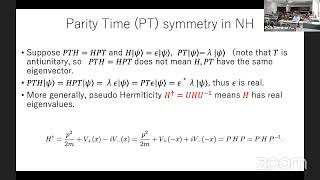
Unifying the Anderson Transitions in Hermitian and Non-Hermitian Systems
Explore Anderson transitions in Hermitian and non-Hermitian systems, examining critical behavior, symmetry classes, and universality. Uncover the correspondence between these systems and its implications.
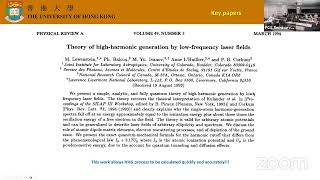
Attosecond Science and the Nobel Prize in Physics 2023
Explore attosecond science and its Nobel Prize-winning foundations. Discover historical developments, key contributions, research impacts, and potential applications in ultrafast physics.
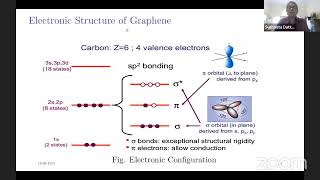
Spin-Boson Model for Nonlinear Optical Conductivity of Graphene
Explore graphene's quantum properties and nonlinear optical conductivity using spin-boson model. Analyze electronic configuration, hybridization, and optical absorption beyond linear regime through quantum mechanics and statistical mechanics.
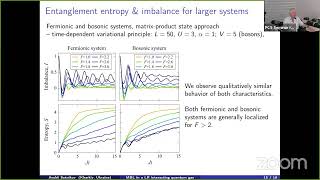
Many-Body Localization in Wannier-Stark Ladders with Long-Range Interactions
Explore many-body localization in quantum lattice systems with long-range interactions and linear external potential. Analyze phase diagrams and system dynamics using numerical approaches.
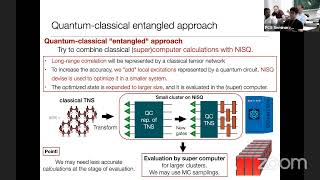
Quantum-Classical Entangled Approach with Tensor Networks for Spin Liquid
Explore quantum-classical entangled approaches using tensor networks for spin liquid states. Delve into efficient quantum circuit design for near-future noisy quantum computers, focusing on the honeycomb lattice Kitaev model.
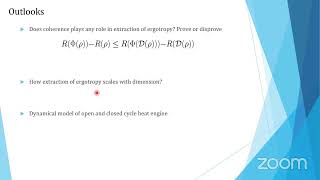
Extraction of Ergotropy: Free Energy Bound and Application to Open Cycle Engines
Explore ergotropy extraction in microscopic systems, its fundamental bounds, and applications to open-cycle heat engines. Gain insights into thermodynamics at the quantum scale.
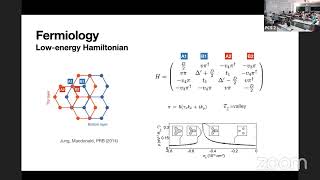
Superconductivity from Repulsive Interactions in Bernal Bilayer Graphene
Explore superconductivity in Bernal-stacked bilayer graphene, examining its emergence under specific conditions and the underlying electronic instability mechanism.
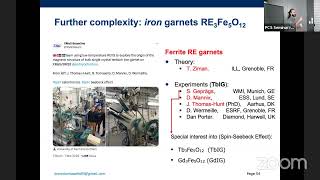
Role of Magneto-Crystalline Anisotropies in Complex Rare-Earth Systems
Explore magneto-crystalline anisotropies in rare-earth crystals, examining their impact on phenomena like emergent gauge theories, topological phases, and unconventional ordering in pyrochlores and garnets.
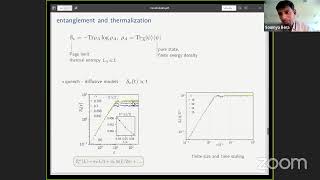
Internal Clock for Many-Body Delocalization
Explore the concept of internal clock in many-body delocalization, examining relaxation of charge imbalance and entanglement entropy in 1D disordered fermion systems.
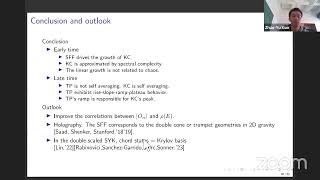
Chaos and Krylov Complexity
Explore the relationship between Krylov complexity and chaos in quantum systems, examining wave function evolution and transition probabilities to uncover universal behaviors in chaotic Hamiltonians.
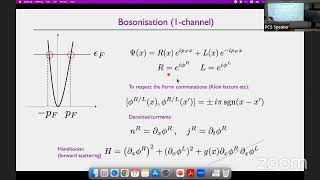
Fractional Conductance in One-Dimensional Constrictions
Explore theoretical models and Luttinger approach for fractional conductance in one-dimensional constrictions, examining recent experimental observations and potential fractions.
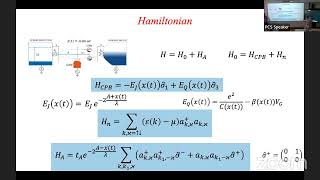
Mechanically Assisted Andreev Reflection in Cooper Pair Box Systems
Explore quantum mechanics through mechanically assisted Andreev reflection, Cooper pair boxes, and flying qubit states. Discover how mechanical motion impacts electric current in superconducting systems.
Chiral Induced Spin Selectivity and Time-Reversal Symmetry Breaking
Explore chiral-induced spin selectivity in helical molecules, examining theoretical explanations and experimental findings. Analyze various models to overcome Bardarson's theorem and achieve spin polarization.
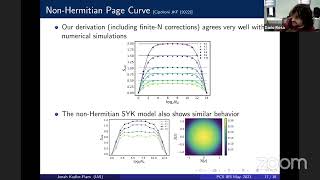
Explorations of Dissipative Quantum Chaos from Non-Hermitian Random Matrix Theory
Explore dissipative quantum chaos through non-Hermitian random matrix theory. Examine volume-law entanglement entropy and eigenstate thermalization hypothesis modifications in open quantum systems.
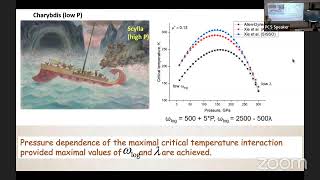
Electron-Phonon Interaction in Metals: Limits and Implications
Explore the limits of electron-phonon interaction in metals, its impact on superconductivity, and potential metal-insulator transitions through advanced theoretical analysis.
Ferrodark Solitons in a Spin-1 Bose-Einstein Condensate
Explore exact propagating topological excitations in ferromagnetic spin-1 Bose-Einstein condensates, including kinks in transverse magnetization and two types of ferrodark solitons with unique properties.
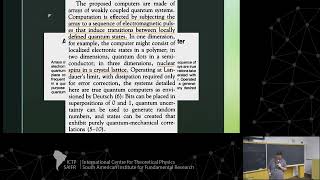
Nuclear Qubits in Quantum Computation - Lecture
Explore nuclear qubits, quantum teleportation, and related physics concepts. Gain insights into relaxation, hydrogen atoms, and chloroform Hamiltonians.
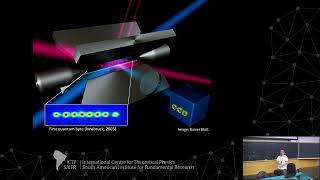
Trapped Ion Quantum Computers - Lecture 4
Explore advanced concepts in trapped ion quantum computing, focusing on cutting-edge developments and future prospects in this rapidly evolving field.