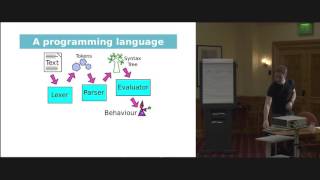
How to Write a Programming Language
Explore the process of creating a simple programming language interpreter, covering lexing, parsing, and evaluation, using Python to implement a basic language called Cell.
Thoughts on Metaclasses - Keynote
Exploración de metaclases en C++: simplificación del código, mejora de la reflexión y potencial para futuras características del lenguaje sin necesidad de nuevos compiladores.
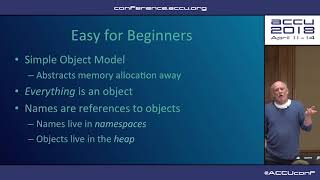
How Python Wins New Friends
Explore Python's rise to popularity, its user-friendly features, and its impact on programming education and various industries.
Turtles! Hill Climbing! Hammers! Paper Bags!
Explore optimization techniques through turtle graphics, from hill climbing to simulated annealing, laying the groundwork for understanding neural networks and machine learning concepts.
Tales of C, the 6502 and the BBC - With Added Python
Explore the journey of creating a C compiler for the BBC Micro using Python, delving into 80s computing, assembly language, and modern programming techniques.
Interactive C++ - Meet Jupyter - Cling
Explore interactive C++ using Jupyter and Cling. Learn prototyping techniques, interface guidance, and powerful combinations for data science and exploratory programming.
Anchored Metadata
Explore anchoring techniques for associating metadata with code, separate from source files. Learn about spor, a tool implementing this approach, and its applications in mutation testing.
Dynamic Polymorphism With Code Injection and Metaclasses
Explore advanced C++ techniques for dynamic polymorphism using code injection and metaclasses, offering alternatives to traditional virtual functions and inheritance for improved performance and flexibility.
Properties & Bindings for Modern C++
Efficient implementation of properties and bindings in modern C++ for simplified, declarative programming. Explores open-source, header-only solution for type-safe, dynamically bound properties.
Edit Live Jupyter Notebook Cells with Emacs
Edit live Jupyter notebook cells with Emacs using GhostText and Atomic Chrome. Learn setup, supported browsers, and precautions. Includes demos for Python and Julia code editing.
How Much Do You Trust That Package? Understanding the Software Supply Chain
Explore software supply chain security risks, including package vulnerabilities and malicious code injection. Learn strategies to mitigate these risks in modern software development.
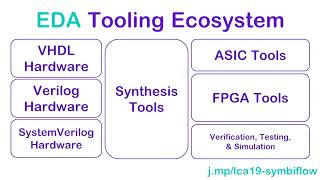
SymbiFlow - The Next Generation FOSS FPGA Toolchain
Explore open-source FPGA development with SymbiFlow, the "GCC of FPGAs". Learn about its current status, supported FPGAs, and how hobbyists are revolutionizing hardware design.
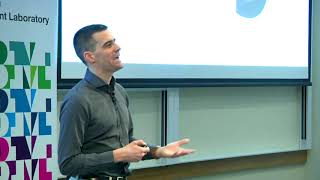
Learn Complex Skills, From Anywhere - Combining Django, Ansible and OpenStack to Teach Any Tech Skill
Innovative platform combining Django, Ansible, and OpenStack to teach complex, distributed tech skills remotely. Enables hands-on learning of modern technologies through realistic, on-demand lab environments.
Teaching 9-10 Year Olds to Code
Insights and strategies for teaching coding to 9-10 year olds, covering curriculum, tools, diversity, and challenges in running a successful Code Club for primary school students.
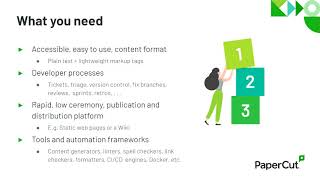
A Practical Introduction to Docs-As-Code
Practical introduction to Docs-As-Code approach for managing project documentation, featuring a demonstration project and tools like Sphinx, GitLab CI/CD, Docker, and GNU Make.
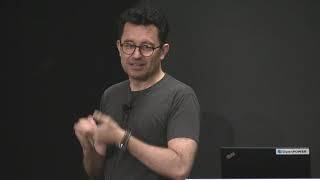
Build Your Own Open Hardware CPU in 25 Minutes or Less
Learn to download, simulate, and synthesize Microwatt, an OpenPOWER core, onto an FPGA. Discover how to run Micropython and Zephyr, and modify the core by adding new instructions.
It's All About Timing
Explore the design and implementation of a custom, cost-effective timing system for motorsport events using open-source software, Beaglebones, and custom hardware capes.
Snek - A Python-Inspired Language for Tiny Embedded Computers
Explore Snek, a Python-inspired language for tiny embedded computers, designed for teaching robotics to middle schoolers. Learn about its implementation, features, and classroom integration.
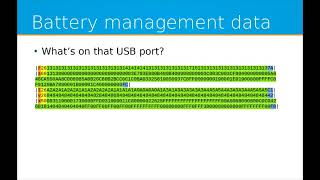
Decoding Battery Management Data - Back in the Old School
Explore decoding battery data from an electric motorbike using Raspberry Pi, Python, and open-source tools. Learn techniques for interpreting binary data from closed systems without documentation.
OpenWRT for Energy Monitoring
Explore designing an open-source IoT energy monitoring system with Linux, focusing on security, privacy, and user control. Learn about hardware evolution and software implementation.
The Life of Open Source Spatial with QGIS - From Hobby to Grown Up, with Bonus Growing Pains
Explore QGIS's evolution from hobby project to leading open-source GIS software. Learn about its growth, challenges, and impact on the spatial community, including governance, stability, and community development.