Dashing Off a Dashboard
Live-coding session demonstrating real-time dashboard creation using KSQL, Python, and JavaScript. Showcases rapid development of KPI visualization tools for organizations or personal projects.
Abzu's Pioneering Technology, the QLattice, Introduces a New Standard of Interpretability to Artificial Intelligence
Explore Abzu's QLattice, an explainable AI technology inspired by Feynman's path integrals. Learn how it predicts and explains outcomes using simple mathematical equations, demonstrated through a heart failure case study.

Practical Geometric Deep Learning in Python
Explore Geometric Deep Learning with StellarGraph, an open-source Python library for network-structured data analysis. Learn its applications, design philosophy, and implementation in real-world scenarios.

Ghidriff
Explore ghidriff, an open-source Python package for efficient binary diffing using Ghidra. Learn about its command-line interface, function matching heuristics, and markdown output for simplified patch analysis and vulnerability research.

Image Processing with Halide
Explore Halide for high-speed image processing in 3D machine vision, including the transition from OpenCL, benefits, and challenges faced in real-world applications.
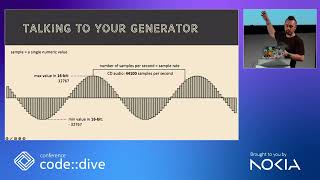
Async Generators in Python: A Deep Dive
Explore async generators in Python with working examples, internal implementation, and practical use cases. Gain insights from Python core developer Łukasz Langa.
The One Where We Threat Model During Development
Explore threat modeling as a development tool, learning its principles, techniques, and value for developers, managers, and testers. Gain insights on implementing continuous threat modeling and using Pytm for a Pythonic approach.

Non-English Programming with Hedy
Explore Hedy, a gradual programming language designed for multilingual learning. Discover its unique levels, syntax evolution, and the challenges of creating an inclusive coding environment for diverse languages and cultures.
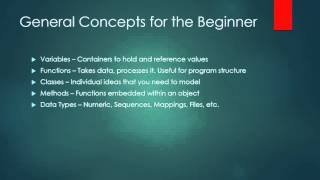
Python For Infosec
Learn to leverage Python for information security tasks, enhancing your cybersecurity toolkit with practical coding skills and automation techniques.
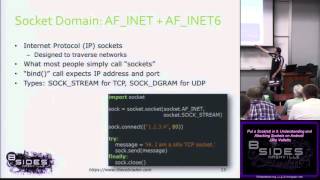
Put a Socket in It - Understanding and Attacking Sockets on Android
Explore Android socket programming, security implications, and techniques for identifying and analyzing sockets. Learn about different socket types and their uses in Android development.

Automating Malware Analysis for Threat Intelligence
Explore automated malware analysis techniques for threat intelligence, including kill chain concepts, Python coding, and C2 clustering to enhance cybersecurity defenses.
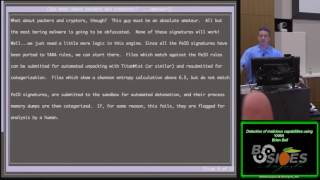
Detection of Malicious Capabilities Using YARA
Explore YARA for malware detection, covering heuristics, memory analysis, and comparison with other frameworks. Learn to create effective rules for identifying malicious capabilities.
A Year in the Empire
Explore Empire's evolution, new features, and design decisions in this comprehensive overview of the popular post-exploitation framework's development and community impact.
Garbage in Garbage Out - Generating Useful Log Data in Complex Environments
Explore effective log data generation in complex environments, focusing on meaningful data, thresholds, and log management systems for improved security and analysis.
Quick and Easy Windows Timelines with Python, MySQL, and Shell Scripting
Learn to create efficient Windows timelines using Python, MySQL, and shell scripting for enhanced digital forensics and incident response capabilities.

Predictive Analytics and Machine Learning - Real Use Cases for IT Security Professional
Explore real-world applications of predictive analytics and machine learning in IT security, covering data mining, modeling techniques, and practical implementation strategies.
DIY Spy Covert Channels With Scapy And Python
Learn to create covert communication channels using Scapy and Python. Explore techniques for hiding data, constructing protocols, and implementing command and control systems in network traffic.
PANDA Walking Loud in the Cloud - Logan Hicks
Explore PANDA, an open-source cloud networking solution, covering its objectives, features, and architecture. Learn about its performance stack, traffic flow, and global layout.

Decentralization for Security and Freedom - A Discussion of Asymmetric and Decentralized Approaches
Explore decentralization's role in enhancing security and freedom, covering VPNs, autonomous tools, and innovative projects like IPFS and Magic Wormhole.
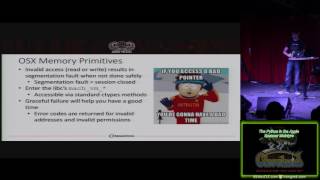
The Python in the Apple
Explore Railgun, a Python-based post-exploitation tool for macOS, learning its implementation, memory handling, and practical demonstrations.
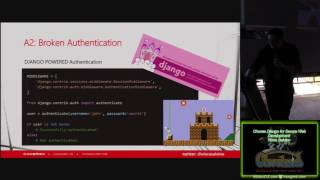
Choose Django for Secure Web Development
Learn why Django excels in secure web development, covering key security features and best practices to protect against common vulnerabilities and threats.