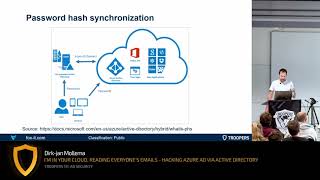
I'm in Your Cloud, Reading Everyone's Emails - Hacking Azure AD via Active Directory
Explore Azure AD vulnerabilities, hacking techniques, and security risks in cloud environments. Learn about AD Connect, crypto magic, and service principles to enhance your cybersecurity knowledge.
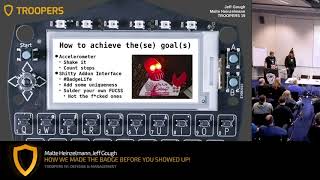
How We Made the Badge Before You Showed Up
Explore the creation process of a unique badge, featuring Python programming, accelerometer technology, and software optimization techniques.
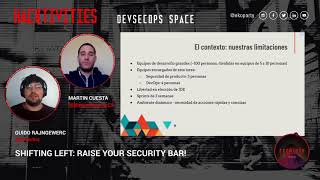
Shifting Left- Raise Your Security Bar! - Guido Rajngewerc & Martin Cuesta - Ekoparty Security Conference - 2020
Integración de seguridad en el ciclo de desarrollo ágil: herramientas y estrategias para detectar vulnerabilidades temprano, empoderando a los desarrolladores como actores clave en la seguridad del producto.
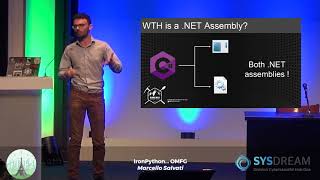
IronPython... OMFG - Marcello Salvati - Hack in Paris - 2019
Explore dynamic .NET runtime access using Python, bypassing PowerShell restrictions for stealthy offensive operations in Windows environments.
10 Mio€ für Open Source - Jedes Jahr
Einblicke in die Struktur und Bedeutung von Open-Source-Projekten für die Sicherheit sowie Vorschlag eines öffentlichen Fonds zur finanziellen Förderung mit 10 Mio € jährlich zur Absicherung wichtiger Projekte.
Measuring Radioactivity Using Low-Cost Silicon Sensors
Learn to build a DIY particle physics detector using low-cost silicon sensors. Explore natural radioactivity, measure particle energy, and analyze data with Python in this hands-on introduction to modern particle physics.
Linux on RISC-V with Open Hardware
Explore RISC-V architecture, its implementation in open hardware, and Linux support. Learn about various RISC-V boards, Linux distributions, and open-source FPGA toolchains.
Teaching Your Test Framework to Speak LAVA
Learn to integrate your existing test framework with LAVA, enabling detailed test case results and dashboard analytics without rewriting tests. Explore implementation examples for pytest, unittest, and BATS.
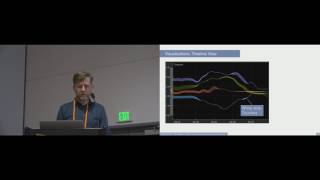
GIAnT - Visualizing Group Interaction at Large Wall Displays
Visualization toolkit for analyzing group interactions at large wall displays, aiding research with timeline, wall, and floor visualizations to gain quick insights into multi-user behavior.
Programming Essentials for Beginners
Explore fundamental programming concepts like variables, functions, and loops using Python. Ideal for beginners starting their journey in software development.
A Microservices Architecture with Python and Docker Containers
Explore microservices architecture using Python and Docker, featuring a custom library for efficient team implementation. Learn high-level concepts and practical applications.
Best Practices for Compose-Managed Python Apps
Discover best practices for Python projects using Docker Compose, including project setup, development workflow, debugging, testing, and optimizing builds for faster and improved development.
OpenStack Architecture
Dive into OpenStack's architecture, exploring integrated projects, new components, and features in Red Hat OpenStack 2.1 and 3.0 for cloud readiness.
Deploying Machine Learning Models for Forensic Anthropology with Docker and Streamlit
Deploy ML models for forensic anthropology using Docker and Streamlit. Learn to create a web application for skeletal sex prediction, combining archeology, physics, and technology for impactful research in bioarchaeology.
Keylime - An Open Source TPM Project for Remote Trust
Explore Keylime, an open-source project for remote trust using TPM technology. Learn about its architecture, operations, and applications in securing hardware roots of trust and continuous remote attestation.
RATs and IOCs - The Easy Way
Explore techniques for extracting and analyzing Remote Access Trojan (RAT) configurations, focusing on static analysis methods and utilizing the extracted data for threat intelligence and defense.
Owning the Smart Home with Logitech Harmony Hub
Explore reverse engineering of Logitech's Harmony smart home hub, uncovering vulnerabilities and discussing their implications for device security and potential exploitation.
Drone Hijacking and Other IoT Hacking with GNU Radio and SDR
Explore IoT security vulnerabilities using SDR and GNU Radio. Learn to intercept, sniff, and hijack wireless devices like drones and keyboards through practical demonstrations and attacks.
Python - The Wonder Woman of Embedded Device Reversing
Explore Python's power in embedded device reverse engineering, covering triage, scripting, analysis, and IDA integration for efficient vulnerability research.
Windows Rootkit Development - Python Prototyping to Kernel Level C2
Explore kernel-mode drivers for network traffic control, TCP connection handling, and proxy manipulation. Learn weaponization and deployment strategies for advanced Windows rootkit development.
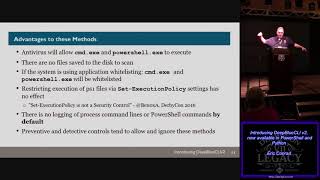
Introducing DeepBlueCLI v2 Now Available in PowerShell and Python
Explore DeepBlueCLI v2's enhanced features for Windows malware detection, including PowerShell and Python implementations, regex improvements, and automated whitelisting techniques.