How to Implement a Variational Autoencoder in Python and Keras
Implement a Variational Autoencoder using Python, TensorFlow, and Keras. Learn to modify the encoder, update loss functions, train the model, and visualize the latent space for data generation.
Generation with AutoEncoders - Results and Limitations
Explore image generation using autoencoders, analyze latent space representations, and understand limitations in generative tasks. Learn why variational autoencoders are necessary for improved generation.
RAPIDS - The Platform Inside and Outside - Joshua Patterson - ODSC East 2019
Accelerating data science with GPUs using RAPIDS: open-source libraries for GPU-powered data manipulation, machine learning, and graph analytics, scaling across multiple GPUs and integrating with existing Python ecosystems.
Physical Computing: How Software Meets Hardware - From Christmas Trees to Connected Devices
Explore physical computing and connected devices, from microcontrollers to digital fabrication. Learn how diverse creators use open-source hardware and software to build interactive technologies and shape our connected world.
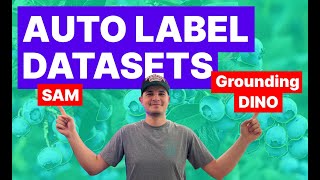
Accelerate Image Annotation with SAM and Grounding DINO - Python Tutorial
Learn to accelerate image annotation using Grounding DINO and Segment Anything Model (SAM). Convert object detection datasets to instance segmentation and explore automatic annotation for real-time detectors like YOLOv8.

Batch Scheduling Across Multiple Kubernetes Clusters - Mirantis Labs Tech Talks
Explore Armada, an open-source solution for batch scheduling across multiple Kubernetes clusters. Learn about its features, real-world applications, and see a live demo of multi-cluster batch processing.
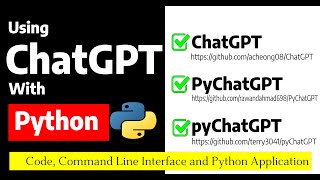
ChatGPT - How to Access Through Python Libraries in Your Code
Explore Python libraries for integrating ChatGPT into your code. Learn to send prompts and receive responses using open-source tools, enhancing your AI-powered applications.
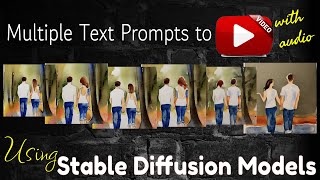
Automated Video Creation with Stable Diffusion AI Models - A Developer Guide
Learn to create automated videos with audio using Stable Diffusion AI models in Python. Hands-on tutorial covers installation, GUI usage, pipeline implementation, and provides GitHub resources.
Build Your Own OpenAI + LangChain Web App
Learn to create an OpenAI and LangChain-powered web app using Streamlit. This tutorial covers setup, app building, deployment, and showcases a live text globalization application.
Creating a Custom GPT-4 Chatbot
Learn to create a custom GPT-4 chatbot that responds to tweets and questions in any personality. Discover how to train, implement, and automate your chatbot using MindsDB for intelligent, human-like conversations.
Test Drive - A Very First Look at H2O Hybrid Cloud
Explore H2O AI Hybrid Cloud's features: AI App Store, MLOps pipeline, AI engines, and collaboration tools. Gain insights into automated machine learning for complex business problem-solving.

Generative Python Transformer Model Released - The Off-Brand Github Copilot
Explore GPyT, an open-source alternative to Github Copilot. Learn how to use this generative Python transformer model for code autocompletion and generation across various programming tasks.

Cyber Python 2077 - Using Computer Vision to Read and Walk from Cyberpunk 2077 Map
Learn to create AI that navigates Cyberpunk 2077 using Python and OpenCV. Explore computer vision techniques for game automation and pathfinding in this hands-on tutorial.

Facial Recognition on Video with Python
Learn to implement facial recognition in video using Python, covering encoding, labeling, and real-time detection techniques for efficient and accurate face identification.

Facial Recognition with Python and the Face_recognition Library
Learn to implement facial recognition in Python using the face_recognition library. Covers setup, encoding, and drawing rectangles around detected faces.

Creating Chat Application with Sockets in Python
Learn to build a console-based chat application using Python sockets. Covers creating sockets, receiving messages, reading sockets, and implementing notification sockets in a practical, hands-on tutorial.
JAX- Accelerated Machine Learning Research via Composable Function Transformations in Python
Explore accelerated machine learning research using JAX, a Python library for composable function transformations, enhancing ML model development and experimentation.
AI Rap Bot: Creating Lyrics and Vocals with Tacotron 2 and ChatGPT
Explore AI-powered rap generation using Tacotron 2 and ChatGPT. Learn to create a user-friendly interface with Gradio for generating lyrics and vocals.
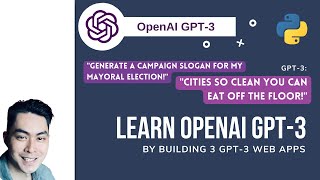
GPT-3 Tutorial: Building Projects for Email Writing and Ad Slogan Generation
Hands-on tutorial exploring GPT-3's capabilities through practical projects, including LaTeX translation, email composition, and ad slogan generation. Covers API setup, model parameters, and unexpected results.
Flux - A Next Generation Resource Manager for HPC and Beyond - IPAM at UCLA
Explore Flux, a next-gen resource manager for HPC, offering advanced scheduling, standardized interfaces, and nested instance capabilities for improved scientific workflows.
ExaFEL - Achieving Real-Time XFEL Data Analysis Using Exascale Hardware
Explore real-time data analysis for X-ray Free Electron Laser experiments using high-performance computing, focusing on challenges, workflow design, and performance insights for future scientific applications.