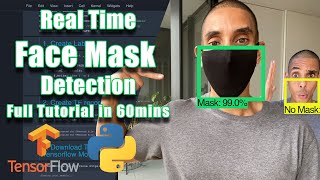
Real Time Face Mask Detection with Tensorflow and Python - Custom Object Detection with MobileNet SSD
Learn to build a real-time face mask detector using TensorFlow and Python. Master image labeling, custom object detection, transfer learning, and implement a practical workflow for training and deployment.
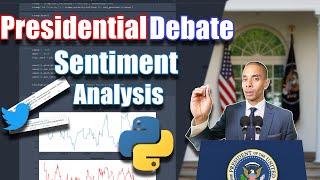
Presidential Debate Twitter Sentiment Analysis Using Python and NLTK
Learn to analyze Twitter sentiment for presidential debates using Python, NLTK, and TextBlob. Extract polarity and subjectivity from tweets to gauge public opinion on candidates quickly and efficiently.
Deep Reinforcement Learning Tutorial for Python
Learn to create OpenAI Gym environments, build deep learning models, and train reinforcement learning agents using Tensorflow, Keras, and Keras-RL in this hands-on tutorial for Python developers.
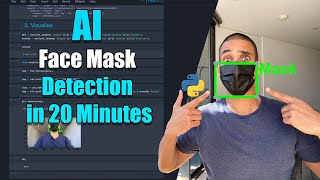
Build a Face Mask Detector with Watson and Python
Learn to create a face mask detector using Watson Visual Recognition, Python, and OpenCV. Capture images, visualize detections, and train custom object detection models in this hands-on tutorial.
Getting Started with Machine Learning - What is Machine Learning
Comprehensive introduction to machine learning, covering data manipulation, visualization, exploratory analysis, and model building using Python libraries and the Diabetes dataset.
Machine Learning Basics - Machine Learning for Beginners
Comprehensive introduction to machine learning basics, covering key concepts, data manipulation, visualization, and model building using Python libraries and real-world datasets.
Neural Network from Scratch - Machine Learning Python
Implement a neural network using Python and numpy, focusing on the coding aspects while building upon previously explained mathematical concepts.
K-Nearest Neighbor From Scratch - Machine Learning Python
Implementación desde cero del clasificador K-Nearest Neighbor en Python, incluyendo una versión intuitiva y otra eficiente sin bucles para el aprendizaje automático.
Cryptography - Hill Cipher Python
Learn to implement the Hill cipher encryption algorithm in Python, with step-by-step explanations and code examples for this challenging cryptographic technique.
Neural Network from Scratch with Python - Part 4
Implement a neural network using Numpy, learning to build deep learning models from the ground up without relying on high-level frameworks.
AI Learns What to Do Next Using TensorFlow and Python
Learn to predict future events using TensorFlow and Python. Build LSTM models, preprocess data, and generate next best actions for practical applications like sales progression.
Multilingual Video Caption Generator with OpenAI Whisper - Full Tutorial
Learn to create a multilingual video subtitle generator using OpenAI Whisper, Python, and Gradio. Build, deploy, and use this free tool for automatic captioning in various languages.
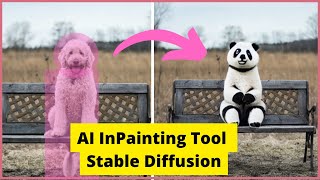
Replace ANYTHING with Stable Diffusion AI InPainting Tool Using Gradio
Learn to create an AI in-painting tool using Hugging Face Gradio and Diffusers, enabling you to replace any element in an image with Stable Diffusion technology.
Real-Time Live Speech-to-Text - Streaming ASR Gradio App with Hugging Face Tutorial
Build a real-time speech-to-text app using Hugging Face Transformers and Gradio. Learn to implement live audio transcription with Facebook's Wav2Vec2 model in this hands-on tutorial.
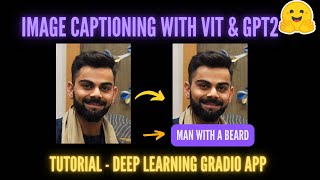
Image Captioning Python App with ViT and GPT2 Using Hugging Face Models - Applied Deep Learning
Learn to create an image captioning app using ViT and GPT2 models from Hugging Face. Build a Gradio interface and deploy it on the Model Hub for easy access and sharing.
Custom NER with spaCy v3 Tutorial - Named Entity Recognition Tutorial
Learn to build custom Named Entity Recognition models using spaCy v3, including data annotation with free tools and training techniques for improved NLP applications.
AutoXGB - Automated ML with XGBoost + Optuna + FastAPI - Kaggle Demo
Explore AutoXGB, a Python library for automated machine learning using XGBoost, Optuna, and FastAPI. Learn its parameters and application in a Kaggle competition.
Understanding SHAP Summary Plot - Interpretable Machine Learning - Day 19
Explore SHAP and Shapley values for interpretable machine learning, focusing on summary plots and dependence plots to enhance model explainability and insights.
XGBoost and Data Leakage in Machine Learning - Day 14 of 30 Days of ML
Explore XGBoost and data leakage in machine learning. Learn to build optimized models, prevent leakage issues, and enhance your ML skills with practical tutorials and exercises.
Scikit-Learn Pipeline and Cross-Validation - Day 13 of 30 Days of ML
Learn advanced machine learning techniques with Scikit-Learn, focusing on pipelines for organized code and cross-validation for improved model performance evaluation. Part of a 30-day ML challenge.
Kaggle 30 Days of ML - Day 12 - Missing Values and Categorical Variables
Explore missing values and categorical variables in machine learning, learning practical approaches to handle data imperfections and enhance model performance.