
Finetune GPT-3 to Write a Coherent Novel - Success! With Minor Bugs
Explore the process of using AI to write a novel, from generating summaries to creating full chapters, with insights on recursive neural networks and GPT-3 implementation.
Fine-Tune Multiple Cognitive Tasks with GPT-3 on Medical Texts and Reduce Hallucination
Learn to finetune GPT-3 for medical tasks, reduce hallucination, and improve accuracy in extracting information from patient charts and generating diagnoses.
Convolutional Neural Nets Explained and Implemented in Python - PyTorch
Comprehensive guide to Convolutional Neural Networks: theory, implementation, and practical applications using Python and PyTorch for computer vision tasks like image classification.

Vision Transformers Explained + Fine-Tuning in Python
Explore Vision Transformers (ViT) for image classification, from theory to implementation. Learn about attention mechanisms, patch embeddings, and fine-tuning using Hugging Face in Python.

Fast Zero Shot Object Detection with OpenAI CLIP
Learn zero-shot object detection and localization using OpenAI CLIP, a multi-modal deep learning model. Implement practical techniques for efficient, domain-flexible computer vision tasks without fine-tuning.
How to Use OpenAI Whisper to Fix YouTube Search
Learn to enhance YouTube search using OpenAI Whisper, transformers, and vector search. Build a system for precise content retrieval, transcription, and question-answering from YouTube videos.
Evaluation Measures for Search and Recommender Systems
Learn popular offline metrics for evaluating search and recommender systems, including Recall@K, MRR, MAP@K, and NDCG@K, with Python demonstrations and practical insights for improving information retrieval systems.
How to Build a Q&A AI in Python - Open-Domain Question-Answering
Learn to build an open-domain question-answering AI in Python, covering retriever training, fine-tuning, evaluation, vector database setup, and querying techniques for natural language interfaces.
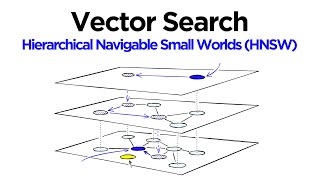
HNSW for Vector Search Explained and Implemented with Faiss - Python
Demystifying HNSW algorithm for vector similarity search, explaining its foundations, implementation with Faiss, and optimization techniques for top-performing indexes in approximate nearest neighbor searches.
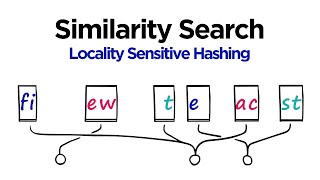
Locality Sensitive Hashing for Search with Shingling + MinHashing - Python
Learn efficient similarity search using Locality Sensitive Hashing (LSH) with shingling and MinHashing techniques in Python. Explore implementation steps, from data preprocessing to LSH tuning, for approximate nearest neighbor search.
JAX Crash Course - Accelerating Machine Learning Code
Accelerate machine learning with JAX: Learn NumPy-like operations on CPU, GPU, and TPU, automatic differentiation, and high-performance techniques for ML research in this comprehensive introduction.
Building Machine Learning Applications Fast
Learn to rapidly create machine learning applications using Gradio, exploring its modalities and desktop interface for easy model demonstration and deployment.
Langchain ChatGPT Your Documents Challenge Part 2 with GPT-3 and OpenAI Embeddings and Streamlit UI
Build a ChatGPT-like chatbot using Langchain, GPT-3, and OpenAI embeddings. Includes Streamlit UI, file uploader, and Wikipedia API integration for answering questions based on uploaded documents and relevant context.
Chat GPT UI Built by GPT-3 API Responses Directly in VS Code Using HTML, CSS, JavaScript & FastAPI
Build a ChatGPT-like UI using HTML, CSS, JavaScript, and FastAPI. Integrate OpenAI's GPT API for responses directly in VS Code, creating an interactive chat interface.
Fine Tuning GPT-3 With a Custom Dataset
Learn to fine-tune GPT-3 using a custom dataset, from generating training data to implementing the fine-tuned model in a web application, with step-by-step guidance and practical demonstrations.
Beginners Workshop to Fine-Tune OpenAI LLM Model with Enterprise Web Data in Python
Learn to fine-tune OpenAI's GPT-3.5-Turbo model with enterprise web data using Langchain and ChromaDB. Create a ChatGPT-like interface for your customer data in this hands-on Python workshop.
Python Gradio UI for Fine-Tuning LLM - OpenAI GPT with Custom Data
Learn to create a Python Gradio UI for fine-tuning OpenAI's GPT model with custom data using LlamaIndex, enabling personalized Q&A and summarization capabilities.
Fine Tuning LLM -OpenAI GPT- with Custom Data in Python
Learn to fine-tune OpenAI GPT models with custom data using LlamaIndex in Python. Explore concepts, see a Gradio UI demo, and follow a coding walkthrough for Q&A and summarization tasks.
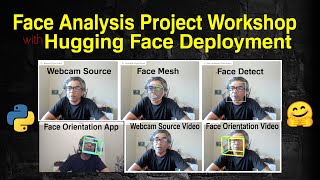
Python Workshop with Face Detection, Mesh & Orientations with Hugging Face Deployment
Build a Python web app for face analysis using Gradio UI, including face detection, mesh, and orientation. Learn to process webcam input and deploy to Hugging Face Space.
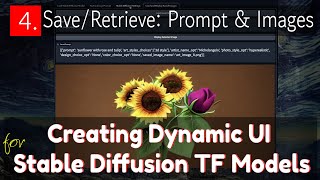
Hands-on Coding Lab: Text Prompt UI for Stable Diffusion Models - Part 4
Learn to save and retrieve prompts and images for Stable Diffusion models using Gradio. Implement a UI with dropdown lists, JSON storage, and duplication prevention for efficient prompt management.
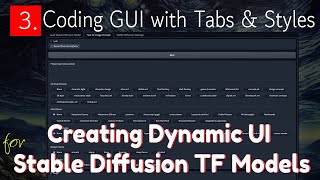
Hands-on Coding Lab: Text Prompt UI for Stable Diffusion Models - Part 3
Learn to create a Python Gradio UI for Stable Diffusion models, including audio-to-text prompts, prompt updates, and image saving functionality in this hands-on coding tutorial.