
The Psychology of Evil - Understanding and Challenging Human Behavior
Explore the nature of evil, its psychological roots, and the potential for heroism in this thought-provoking talk by Philip Zimbardo, drawing insights from famous experiments and real-world events.
The Truth About "The Zone" - Mental Focus and Resilience in Sports
Explore "the zone" in sports with Steph Curry, delve into mental resilience with Dr. Nicole Detling, and learn from Olympic biathlete Clare Egan's experiences in this insightful podcast episode.

Creativity and Cognition: Past, Present and Future - Keynote
Explore the evolution of Creativity and Cognition conferences, their impact on HCI, and recent advances in creativity support, interactive computing in arts, and AI's role in artistic creation.

The Belief Understanding Scale - Monographs
Overview of the Belief Understanding Scale, a laboratory measure differentiating children's mind understanding methods. Explores theory of mind, false belief, and introspection in preschoolers, with implications for school readiness.
Six Essential Leadership Practices in the ED - Creating a World-Class Emergency Department
Discover essential leadership practices for creating a world-class emergency department. Learn strategies for self-awareness, goal-setting, effective communication, and decisive action in challenging healthcare environments.
Avoiding Diagnostic Error in the ED - EM & Acute Care Course
Learn strategies to reduce diagnostic errors in emergency departments, focusing on critical thinking, effective communication, and evidence-based approaches to improve patient outcomes and safety.

Developmental Psychology
Explore key developmental milestones in pediatrics, psychology, and psychiatry through animated mnemonics and comprehensive coverage of normal child development stages.
Prime Time Alive- Tuning into Happiness as You Cope Through Tough Times
Discover strategies for finding happiness and resilience during challenging times, exploring grief, stress management, and the building blocks of well-being and satisfaction.
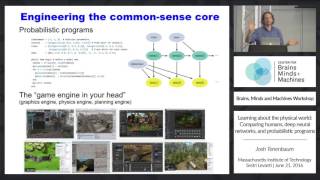
Learning About the Physical World - Comparing Humans, Deep Neural Networks, and Probabilistic Programs
Explore intuitive physics and psychology in human cognition, comparing it with AI approaches like deep neural networks and probabilistic programs for understanding the physical world.
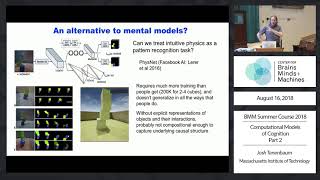
Computational Models of Cognition - Part 2
Explore intuitive physics, mental models, and probabilistic reasoning in cognitive science, featuring cutting-edge research on infant cognition and AI applications.
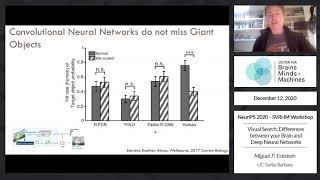
Visual Search - Differences Between Your Brain and Deep Neural Networks
Explore how human visual perception differs from deep neural networks, examining experiments, results, and implications for fields like medical imaging.
Is There Anything Special About Human Intelligence? - Vs. Non-Human Animals, Vs. Machines
Explore human intelligence compared to animals and machines in this panel discussion, examining unique cognitive abilities, language, abstract thinking, and self-awareness.
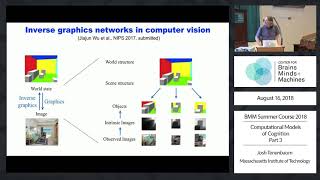
Computational Models of Cognition - Part 3
Explore cognitive models, inverse graphics, and Bayesian learning in this advanced lecture on computational approaches to understanding the mind and brain.
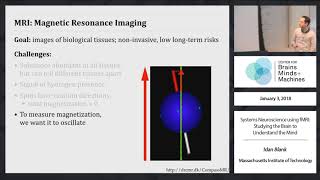
Systems Neuroscience Using fMRI - Studying the Brain to Understand the Mind
Explore fMRI principles and applications in neuroscience, including experiment design, intuitive physical inference, and the neural basis of social rejection and physical pain.
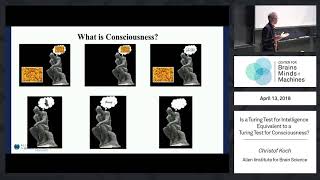
Is a Turing Test for Intelligence Equivalent to a Turing Test for Consciousness?
Explore the distinction between intelligence and consciousness in AI systems, examining neural correlates, theories of consciousness, and implications for future technology.
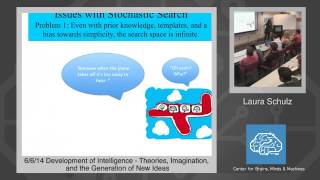
Development of Intelligence - Tomer Ullman vs. Laura Schulz Debate
Debate exploring theories of intelligence development, comparing stochastic search models with goal-oriented hypothesis generation and the role of imagination in cognitive processes.
Development of Intelligence - Cognitive Development and Commonsense Reasoning
Explore cognitive development, commonsense reasoning, and early knowledge formation in infants, including object perception, causal understanding, and recognition of agents and intentional actions.

Reflexive Theory of Mind Reasoning in Games
Explore reflexive theory-of-mind reasoning in games, examining how players build predictive mental models of co-players based on experience and context, challenging traditional game-theoretic assumptions.
Hart - Concept of Law - Summary of John Austin's Theory of Law
Explore Austin's habit- and sanction-based theory of law through a gunman scenario, examining concepts of internal supremacy and external independence in sovereignty.

Frank Jackson's Famous 'Mary's Room' Thought Experiment
Explore Frank Jackson's 'Mary's Room' thought experiment, challenging physicalism and introducing epiphenomenalism in this introductory philosophy lecture on consciousness and knowledge.
What is it Like to be a Bat? - The Hard Problem of Consciousness
Explore the philosophical challenge of understanding subjective experiences through Thomas Nagel's famous bat argument, examining the limitations of physicalism in explaining consciousness.