David Chalmers – Consciousness and the Collapse of the Wave Function
Explore the intriguing theory of consciousness collapsing quantum wave functions, combining integrated information theory with quantum collapse dynamics and discussing potential experimental tests.
Awareness - An Operational Theoretical Approach
Exploring awareness as a form of information using operational probabilistic theory, examining its private nature and potential connection to quantum coherence, with implications for cognitive sciences.
Synergistic Workspace for Consciousness Revealed by Integrated Information Decomp
Exploring brain's information processing architecture and its role in consciousness through integrated information decomposition, revealing a synergistic global workspace crucial for conscious experience.
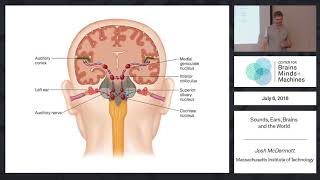
Sound, Ears, Brains and the World
Explore auditory processing, sound perception, and the brain's ability to distinguish multiple sound sources. Learn about computational modeling and the "Cocktail Party problem" in this insightful lecture by MIT Professor Josh McDermott.
Differences Between Neural Networks and the Brain
Explore the similarities and differences between neural networks and the brain in this panel debate featuring leading experts in neuroscience and artificial intelligence.
Explore MIT Today - Reverse Engineering the Mind - Brain and Cognitive Sciences
Panel discussion exploring brain science, AI, and human intelligence, covering neural processing, learning, robotics, brain-computer interfaces, and ethical considerations in cognitive research.
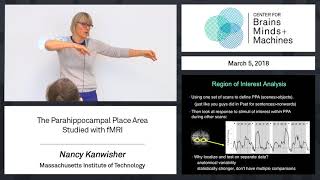
The Parahippocampal Place Area Studied with fMRI
Explores the parahippocampal place area's role in scene recognition using fMRI, discussing methodological considerations and replication in cognitive neuroscience research.
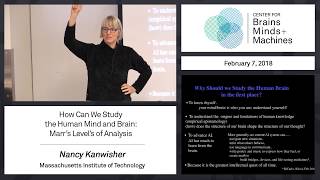
How Can We Study the Human Mind and Brain? - Marr's Levels of Analysis
Explore Marr's levels of analysis for studying the human mind and brain, focusing on computational theory and its application to color vision and other cognitive processes.

How the Brain Pays Attention
Explore selective attention, executive control, and visual recognition in this comprehensive examination of cognitive processes and their impact on human behavior.
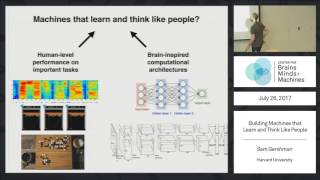
Building Machines that Learn and Think Like People
Explore computational neuroscience and AI inspired by human cognition, covering intuitive theories, compositionality, and learning to learn for more human-like artificial intelligence.
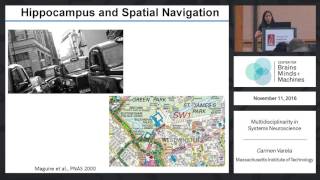
Multidisciplinarity in Systems Neuroscience
Explore interdisciplinary approaches in systems neuroscience, focusing on hippocampus function in memory and navigation, and the thalamus's role in information transfer to the neocortex.
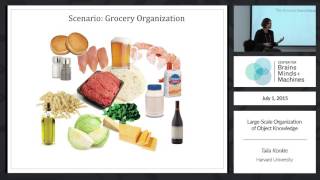
Large-Scale Organization of Object Knowledge
Explore the organization of object knowledge in the brain, focusing on visual cortex structure and how we categorize everyday items like groceries.
Building Newborn Minds in Virtual Worlds
Explore the development of high-level vision in newborns through innovative controlled-rearing experiments, revealing insights into invariant object recognition and computational models of visual cortex.
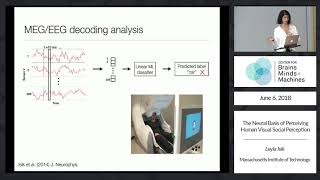
The Neural Basis of Perceiving Human Visual Social Perception
Explore neural mechanisms of visual object recognition and social perception using MEG, fMRI, and computational modeling. Discover how the brain processes visual scenes, objects, and social interactions over time.
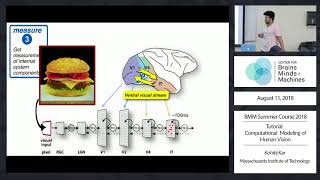
Computational Models of Human Vision - Part 2
Explore computational approaches to human vision, focusing on encoding, decoding, and behavioral metrics in the ventral stream and identity manifold.
Everything You Always Wanted to Know About the Visual System but Were Afraid to Ask
Explore the intricacies of visual perception, from anatomy to cognitive processes, with insights on recognition, scenes, and eye movements in this comprehensive overview.
Functional Imaging of the Human Brain - A Window into the Organization of the Human Mind
Explore the organization of the human mind through functional brain imaging, covering topics from face recognition to music processing and evolutionary perspectives.
Does the Neocortex Use Grid Cell-Like Mechanisms to Learn the Structure of Objects?
Explore how the neocortex might use grid cell-like mechanisms to learn object structure, drawing parallels between spatial navigation and object recognition in the brain.
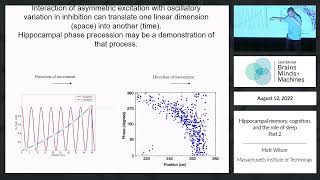
Hippocampal Memory, Cognition, and the Role of Sleep - Part 2
Explore hippocampal memory, cognition, and sleep's role through phase processing, decoding, spatial navigation, and neural mechanisms in this comprehensive lecture.
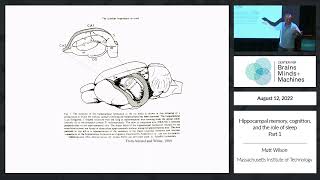
Hippocampal Memory, Cognition, and the Role of Sleep - Part 1
Explore hippocampal structure, memory coding, and electrophysiology techniques. Delve into working hypotheses and data interpretation in neuroscience research.
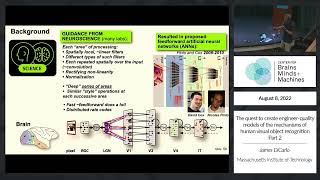
The Quest to Create Engineer-Quality Models of the Mechanisms of Human Visual Object Recognition - Part 2
Explore advanced neural models and mechanisms of human visual object recognition, including linear decoders, adversarial attacks, and individual variability in visual processing.