
10 Midjourney Prompts Styles and Tips for AI Art - Volume 31
Explore 10 diverse Midjourney prompt styles, from Madhubani paintings to greasy machinery collages, enhancing your AI art creation skills and expanding your creative horizons.

Python AI Choose Your Own Adventure Game
Create an AI-powered choose-your-own-adventure game in Python using OpenAI and vector databases. Learn about LLM memory, database integration, and prompt engineering to build an engaging interactive experience.
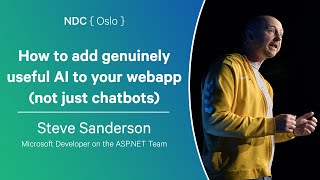
How to Add Genuinely Useful AI to Your Webapp - Not Just Chatbots
Explore practical ways to integrate AI into web UIs, enhancing user experience beyond chatbots. Learn to anticipate needs and streamline tasks using language models in Blazor, MVC, and C#.
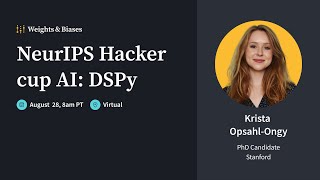
DSPy for Code Generation: Building and Optimizing Language Model Pipelines
Explore DSPy, a Stanford framework for optimizing language model pipelines in code generation. Learn its applications, potential, and hands-on usage with the HackerCup dataset.
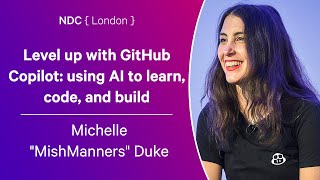
Level Up with GitHub Copilot - Using AI to Learn, Code, and Build
Discover how GitHub Copilot enhances coding efficiency, offering AI-powered suggestions, explanations, and translations. Learn to leverage prompt engineering for optimal results and explore conversational coding.

Building AI Agents from Scratch - Simplified
Uncover AI agent mechanics and learn a basic pattern to build your own without intermediate libraries. Gain practical insights for custom AI development.
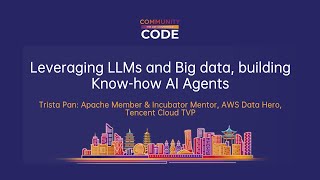
Leveraging LLMs and Big Data - Building Know-how AI Agents
Discover how to build intelligent AI agents by combining large language models with big data, exploring practical implementation strategies and real-world applications.
Automation of the Automation Using ChatGPT for Test Generation and Integration
Master prompt engineering and ChatGPT integration for automated testing, focusing on Playwright implementation, self-testing mechanisms, and practical DSL development for UI and API test generation.

In-Context Learning - Comparing Extreme Context Length with Fine-Tuning and RAG
Explore groundbreaking research on in-context learning with extended context models, comparing performance against fine-tuning and RAG methods while examining scaling impacts and demonstration effectiveness.
Understanding DSPy - Programming AI Pipelines for Language Models
Explore DSPy's innovative approach to AI pipeline programming, from its ColBERT v2 origins to practical applications in modular pipeline generation and self-improving language programs.

LLM Prompt Formatting: Optimizing Performance for Language Models and RAG Systems
Master the critical impact of prompt formatting on LLM and RAG system performance, exploring optimization techniques and understanding how different formats influence AI model responses.
DSPy for In-Context Learning and RAG Classification - Code Explained
Explore state-of-the-art extreme multi-label classification using DSPy's Infer-Retrieve-Rank program, combining frozen retrieval with in-context learning for optimal results.
DSPy: Building Self-Improving Language Model Pipelines - Beyond LangChain Templates
Explore DSPy's innovative approach to building self-improving LLM pipelines, featuring automatic prompt engineering and graph-based optimization - moving beyond traditional prompt templates.
Writing the Perfect AI Prompt - A Guide to Cross-Platform Prompt Engineering
Master the art of crafting effective prompts for LLMs like GPT-4 and Claude 3, exploring formatting techniques, cross-model compatibility, and best practices for optimal AI interactions.

Techniques to Avoid Common LLM Pitfalls - Overcoming Hallucinations and Limitations
Master practical techniques for overcoming LLM challenges, including RAG, ReACT prompting, function calling, and grounding to enhance accuracy and reliability in real-world applications.
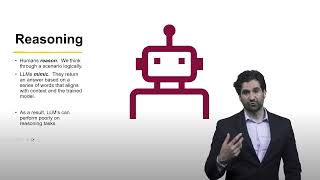
Prompt Engineering for Neuro-Symbolic AI - Part 2
Dive into advanced prompt engineering techniques, exploring the intersection of symbolic methods and deep learning for more effective AI interactions and development.
LLM-augmented Autonomous Agents - Achieving Goals with One Prompt Without LangChain
Discover how to orchestrate multiple AI agents using advanced prompt engineering, enabling complex task resolution through collaborative interactions and digital twin simulations - no LangChain required.

Anthropic's Improved Contextual RAG System - Implementation Guide and Performance Analysis
Discover how to implement Anthropic's improved RAG system with contextual retrieval, featuring cBM25, prompt caching, and reranking techniques - applicable across all LLM platforms for enhanced performance.
Understanding Meta AI's Segment Anything Model (SAM) - Architecture, Data Engine, and Results
Dive into Meta AI's Segment Anything Model (SAM), exploring its architecture, innovative data engine, and zero-shot transfer learning capabilities for advanced image segmentation tasks.
How to Create an Effective Prompt - A No-Code Guide for Custom LLM Applications
Learn to craft effective AI prompts tailored to your needs with a practical, template-free approach that works across different LLM platforms and specific use cases.
Agent-based Mixture of Experts and LLM-augmented Autonomous Agents - A Tutorial on Dynamic Expert Generation
Discover how to create specialized AI expert agents through dynamic prompting, enabling tailored solutions for complex tasks from code generation to artistic design using LLM-augmented systems.