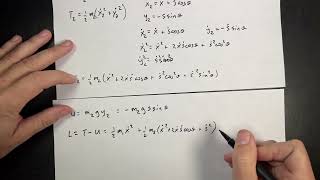
Lagrangian Mechanics - Block on a Movable Wedge
Solve a complex physics problem using Lagrangian mechanics to analyze the motion of a frictionless mass on a movable wedge.
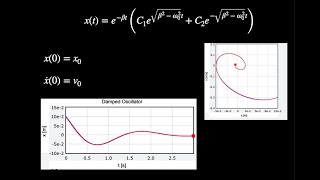
Plotting Damped Harmonic Oscillator with Initial Conditions
Explore damped harmonic oscillator plots with initial conditions, covering over-damped and under-damped scenarios. Gain insights into position vs. time and phase space representations.
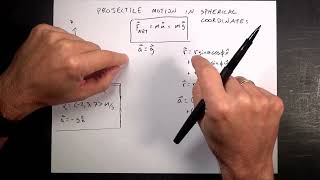
Projectile Motion in Spherical Coordinates - Just Because It's Fun
Derive and model projectile motion using spherical coordinates, exploring acceleration vectors and implementing Python code for accurate simulations.
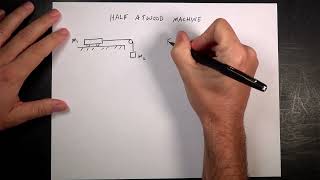
Center of Mass and the Half Atwood Machine
Explore the center of mass in a half Atwood machine, correcting common misconceptions and analyzing system motion using Python.
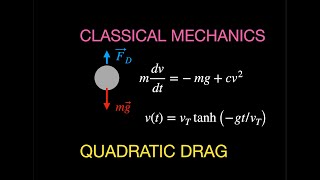
Classical Mechanics: Falling Object with Quadratic Drag
Explore falling objects with quadratic drag in classical mechanics, including velocity analysis and Python code implementation.
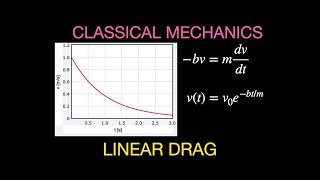
Classical Mechanics: Linear Drag without the Gravitational Force
Derive motion equations for objects with velocity-proportional drag, excluding gravity. Includes numerical modeling and Python code for practical application.
Classical Mechanics: Pulling a Block with Friction - Angle for Max Acceleration
Discover the optimal angle for maximum acceleration when pulling a sled, using physics principles and Python code to solve this real-world problem.
Python Physics: Understanding and Calculating Moment of Inertia
Explore the concept of moment of inertia in physics, using Python to calculate it for a disk through Monte Carlo simulation and plausibility arguments.

Calculating the Moment of Inertia for a Rod
Learn to calculate the moment of inertia for a rod, exploring rotations about different points and using Python for numerical calculations.
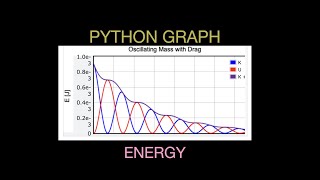
Energy Graphs for a Damped Harmonic Oscillator
Explore energy graphs of damped harmonic oscillators using Python, covering forces, momentum, motion modeling, and different types of drag.
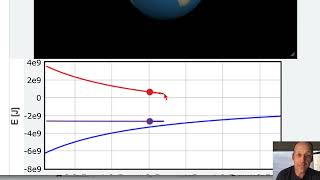
Escape Velocity with Energy Plots
Explore escape velocity through energy plots, analyzing kinetic, potential, and total energy in gravitational systems.
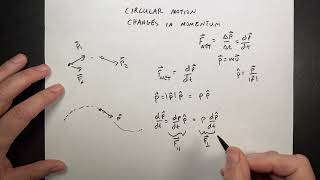
Forces and Momentum - Change in Directions and Circular Motion
Explore forces and momentum in circular motion through derivations and Python examples.
Physics Fundamentals: Trigonometry, Calculus, and Python Prerequisites
Explore essential prerequisites for physics, including trigonometry, calculus, and Python, in preparation for advanced studies using Matter and Interactions textbook.
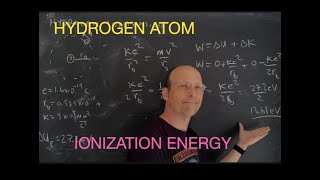
Calculating the Ionization Energy for Hydrogen with the Bohr Model
Explore the Bohr model to calculate hydrogen's ionization energy, using Python for numerical calculations and referencing OpenStax's College Physics.
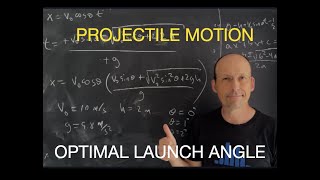
Projectile Motion: Finding the Optimal Launch Angle
Explore projectile motion and determine the optimal launch angle for maximum range using Python simulations and physics principles.
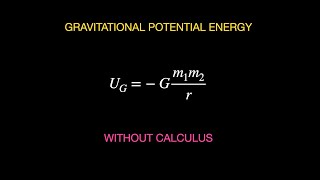
Universal Gravitational Potential Energy Without Calculus
Explore gravitational potential energy through numerical calculations in Python, avoiding calculus for a practical understanding of universal gravitation.
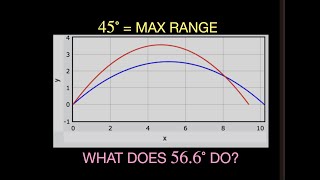
Projectile Motion: Optimal Launch Angle for Maximum Distance - 56.6 Degrees
Explore the optimal launch angle for maximum projectile distance, analyzing the significance of 56.6 degrees through mathematical modeling and Python simulation.
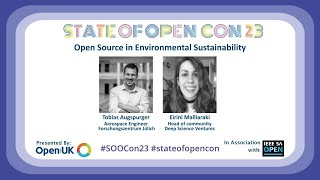
Open Source in Environmental Sustainability
Explore open source's role in environmental sustainability with insights from industry experts on innovative approaches and collaborative solutions.
Honda's AOSP-Based In-Vehicle Infotainment System Development - A Case Study
Explore Honda's journey in developing an AOSP-based in-vehicle infotainment system, from team formation to launch, highlighting key challenges and solutions using open-source software.
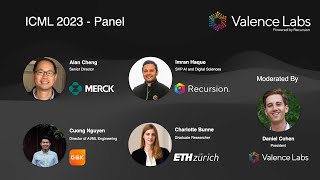
Fostering the Development of Impactful AI Models in Drug Discovery - ICML 2023 Panel
Explore challenges and solutions in bridging academic AI research with real-world drug discovery applications through expert panel insights on benchmarking, data sharing, and industry-academia collaboration.
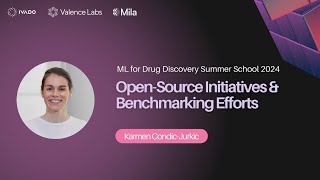
Open-Source Initiatives and Benchmarking Efforts in Machine Learning for Drug Discovery - Day 5
Explore open-source initiatives and benchmarking efforts in machine learning for drug discovery with Karmen Condic-Jurkic from Valence Labs.