Quantum Mechanics and Quantum Field Theory from Algebraic and Geometric Perspectives - Lecture 2
Explore alternative viewpoints to quantum mechanics, including algebraic and geometric approaches. Examine observables, states, and scattering concepts without relying on traditional textbook methods.
Quantum Mechanics and Quantum Field Theory from Algebraic and Geometric Perspectives - Part 1
Explore alternative viewpoints on quantum mechanics, including algebraic and geometric approaches. Gain insights into particle concepts, scattering, and L-functionals for solving infrared problems in quantum electrodynamics.
Waves, Disorder and Interactions: A Physicist's Perspective
Explore Anderson localization and its implications for interacting quantum particles in random potentials. Gain insights into wave equations, quantum phenomena, and challenges in physics research.
Categorified Crystal Bases on Localized Quantum Coordinate Rings
Explore categorified crystal bases on localized quantum coordinate rings, focusing on monoidal categories, quiver Hecke algebras, and crystal structures in quantum algebra.

Unlocking Software-Defined Vehicles - A Deep Dive into Automotive Software
Explore challenges and solutions for secure automotive software integration, featuring insights from Canonical and Elektrobit's partnership on SDV development.
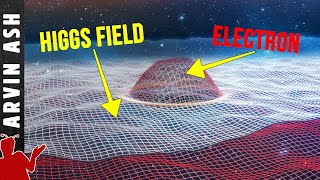
The Crazy Mass-Giving Mechanism of the Higgs Field Simplified
Explore the Higgs field's role in giving mass to particles, how it interacts with other fields, and its crucial importance for the existence of our universe.

Why Changing One Proton Changes an Element - Atomic Structure and Chemistry
Explore how a single proton change drastically alters an element's properties, delving into electron configurations, atomic structure, and the fundamental principles of chemistry and quantum mechanics.
The Non-perturbative Hilbert Space of JT Gravity
Explore non-perturbative aspects of JT gravity's Hilbert space in this advanced theoretical physics lecture, delving into quantum information and gravity connections.
York Slicing in JT Gravity
Explores York slicing in JT gravity, examining its implications for quantum information and spacetime emergence in the context of AdS/CFT correspondence and holography.
Localization of Quantum Information in Gravity - Lecture 3
Explores quantum information localization in gravity, focusing on AdS/CFT correspondence and its implications for spacetime emergence, black hole physics, and quantum field theories.
Localization of Quantum Information in Gravity - Lecture 2
Explores quantum information localization in gravity, focusing on AdS/CFT correspondence and its implications for spacetime emergence, black hole physics, and quantum field theories.
New Features in Q-Chem 6 - 2023 Virtual Winter School in Computational Chemistry
Explore the latest advancements in computational chemistry software with insights on Q-Chem 6.0 and upcoming features in version 6.1, enhancing your research capabilities.
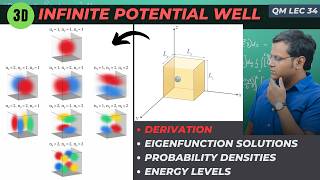
Particle in a 3D Box - Quantum Mechanics Fundamentals
Explore quantum mechanics through the particle in a 3D box problem. Learn about wavefunctions, energy quantization, and their implications for understanding atomic and molecular systems.
Applying AI to HEC-RAS Modeling Workflows
Explore AI-powered coding for HEC-RAS workflows, including terrain modifications, custom data exports, and GIS scripts. Learn to leverage ChatGPT's code interpreter for efficient hydraulic modeling tasks.
A Fast and Flexible CFD Solver with Heterogeneous Execution - JuliaCon 2024
Explore WaterLily.jl: a fast, flexible CFD solver for CPUs and GPUs. Learn about its meta-programming approach, performance, and potential for ML integration and differentiability.
Localization and Resummation in 2d Yang-Mills Theory
Explore advanced mathematical techniques in quantum field theory, focusing on localization and resummation methods applied to two-dimensional Yang-Mills theory.

Something from Nothing: Pair Production and Pair Annihilation
Explore pair production and annihilation, fascinating quantum phenomena showcasing mass-energy conversion. Gain insights into particle-antiparticle interactions and their implications for physics.
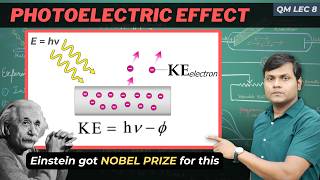
The Photoelectric Effect - Dual Nature of Light and Photons
Explore the photoelectric effect's role in quantum mechanics, its experimental observations, and Einstein's groundbreaking theory, revealing light's dual nature as waves and particles.
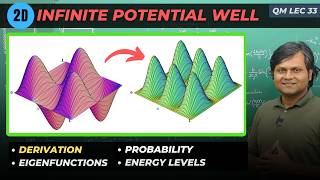
Particle in a 2D Box - Infinite Potential Well
Explore quantum mechanics through the 2D particle in a box problem, covering Schrödinger equation, wavefunctions, energy levels, and applications in nanoscale structures.
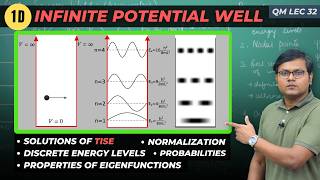
Particle in a 1D Box - Infinite Potential Well Problem in Quantum Mechanics
Comprehensive exploration of the Infinite Potential Well problem in quantum mechanics, covering wavefunctions, energy levels, and probability distributions for particles in a 1D box.

Free Particle in Quantum Mechanics
Explore free particle behavior in quantum mechanics, from plane waves to wave packets. Learn about normalization, localization, and the probabilistic nature of quantum systems.