Double Pendulum Simulation: Coding and Energy Conservation - Part 5
Explore double pendulum physics through coding, focusing on energy conservation and chaotic motion. Skip algebra for practical implementation in VPython.
Pendulum Dynamics - Exploring Different Driving Functions
Explore pendulum behavior with different driving functions. Visualize and analyze changes in motion using Python simulations, including kick, sawtooth, and step functions.
Pendulum Dynamics in Phase Space - Damped Driven Pendulum Simulation
Explore damped driven pendulum behavior through phase space plots, with coding examples in VPython to visualize complex motion and periodic forces.
Pendulum Simulation - Breaking Simple Harmonic Motion
Explore pendulum motion beyond simple harmonic approximations through coding, visualizing how small angle assumptions break down as amplitude increases.
Wave Function Evolver: Lennard-Jones Simulation Analysis - Episode 10
Explore Lennard-Jones simulation behavior by modifying potential energy minimum locations. Augment code to analyze changes and generate insights for physics enthusiasts and programmers.
Gravity Simulator - Double-Planet System - Episode 3
Explore double-planet and trinary star systems using a gravity simulator. Learn to code physics simulations and visualize complex celestial interactions in VPython.
Gravity Simulator: Binary Star System - Episode 2
Explore gravitational interactions in binary star systems using a simulator. Learn about energy calculations, angular momentum, and the fascinating patterns of orbital motion.
Gravity Simulator - Sun and Earth Orbital Motion - Episode 1
Explore gravitational motion simulation using VPython, focusing on Sun-Earth dynamics. Learn about Euler-Cromer method, indices tracking, and Earth's scale in space.
Bouncy Balls Simulation - Temperature and Pressure Calculations - Episode 5
Explore temperature, pressure, and the Ideal Gas Law through bouncy ball simulations using VPython. Calculate and visualize ensemble properties in this engaging physics coding tutorial.
Bouncy Balls Collision Math - Episode 3
Explore elastic collision math for bouncy balls, covering conservation of momentum, parallel axis, and unit vectors. Practical application in coding physics simulations.
Potential from Boundary Conditions - Computational Electromagnetism
Learn to solve Poisson's equation using finite differences, applying computational techniques to find electric potentials from boundary conditions in electromagnetism problems.
Projectile Motion in Football Field Goals - Lecture 7
Explore projectile motion through football field goals, analyzing angles and speeds to understand the physics behind successful kicks.
Stationary States and the Shooting Method in Quantum Mechanics
Explore stationary states in quantum mechanics using computational modeling and the shooting method to solve the Schrödinger equation.
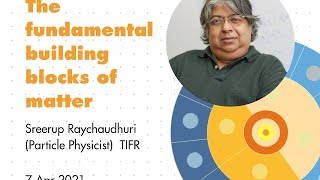
Fundamental Building Blocks of Matter - Developing the Standard Model
Explore the evolution of particle physics from the electron's discovery to the Higgs boson, tracing the development of the Standard Model and its implications for our understanding of the universe.
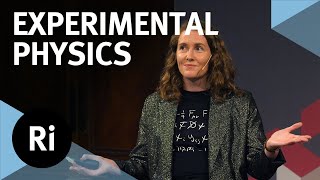
Physics Experiments That Changed the World – With Suzie Sheehy
Explore groundbreaking physics experiments that shaped our world, from X-rays to cosmic rays, through engaging stories and demonstrations. Discover the scientists behind these revolutionary discoveries and their lasting impact.
The Basics of Inborn Errors of Metabolism - A Clinical and Diagnostic Perspective
Explore inborn errors of metabolism, covering biochemical genetics, metabolic pathways, disorders, testing, inheritance, and specific conditions like phenylketonuria and fatty acid oxidation disorders.
Hydrodynamic Scale for Integrable Classical Many-Body Systems - Herbert Spohn
Explores hydrodynamic scale in integrable classical many-body systems, covering generalized free energy, CMV matrices, and operator image. Offers insights into non-equilibrium physics and universality classes.
Modelling Aggregation and Fragmentation Phenomena Using the Smoluchowski Equation by Argya Dutta
Explore aggregation and fragmentation phenomena modeling using the Smoluchowski equation in this advanced theoretical physics lecture by Argya Dutta.
Quantum Thermalization and Many-Body Anderson Localization by David Huse
Explore quantum thermalization and many-body Anderson localization in this advanced discussion on nonequilibrium statistical physics, focusing on transport, fluctuations, and localization phenomena.
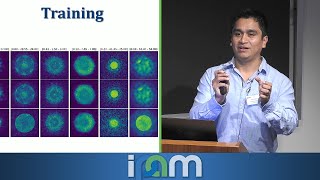
Application of Machine Learning to Electron Microscopy Data - IPAM at UCLA
Explore machine learning applications in electron microscopy, focusing on data modeling and neural networks for distortion compensation in experimental datasets.

Metabolism - Lipoprotein Metabolism - Chylomicrons, VLDL, IDL, LDL, & HDL
Comprehensive exploration of lipoprotein metabolism, covering chylomicrons, VLDL, IDL, LDL, and HDL. Examines exogenous and endogenous pathways, reverse cholesterol transport, and normal serum cholesterol levels.