Proactive Supply Chain Security with GUAC
Explore GUAC, a tool for proactive software supply chain security. Learn about its features, recent release, roadmap, and how to contribute to this OpenSSF project.
Community Engagement and Security Initiatives: Examples from Python and Rust
Explore Python and Rust Foundations' security initiatives, focusing on community engagement, consensus building, transparent communication, and addressing pushback for better open-source security practices.
Navigating the Intersection: AI's Role in Shaping the Secure Open Source Software Ecosystem
Explore AI's impact on open-source software security, covering OSS in AI systems, open-sourcing AI components, AI-driven security automation, and AI's evolving role in OSS development.
API Security: Code-to-Cloud Context for Complete Protection
Comprehensive approach to API security, covering code-level inventorying and runtime protection. Learn to mitigate issues faster and improve organizational API security posture efficiently.
Using Large Language Models to Improve Data Loss Prevention in Organizations
Explore how large language models enhance data loss prevention by enabling full-text analysis and document categorization, improving sensitive information detection beyond pattern-based matching.
Security as a Culture: The Distributed Advocacy Approach
Explore distributed advocacy in cybersecurity, integrating security into development processes. Learn how to foster collaboration between security advocates and developers for enhanced system protection.
Leveraging the Linux Kernel for Building a Zero-Trust Environment Without a Service Mesh
Explore an innovative approach to zero-trust security using a Linux kernel module for mTLS and access control, avoiding service mesh complexities while maintaining strong workload identities and traffic encryption.
CVE Context Matters - Prioritizing Vulnerabilities in Cloud-Native Projects
Explore vulnerability scanning in cloud-native projects, learn to prioritize vulnerabilities, and implement effective scanners. Gain insights on assessing relevance and improving daily workflows.
Evasive Maneuvers - Strategies to Overcome Runtime Detection Tools
Explore innovative evasion strategies against runtime detection tools, from obfuscation to behavioral camouflage. Gain insights into evolving threat actor tactics and the importance of adaptive security measures.
Future Open Source LLM Kill Chains - Security Risks and Mitigation Strategies
Explore potential security risks in open-source AI ecosystems, focusing on LLM vulnerabilities and kill chains. Learn mitigation strategies to protect against sophisticated adversaries in the evolving AI landscape.
Sigstore: Past, Present and Future Directions
Explore Sigstore's journey, impact on OSS code signing, and future plans. Learn about its adoption by major projects and integration efforts with package managers.
Championing Security - Scaling Security at Every Level
Explore the concept of Security Champions to address enterprise security challenges. Learn best practices for implementing a program that empowers team members to promote and integrate security across the organization.

Invisible Infiltration of AI Supply Chains: Protective Measures from Adversarial Actors
Explore protective measures against adversarial actors infiltrating AI supply chains. Learn to secure data, models, and pipelines, implement security controls, and mitigate risks in AI systems.

Maximizing Benefits of Neurodiversity in Software Development and Supporting Neurodivergent Developers
Explore strategies for leveraging neurodiversity in software teams, supporting neurodivergent developers, and fostering an inclusive work environment that benefits from diverse perspectives.
GRC Engineering - Bringing Governance, Risk, and Compliance to Your Git Repositories
Explore innovative approaches to integrate Governance, Risk, and Compliance directly into git repositories, revolutionizing how organizations handle compliance and security challenges.
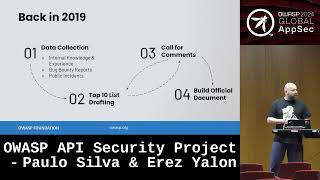
OWASP API Security Project
Explore OWASP's API Security Project, focusing on best practices, common vulnerabilities, and strategies to enhance API protection in modern applications.
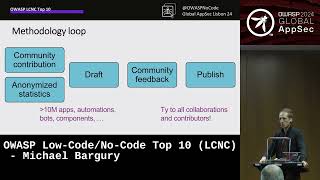
OWASP Low-Code/No-Code Top 10 - LCNC Security Risks
Explore the top 10 security risks in low-code/no-code platforms with expert Michael Bargury, gaining insights to protect your applications and data in this rapidly evolving landscape.
OWASP Coraza Web Application Firewalls Revisited
Explore OWASP Coraza's advanced features for securing web applications, including its architecture, rule language, and integration capabilities with popular web servers and frameworks.
OWASP Cornucopia - Introduction to Application Security Card Game
Explore OWASP Cornucopia, a card game designed to help software developers identify security requirements in web applications, with expert insights from Johan Sydseter.
OWASP DefectDojo - Introduction and Overview
Learn about DefectDojo, an open-source application vulnerability management tool. Discover its features for streamlining security testing workflows and enhancing vulnerability tracking and remediation processes.
Automating Security Test Cases Based on ASVS
Learn to automate security test cases using ASVS, enhancing your application's vulnerability assessment and overall security posture.