Secure by Design: Insights and Pitfalls
Explore secure software design principles, their benefits, and potential pitfalls. Learn from real-world examples and gain insights on crafting more secure code through thoughtful design choices.
Using DevOps Practices to Implement a Full Route-to-Live for SIEM Platforms
Explore DevOps practices for implementing full route-to-live in SIEM platforms. Learn about threat detection, adaptive hunting, and version control for enhanced cybersecurity.
Network Security in the Age of the Third Platform – Stephen Hampton, Hutchinson Networks
Explore security challenges in the Third Platform era, covering firewalls, DDoS attacks, and cloud computing. Learn strategies to protect networks in evolving technological landscapes.
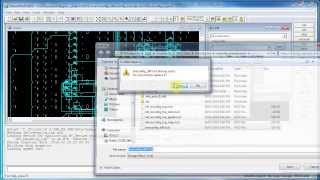
PLIP- Partial Reconfiguration of Spartan 6 FPGA
Learn to implement partial reconfiguration on Spartan 6 FPGAs using practical examples and Python scripts. Covers setup, FPGA Editor, output blocks, and DCM configurations.
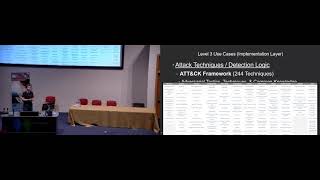
Use Case Management at Scale - Harry McLaren, ECS Security
Explore scalable use case management in cybersecurity, covering frameworks, metrics, implementation layers, and standardization for effective threat detection and response.
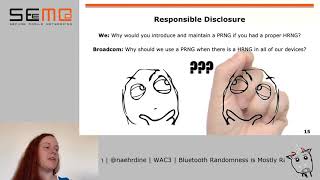
Firmware Insider- Bluetooth Randomness is Mostly Random
Explore Bluetooth randomness, RNG variants, and security implications in firmware. Insights on PRNG, cloud data, MITM attacks, and recent patches for cryptographic enthusiasts.
Side-Channel Attacks
Explore side-channel attacks, including Spectre, timing attacks, and countermeasures. Learn about developer knowledge, resistance techniques, and future directions in cybersecurity.

Training and Deploying AI for Industrial Robotics - Unite Now 2020
Explore AI training for industrial robotics using Unity, featuring domain randomization and insights on shaping the future of robotics from industry experts.

Dynamic Robot Manipulation - Learned Optimization, Deformable Materials, and the Cloud
Explore dynamic robot manipulation through integrated planning, deep learning, and cloud computing for high-speed, reliable motions in unstructured environments.
Towards Generalization of Precise Robot Skills - Accurate Pick-and-Place of Novel Objects
Explore precise robotic generalization for pick-and-place tasks using simulation-learned models. Discover how visuo-tactile sensing enables accurate object manipulation and placement with sub-millimeter precision for novel items.
Adaptive Filters
Explore digital adaptive filters, their algorithms, and applications in noise removal, echo cancellation, and signal processing, with Matlab demonstrations and real-world examples.
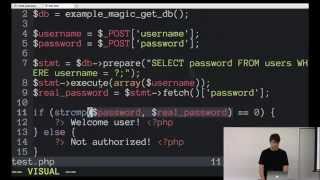
Input Sanitization - Peter Faiman
Learn essential techniques for validating user input, protecting against common vulnerabilities, and developing a security-focused mindset to safeguard your applications from malicious or unintended user actions.
Heartbleed - Jared Shumway
Explore the Heartbleed vulnerability, its impact on major sites, and the lessons learned for better cybersecurity practices and code auditing.
Spooky Botnets - Steven Fosmark
Explore the eerie world of botnets, their rising prevalence, and learn essential strategies to safeguard your devices from these digital threats.
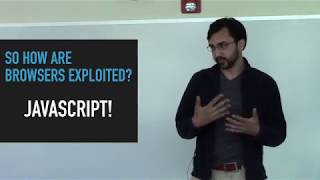
Browser Exploitation - Max Zinkus
Explore JavaScript-based browser exploitation techniques, including XSS, JIT compilation vulnerabilities, and shellcode execution. Learn about browser security measures and how to find and chain exploits.

Mobile Security - Jasper Kahn
Explore mobile security history, vulnerabilities, and legal aspects of rooting devices. Learn about exploits, fake app stores, and critical bugs affecting Android and iOS.
FPGA Glitching & Side Channel Attacks
Explore side channel analysis and fault injection attacks on modern systems using low-cost hardware like FPGAs. Learn about powerful techniques once reserved for governments and researchers.
Reverse Engineering with Ghidra
Dive deep into assembly language concepts for reverse engineering, covering control flow, loops, variables, functions, and memory management using the Ghidra software suite.
Code Forensics - Analyzing High-Level Languages and Compilers
Explore code forensics techniques for analyzing high-level languages, compilers, and architectures. Learn debugging and tracing methods to uncover hidden software behaviors and vulnerabilities.
E-Security - Introduction and Cipher Fundamentals
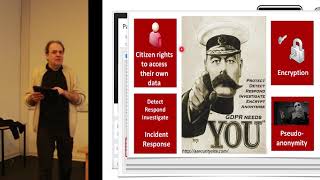
Explore e-security fundamentals, covering topics like GDPR, signatures, tokens, and public keys. Gain insights into real-world cases and practical applications in cybersecurity.
Web Attacks
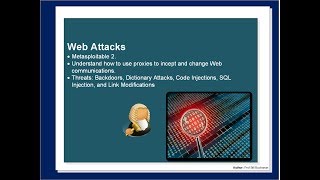
Explore common web vulnerabilities and attack methods, including discovery techniques, backdoors, weak passwords, and injection attacks, to enhance your cybersecurity knowledge.