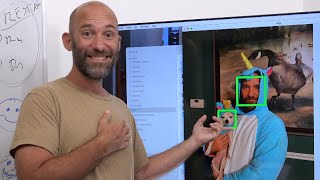
Python - OpenCV for Computer Vision
Learn to use OpenCV with Python for computer vision tasks. Process images and live video, create bounding boxes, and trigger events based on real-time input. Run locally for privacy on various systems.
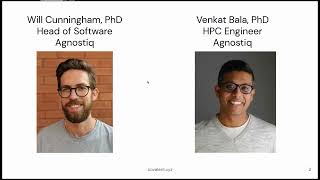
Research Ops - Challenges and Practical Solutions for Distributed Scientific Computing
Explore challenges and practical solutions for distributed scientific computing in research operations, focusing on advanced cyberinfrastructure.
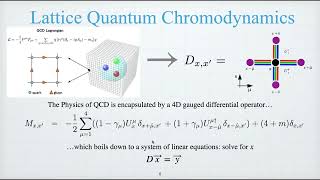
GPU Computing and Krylov Solvers
Explore GPU computing and Krylov solvers for advanced numerical computations, enhancing problem-solving skills in high-performance computing environments.
QCD Spectroscopy 2023 - Part 1 of 2
Explore quantum chromodynamics spectroscopy, delving into the study of hadron properties and interactions through advanced theoretical and computational methods.
Investing in Code Reviews for Better Research Software
Explore code review benefits for scientific software: improved quality, teamwork, and knowledge transfer. Learn approaches to facilitate effective reviews.
Writing Clean Scientific Software
Learn strategies for writing readable, reusable, and maintainable scientific code. Master techniques for creating concise functions, restructuring complex code, and effective commenting.

Infrastructure for High-Fidelity Testing in HPC Facilities
Explore infrastructure and tools for high-fidelity testing in HPC environments, focusing on hardening software for DOE's Exascale Computing Project and future applications.
Secure Software Programming Practices and Development for Scientific Software
Explore secure software development practices to mitigate malicious attacks and protect scientific software integrity, authentication, and sustainability.
Socially Responsible Software Development - Teaching Software Design Systematically
Explore socially responsible software development and its importance in education. Learn strategies for creating curricula that emphasize software as a message to future developers.

Design is Testability - Understanding Software Testing Through Design Principles
Explore software design's impact on testability, linking design concepts to testing strategies for effective automated testing in continuous integration systems.
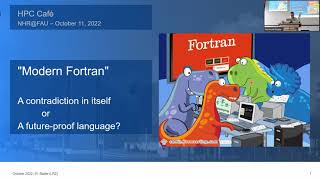
Modern Fortran - A Contradiction or Future-Proof Language?
Explore modern Fortran's evolution, focusing on program design, parallelism, and interoperability. Discover how this 65-year-old language remains relevant for scientific simulations.
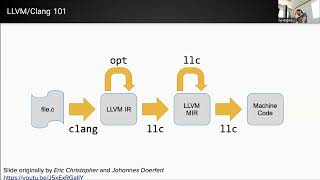
LLVM in HPC - Enabling Performance Portability, Interoperability, and Novel Features - Part 1
Explore LLVM's impact on HPC, covering portable CUDA, debugging at scale, GPU execution of legacy code, and ML in compilers. Learn about efforts to enhance performance, tooling, and development in HPC.
Conflict Resolution for Open Source Teams
Develop conflict resolution skills for open source teams. Learn strategies to address various conflict types, analyze real-world examples, and foster team prosperity.

Game Programming: Introduction to Entity Component System (ECS) - Lecture 5
Explore Entity Component System architecture for game development, enhancing performance and flexibility in C++ game programming.
Introduction to Artificial Intelligence - Hash Functions - Lecture 7
Explore hash functions in AI, covering algorithmic techniques and data structures for modern problem-solving in simple games.
Game Programming: Assignment 3 Overview and Implementation - Lecture 11
Explore game programming fundamentals, including vector math, rendering, AI, physics, and UI. Learn to build functional games using ECS architecture, C++, and SFML graphics library.
Game Programming Course Project Information - Lecture 14
Develop a game project with required features, scenes, and mechanics. Create a level editor, assets, and trailer. Submit proposal, demo, and report video. Work effectively in groups.
Introduction to Artificial Intelligence: Genetic Algorithms for Sudoku - Lecture 12
Explore genetic algorithms for Sudoku solving. Learn about fitness functions, population dynamics, mutation rates, and algorithm implementation in this comprehensive AI lecture.

Game Programming: Saving Progress, Game Tools, and Drag & Drop - Lecture 16
Explore game programming essentials: saving progress, game tools, and drag & drop functionality. Learn practical techniques for enhancing player experience and streamlining development.
Game Programming: C++ Visual Code Profiling - Lecture 20
Explore C++ game programming profiling techniques, including Singletons, event-based, statistical, and instrumentation profilers. Learn to implement a Profiler class and use macros for efficient code timing and analysis.
Video Game AI - Course Introduction - Lecture 1
Explore AI techniques for video games, including movement, search, planning, decision-making, and procedural content generation. Implement assignments in C++ with SFML.