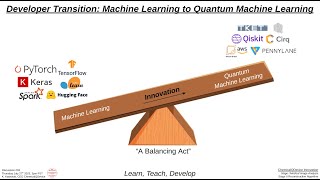
Developer Transition: Machine Learning to Quantum Machine Learning
Explore quantum machine learning frameworks, tools, and resources to transition from classical ML. Gain insights into QML algorithms, simulators, and future developments in the field.
Python PyTorch Quantum ML Ports and Models for Potential Medical Use
Explore quantum machine learning models using Python and PyTorch for medical applications. Learn to build and implement ports tailored for healthcare advancements.
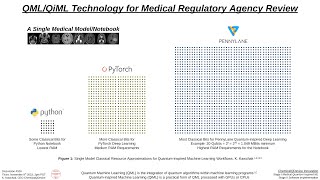
QML/QiML Technology for Medical Regulatory Agency Review - November 9, 2023
Explore QML/QiML technology for medical regulatory review, covering key organizations, fundamental areas, and specific medical research applications. Gain insights into FDA guidelines and next steps.
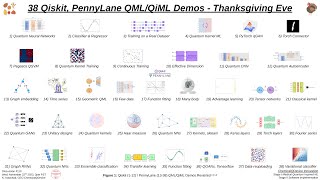
Qiskit, PennyLane QML, and QiML Demos - Thanksgiving Eve
Explore Qiskit and PennyLane QML/QiML demos to improve runtimes, losses, and accuracies. Learn quantum computational building blocks and differentiable programming for medical R&D applications.
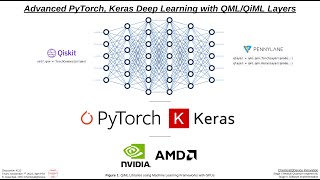
Advanced PyTorch and TensorFlow Deep Learning with QML and QiML Layers
Incorporate quantum algorithms into machine learning frameworks using PyTorch and Keras. Learn benchmarking, strategic layer insertion, and explore potential applications with quantum layers.
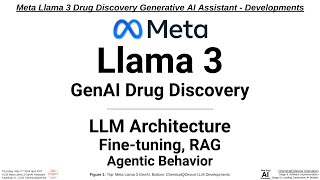
Meta Llama 3 for Drug Discovery - Generative AI Assistant Developments
Explore advanced techniques for modifying Meta Llama 3 for drug discovery, including fine-tuning, RAG implementation, and agentic behavior enhancement for improved accuracy and capabilities.
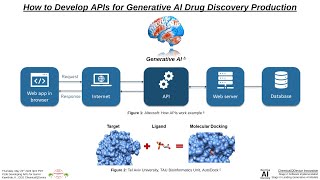
How to Develop APIs for Generative AI Drug Discovery Production
Explore platforms for creating APIs from Large Language Models to enhance drug discovery workflows. Learn to increase efficiency, reduce errors, and lower costs through synchronization and automation.
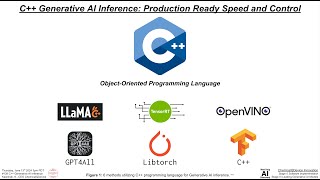
C++ Generative AI Inference - Production Ready Speed and Control
Optimize C++ for generative AI inference, enhancing speed and control. Explore techniques to boost performance and gain precise command over AI model execution in production environments.
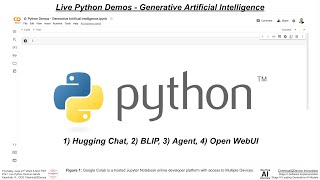
Live Python Demos - Generative Artificial Intelligence
Explore local hosting of generative AI models, comparing LLMs and LMMs for image processing, code generation, and multimodal tasks using various platforms and tools.
Torch.fx Explained - Accelerating ML Code with PyTorch
Explore PyTorch's torch.fx toolkit for accelerating ML code through symbolic tracing, program manipulation, and optimization of neural network modules.

Deep Dive: Formatting and Best Coding Practices in Python - Tutorial 21
Master Python coding best practices for clean, efficient, and maintainable machine learning solutions using Ivy. Learn essential principles for variables, functions, classes, and conventions.

Complex Agentic RAG Systems - Overcoming Limitations of Traditional RAG
Explore advanced agentic RAG systems with expert Atita Arora, overcoming traditional limitations and revolutionizing information retrieval for AI and machine learning applications.
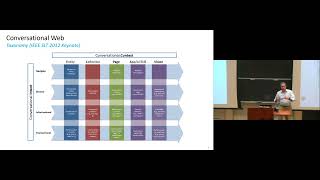
Improving Conversational Interactions through Visually Situated Context
Explore how visual context enhances conversational AI accuracy. Learn about augmentation strategies, grounding techniques, and recent advancements in language models for more effective human-machine interactions.

Text Geolocation and Dating: Light-Weight Language Grounding - 2012
Explore geolocation and dating of texts to identify latitude-longitude pairs and time periods related to documents. Learn about computational models of word meaning beyond standard word vectors.
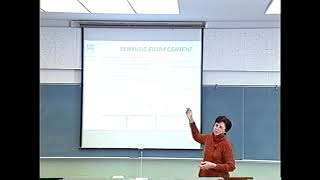
Semantic Lexicons and Semantic Tagging: Towards Content Interoperability
Explore large-scale language resources, computational lexicons, and semantic tagging for content interoperability. Learn about European initiatives, challenges, and future paradigms in language technology.
Declarative Programming via a Relational Algebra - PhD Defense
Explore declarative programming through relational algebra in this PhD defense presentation, delving into advanced concepts and research findings.
OLMo: Accelerating the Science of Open Language Models
Explore OLMo, an open-source language model initiative, and its impact on accelerating research in natural language processing and machine learning.
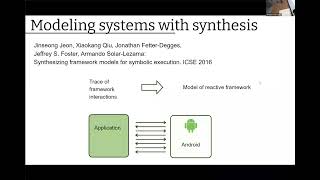
Better Learning Through Programming Languages: Neurosymbolic Synthesis and Learning
Explore program synthesis evolution as a learning tool, from early data-driven models to modern neurosymbolic algorithms.
Mastering the Big Screen - React Native for TV Development
Explore React Native for TV app development, covering design, essential features, code sharing, and performance optimization techniques for the unique TV app ecosystem.
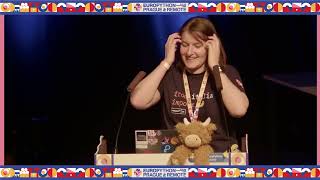
Lightning Talks - EuroPython 2024
Explore diverse Python topics in rapid-fire talks, from matrix arithmetic and 3D modeling to garbage collection and presentation skills. Gain insights from experts in this engaging lightning talk session.
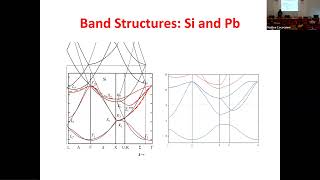
Maximally Localized Wannier Functions: Theory and Recent Developments - Lecture 1.4
Explore maximally localized Wannier functions, their theoretical foundations, and latest advancements in quantum materials research.