
ELECTRONizing MacOS Privacy - A New Weapon in Red Teaming Armory
Discover how to bypass MacOS privacy controls through Electron apps, exploring TCC vulnerabilities and gaining insights into red teaming techniques for enhanced security testing and defense strategies.

Clocks Have Ears - Timing and Browser-Based Local Network Port Scanner
Discover how browser-based timing attacks can be used for local network port scanning, exploring innovative security techniques and network vulnerability assessment methods.
Exploiting Security Vulnerabilities in Microhard Radio Equipment
Uncover critical security vulnerabilities in Microhard's radio equipment, including command injections and buffer overflows, while exploring implications for SCADA and utility systems.
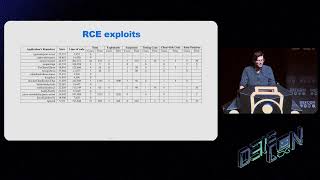
Prototype Pollution Leading to Remote Code Execution in NodeJS
Delve into prototype pollution vulnerabilities in Node.js, exploring how they enable remote code execution, analyzing real-world exploits, and understanding recent security mitigations.

HL7Magic: Medical Data Hacking and Security Testing Tool
Discover how to intercept and analyze HL7 medical device communications using HL7Magic, a new security testing tool designed to identify vulnerabilities in healthcare data transmission systems.
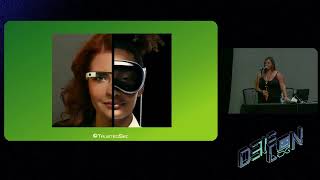
Augmented Reality and Implications on Mobile Security
Explore critical privacy and security challenges in augmented reality technology, focusing on mobile device vulnerabilities and protective measures for AR applications.

Ghost On The Wire
Explore cutting-edge virtual reality security concepts and challenges through expert insights from DEF CON 31's DCGVR Village presentation on digital vulnerabilities.
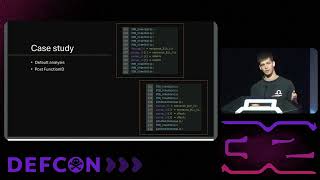
No Symbols When Reversing? No Problem - Bring Your Own Symbols for Binary Analysis
Discover efficient techniques for analyzing unknown functions in binaries, focusing on portable symbol creation and management using Ghidra, with practical examples from Golang-based malware analysis.

UDSonCAN Attacks - Discovering Safety Critical Risks by Fuzzing
Explore critical vehicle security vulnerabilities through UDSonCAN fuzzing techniques, revealing potential safety risks in diagnostic systems and their essential countermeasures for modern electric vehicles.

Travel Better: Expedient Digital Defense for Modern Travelers
Discover essential digital defense strategies for travel, focusing on free tools and OPSEC principles to protect your online presence and personal data while maintaining security awareness.

Attacks on GenAI Data and Using Vector Encryption for Protection
Explore cutting-edge vector encryption techniques and security measures to protect GenAI data from embedding inversion attacks while enabling privacy-preserving searches over encrypted vectors.
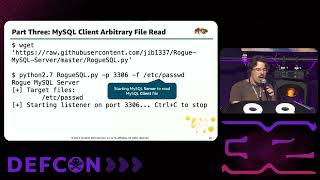
Atomic Honeypot - A MySQL Honeypot That Drops Shells
Discover how a weaponized MySQL honeypot server exploits vulnerabilities to counter-attack malicious clients, featuring innovative use of CVE-2023-21980 and CVE-2024-21096 for defensive security research.
Introduction to IPv6 - Understanding Modern Internet Protocols
Dive into the evolution of Internet protocols, from IPv4 to IPv6, understanding core networking concepts and security implications for modern infrastructure deployment.

National Labs Use of Extended Reality for Security and Training Applications
Explore how Pacific Northwest National Lab leverages XR technology for virtual twins, hazardous environment simulations, and security threat communications in national security operations.
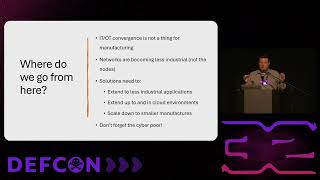
Manufacturing Cybersecurity: Lessons Learned and Taught from Ransomware Attacks
Delve into manufacturing cybersecurity challenges, focusing on ransomware threats, network vulnerabilities, and automation risks while exploring protective strategies for operational technology environments.

Solving the Lover Stalker Killer Murder Case Using Digital Forensics Tools
Delve into forensic digital investigation techniques used to solve a real murder case, exploring how basic Unix tools and Perl programming helped crack a complex cyberstalking homicide investigation.

Generating Software Bill of Materials Through Hardware Hacking - A Case Study of Bob the Minion Router
Dive into hardware hacking techniques for extracting firmware and generating Software Bill of Materials (SBOM) from a WiFi router, exploring vulnerability discovery through practical disassembly methods.
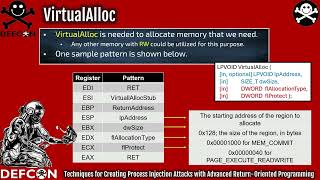
Process Injection Attacks with Return-Oriented Programming - Advanced Techniques and Methodologies
Discover advanced process injection techniques using return-oriented programming (ROP), including unique string comparison solutions, multiple WinAPI patterns, and practical methodologies for reliable implementation.

Sudos and Sudon'ts - Peering Inside Sudo for Windows
Delve into Windows security mechanisms through an analysis of Sudo for Windows, exploring process elevation, ALPC services, and Rust-Windows API interactions while uncovering potential security vulnerabilities.

Securing Frontends at Scale - Paving the Way to Post-XSS World
Discover cutting-edge strategies for defending against XSS vulnerabilities, exploring Google's proven security implementations and future-focused approaches for protecting web applications at scale.

XR Accessibility and Privacy Challenges for Disabled Users
Explore the critical intersection of XR technology, accessibility, and privacy concerns for disabled users, examining key challenges and solutions for creating inclusive virtual experiences.