Grow Your Users from an Unlikely Source - Windows Developers
Strategies for attracting Windows developers to Go, addressing cross-platform challenges, and fostering a more inclusive Go community for diverse operating systems.
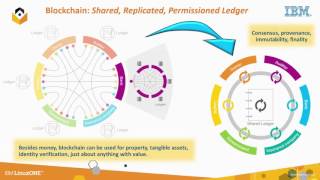
Porting Go to the IBM Z Architecture
Explore porting Go to IBM z Architecture, covering mainframe basics, blockchain applications, and the porting process. Gain insights into optimization techniques and cryptographic implementations.

Go for Mobile Games
Explore Go's potential in mobile game development, focusing on performance optimization, cross-platform compatibility, and practical implementation strategies for game creators.
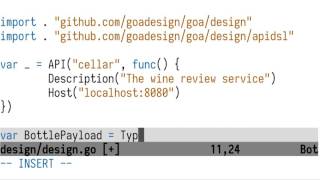
Goa - A New Approach to Microservice Development in Go
Explore goa, a novel framework for building microservices in Go. Learn its design-first approach, code generation capabilities, and how it streamlines API development and documentation.
Evolutionary Optimization with Go
Explore the process of prototyping, optimizing, and productionizing a complex distributed system using Go's standard library, profiling tools, and iterative development techniques.
Go Build Modes
Explore Go's diverse build modes beyond static binaries, including c-archive, c-shared, shared, pie, and plugin, with examples and OS-specific considerations.

Building a High-Performance Key - Value Store in Go
Explore the internals of a high-performance key/value store in Go, learning basic design principles and techniques for efficient data storage and retrieval.
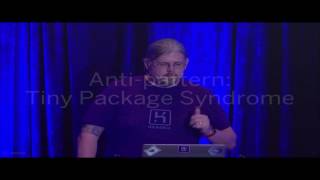
Go Anti-Patterns
Explore common Go anti-patterns, their impact on code quality, and learn effective refactoring techniques to write more idiomatic and maintainable Go code.
Go at the DARPA Cyber Grand Challenge
Explore how Go's features enabled efficient data capture and analysis during DARPA's Cyber Grand Challenge, with insights on optimization, profiling, and resilience in network traffic handling.

Runtime Generated, Typesafe, and Declarative - Pick Any Three
Explore runtime function generation, reflection, and tags in Go to create efficient, type-safe SQL layers, reducing boilerplate and enhancing code reusability.

Self Deploying Kubernetes Applications
Explore self-deploying Kubernetes applications using Go binaries, treating the world as a global-scale computer. Learn unique properties and application-centric abstractions for efficient deployment.
An Introduction to Go Tool Trace
Explore Go's execution tracer to diagnose concurrency issues, uncover latency bugs, and understand goroutine interactions for improved performance and debugging.

Operability in Go
Explore Go's standard library and runtime for improved service operations, covering instrumentation, stack inspection, and memory tracking techniques.
Writing Networking Clients in Go
Explore the high-performance NATS Go client, its APIs, and internal engine design for maximum throughput in the NATS Messaging System.
Creating a Custom Serialization Format
Explore custom serialization formats for service communication, covering motivations, implementation, and benchmarking to enhance JSON data type performance.
The Fallacies of Distributed Computing
Explore fallacies of distributed computing in Go, examining real-world systems like Kubernetes and CockroachDB to address common misconceptions and challenges.
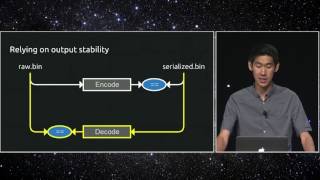
Forward Compatible Go Code
Explore strategies for writing Go code that remains compatible with future language versions, avoiding common pitfalls and ensuring long-term maintainability.

Understanding Channels
Explore the inner workings of Go channels, their operations, and how they interact with runtime systems for effective goroutine communication and concurrency patterns.

Valuable Lessons in Over-Engineering the Core of Kubernetes Kops
Explore lessons from over-engineering Kubernetes kops, discussing the journey of refactoring its core from complexity to clean, simple Go code.

Encrypting the Internet with Go
Explore TLS 1.3 implementation at Cloudflare using Go's crypto/tls, covering handshake states, API changes, interoperability testing, and performance optimizations for secure Internet encryption.

Advanced Testing with Go
Explore advanced Go testing techniques for complex, distributed systems. Learn about subtests, fixtures, golden files, networking, subprocessing, and custom frameworks to ensure robust, reliable software.