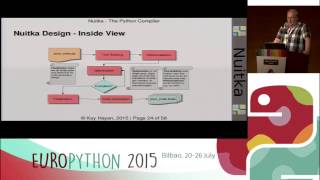
The Python Compiler
Explore Nuitka, a statically optimizing Python compiler with full language support, variable propagation, function in-lining, and a plugin framework for custom optimizations and standalone distributions.
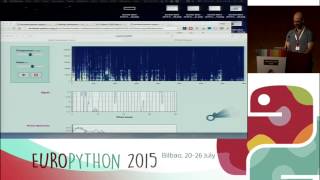
Big Data Beautiful Visualization on the Browser with Bokeh
Explore interactive data visualization using Bokeh, a Python library for creating web-based graphics. Learn its design, API layers, and powerful features through comprehensive examples.
Functional Python with Mochi
Explore functional programming in Python with Mochi, a language that compiles to Python bytecode. Learn about tail recursion, pattern matching, and other functional features to enhance your coding skills.
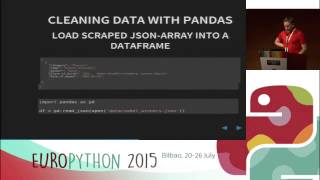
Data-Visualisation with Python and Javascript - Crafting a Data-Viz Toolchain for the Web
Explore data visualization using Python and JavaScript, from scraping and cleaning data to creating engaging web visualizations with tools like Scrapy, Pandas, Flask, and D3.js.
CityBikes - Bike Sharing Networks Around the World
Explore the evolution of CityBikes, an open API providing global bike-sharing data. Learn about its growth, challenges, and impact on urban mobility using Python and community contributions.
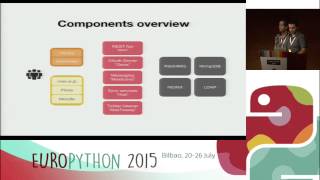
MAX - Realtime Messaging and Activity Stream Engine
Explore MAX, an open-source real-time messaging API built on Pyramid, powering a social intranet for 30,000+ users at BarcelonaTech University with high scalability and performance.
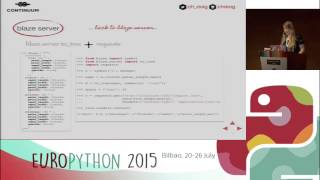
Scale Your Data, Not Your Process - Welcome to the Blaze Ecosystem
Explore the Blaze ecosystem for scaling data processing across various technologies. Learn about tools for querying, migrating, and analyzing large datasets efficiently.
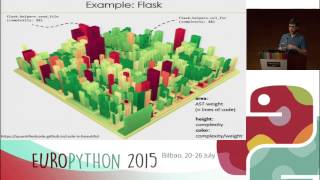
Code Is Not Text - How Graph Technologies Can Help Us to Understand Our Code Better
Explore how treating code as graphs can revolutionize software development, improving understanding, quality, and automation in large projects.
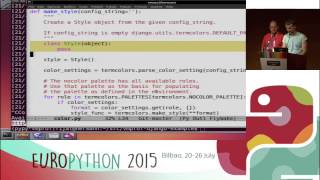
Python and PyPy Performance - Not for Dummies
Explore Python and PyPy performance optimization techniques, JIT compilation, and tools for analyzing program efficiency with expert PyPy developers Antonio Cuni and Maciej Fijalkowski.
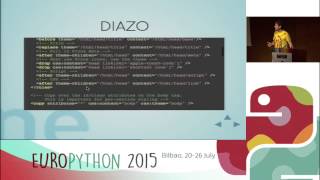
Plone 5 and How to Use Machine Learning With It
Explore integrating machine learning with Plone 5 CMS using sklearn for content classification and clustering, featuring real-world use cases and enhanced frontend development.
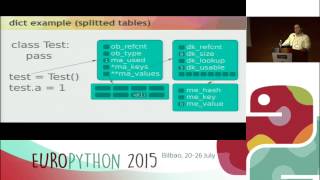
Playing with CPython Objects Internals
Explore CPython object internals, from simple to complex types. Learn to manipulate instance data using ctypes and perform unconventional operations on Python objects.
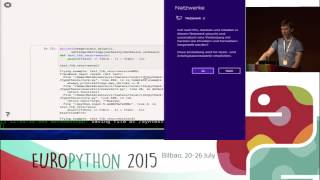
What's the Fuzz All About - Randomized Data Generation for Robust Unit Testing
Explore randomized data generation for robust unit testing using the Hypothesis library in Python, enhancing test coverage and detecting potential bugs through dynamic testing approaches.
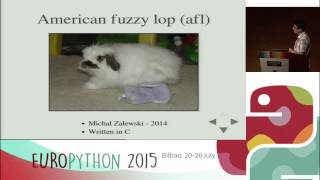
Testing with Two Failure Seeking Missiles - Fuzzing and Property Based Testing
Explore advanced testing techniques using Hypothesis for property-based testing and American fuzzy lop for fuzzing, enhancing code coverage and uncovering hidden bugs in Python applications.
Designing a Scalable and Distributed Application
Learn to design a scalable, distributed application using consul and uWSGI. Covers automatic service registration, health checking, distributed storage, and multi-datacenter awareness for global scalability.
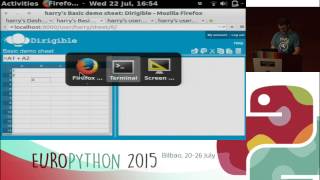
How to Build a Spreadsheet with Python
Learn to build a spreadsheet from scratch using Python, covering data representation, cell objects, formula evaluation, dependency graphs, and custom functions. Gain insights into spreadsheet mechanics.
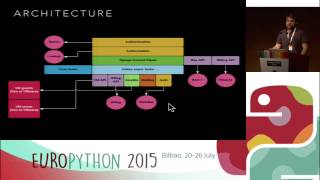
Architecture of a Cloud Hosting Service Using Python Technologies - Django, Ansible, and Celery
Explore the architecture of a cloud hosting service using Django, Ansible, and Celery. Learn about VM management, microservices integration, and University of Cambridge IT services.
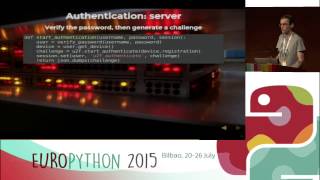
Taking the Pain Out of Passwords and Authentication
Explore modern authentication techniques, including UAF and U2F standards, to improve security and user experience. Learn integration methods for Python frameworks like Django.
Building a RESTful Real-Time Analytics System with Pyramid
Learn to build a scalable RESTful real-time analytics system using Pyramid, exploring architecture, tools, and deployment strategies for handling billions of page impressions in a Big Data context.
Eight Rules for Dumb Development
Eight rules for simplifying development, focusing on clarity and manageable complexity. Learn to write code that's easier to understand, debug, and maintain.
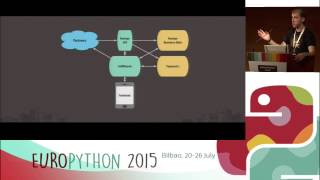
Arrested Development - Surviving the Awkward Adolescence of a Microservices-Based Application
Explore challenges and solutions in evolving microservices architecture, focusing on functional, cultural, and reliability aspects. Learn from real-world experiences and Python-specific tools for graceful growth.
Just Because You Can, Doesn't Mean You Should
Explores antipatterns in Python library design, discussing type checking, API design, resource management, and networking. Emphasizes balancing convenience with flexibility, readability, and predictability.