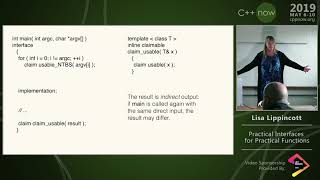
Practical Interfaces for Practical Functions
Explores practical approaches to developing formal interfaces for familiar functions in C++, drawing lessons for effective interface design and building on previous work in software architecture.
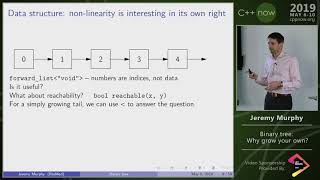
A Generic Binary Tree - Why Grow Your Own?
Explore the design and implementation of a generic binary tree for Boost.Graph, discussing trade-offs, storage options, and performance comparisons while drawing insights from classic computer science texts.
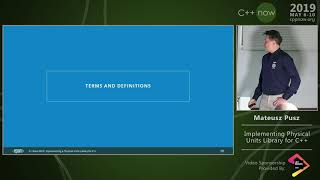
Implementing Physical Units Library for C++
Explore the design and implementation of a Physical Units Library for C++, including challenges, tradeoffs, and C++20 features that enhance usability, maintainability, and extensibility.
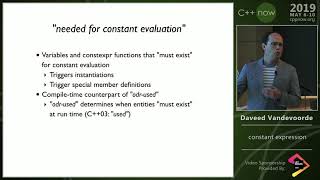
C++ Constants
Explore the evolution of constant expressions in C++, from C++11 to C++20, examining fundamental concepts and new capabilities in modern C++ with expert Daveed Vandevoorde.
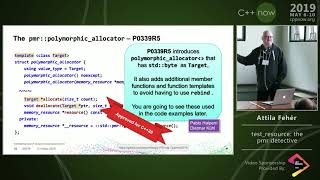
Test Resource - The PMR Detective
Explore pmr::test_resource for detecting memory allocation bugs in C++. Learn to diagnose and fix issues like leaks, overruns, and exception-safety failures using real-world examples.
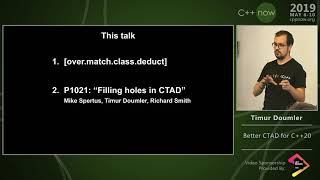
Better CTAD for C++20
Explore improvements to Class Template Argument Deduction in C++20, addressing flaws and pitfalls from C++17 for cleaner, safer, and more intuitive code.
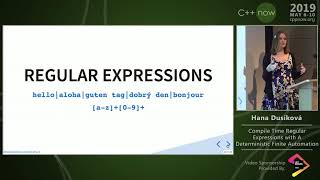
Compile Time Regular Expressions with a Deterministic Finite Automaton
Explore advanced C++20 techniques for compile-time regular expressions using a Deterministic Finite Automaton, optimizing performance and showcasing novel metaprogramming approaches.
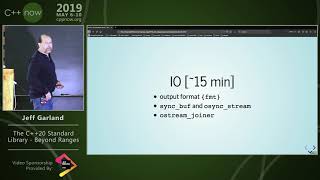
The C++20 Standard Library - Beyond Ranges
Comprehensive overview of C++20 standard library features beyond Ranges, including chrono support, concepts, string formatting, span, container improvements, and threading primitives. Practical examples and implementation status provided.
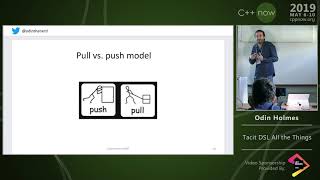
Tacit DSL All the Things
Explore functional programming concepts in C++ through an extended ranges DSL, unifying various paradigms and libraries for more declarative and composable code.
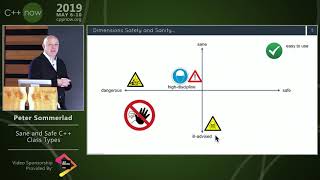
Sane and Safe C++ Class Types
Exploring safe and efficient C++ class design, focusing on special member functions, regular types, and best practices for creating robust and maintainable code.
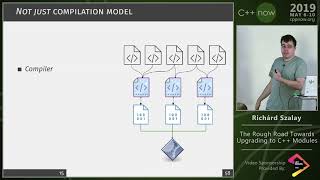
The Rough Road Towards Upgrading to C++ Modules
Explores challenges in adopting C++ Modules, discussing issues with existing systems, attempts at automated modularization, and implications for code organization and compilation performance.
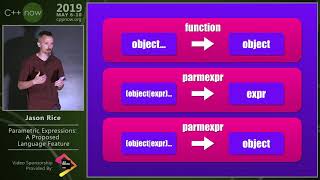
Parametric Expressions - A Proposed Language Feature
Proposed C++ feature: Parametric Expressions explained. Explores use cases, benefits for library authors, and potential impact on build times. Encourages audience participation in discussing this hygienic macro concept.
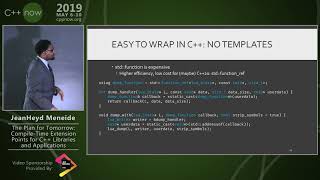
The Plan for Tomorrow - Extension Points in C++ Applications
Explore advanced C++ extension techniques beyond callbacks and virtual classes, examining libraries' non-dynamic extension points for compile-time customization and improved application flexibility.
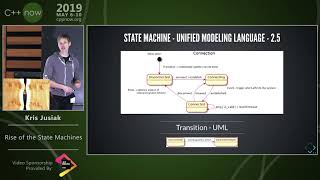
Rise of the State Machines
Comprehensive comparison of state machine implementations in modern C++, exploring trade-offs in compilation time, performance, memory usage, and readability using a connection example and various C++ techniques.
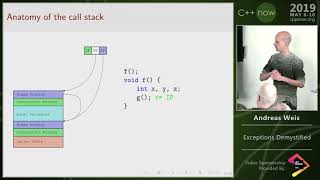
Exceptions Demystified
Demystifying C++ exceptions: explore implementation approaches, understand associated problems, and discover potential future alternatives like static exceptions.
The C++ Reflection TS
Comprehensive overview of C++ Reflection TS, explaining its features, applications, and future directions in standardization, presented by project co-author David Sankel.
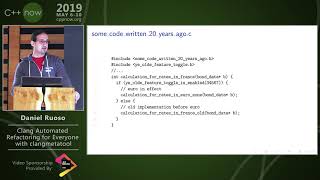
Clang Automated Refactoring for Everyone with Clangmetatool
Explore clang tooling for automated C++ refactoring, focusing on Bloomberg's open-source framework clangmetatool. Learn about static analysis tools and the development process for creating refactoring tools.
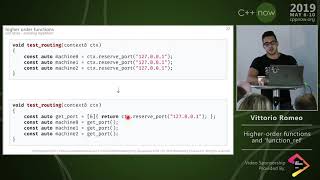
Higher-Order Functions and Function Ref
Explore higher-order functions in C++, their practical applications, and the proposed `function_ref` abstraction for C++20, enhancing code flexibility and performance.
Hey C, This Is What Performance Looks Like - Manually Generating Optimal Assembly at Compile Time
Explore optimizing C++ for exotic hardware through metaprogramming, outperforming industry standards while enhancing safety and usability. Learn DSL techniques for ARM Cortex SoCs to achieve exceptional performance.
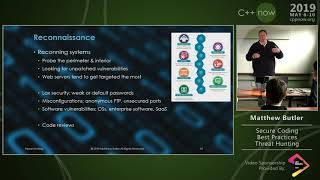
Secure Coding Best Practices - Threat Hunting
Explore threat modeling and secure coding practices in C++, focusing on identifying attack surfaces, analyzing vulnerabilities, and implementing effective defense strategies for robust software design.
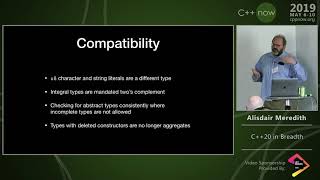
C++20 in Breadth
Comprehensive overview of C++20's major features and changes, exploring language updates, new capabilities, and their impact on C++ development and standardization.