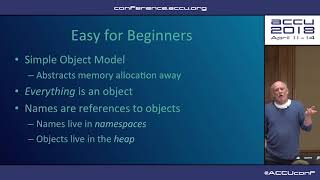
How Python Wins New Friends
Explore Python's rise to popularity, its user-friendly features, and its impact on programming education and various industries.
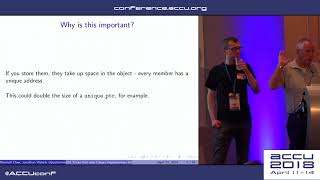
These 10 Tricks That Only Library Implementors Know
Discover advanced C++ coding techniques used in standard library implementations, including empty base class optimization, allocator management, and exception safety.
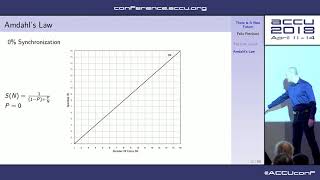
There Is a Better Future
Explore advanced concurrency concepts, including improved futures and CSP channels, for creating efficient parallel task graphs and addressing limitations in std::future.
Finally Executors for C++
Explore C++ executors for asynchronous and parallel programming, covering motivation, requirements, interfaces, and practical examples. Learn about recent proposal developments and interactions with coroutines.
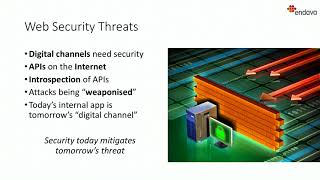
Common Webapp Vulnerabilities and What to Do About Them
Explore common web app vulnerabilities and practical mitigations based on the OWASP Top 10 List, focusing on injection attacks, authentication issues, and data exposure risks.
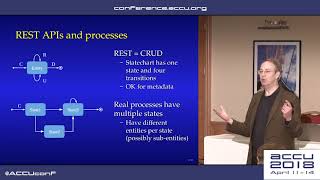
Read and Write Considered Harmful
Explores differences between reading and writing data across various topics, offering alternative approaches for improved system design and architecture.
Monolithic Delivery
Explores the relationship between software design and delivery, challenging the notion of monolithic architecture and examining the potential misunderstandings in modern software development approaches.
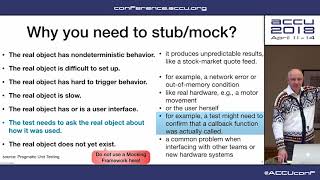
Mocking Frameworks Considered Harmful
Explore test automation challenges, mocking frameworks' drawbacks, and alternative approaches for effective unit testing in C++. Learn refactoring techniques and simpler mocking solutions.
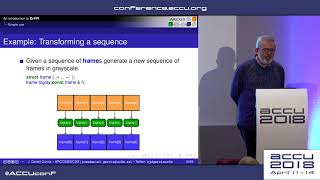
Parallel Design Patterns and Stream Parallelism
Explore parallel design patterns and stream parallelism using GrPPI, an experimental library for expressing parallelism through patterns, with focus on composability and multiple back-end support.
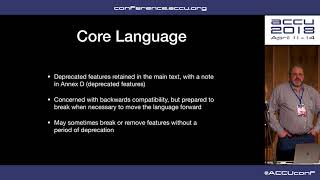
The Incredible Shrinking Standard
Explore C++'s evolution from C++98 to C++17, focusing on feature removals, their impact on the language, and how they shape emerging best practices in programming.
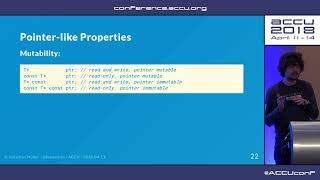
I Just Wanted to Point to Something
Comprehensive guide to pointer-like types in C++, exploring when to use references, pointers, smart pointers, and other alternatives for efficient and correct object referencing.
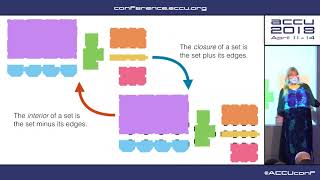
The Shape of a Program
Explore topology's application to programming, viewing code as a shape in time, space, causality, and possibility. Gain insights into program structure and design.

Debug C++ Without Running
Explore advanced C++ debugging techniques without running code, focusing on macros, templates, and preprocessor challenges. Learn IDE-based solutions for improved code analysis and development.
Hacker’s Guide to Rust Programming
Explore Rust's core concepts, including ownership, borrowing, traits, and error handling. Learn to build safe, fast, and concurrent systems with hands-on demos and essential tools.
C++ API & ABI Versioning
Explore C++ API & ABI versioning techniques, focusing on compatibility, breaking changes, and versioning strategies to maintain libraries and adapt to client needs over time.
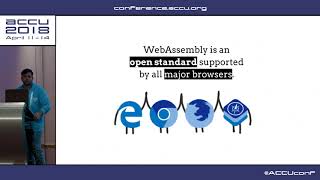
Hacker’s Guide to Web Assembly
Explore WebAssembly's basics, speed advantages, and applications. Learn how to build web apps using C/C++/Rust, with live demos and coding examples for a hands-on understanding of this powerful technology.
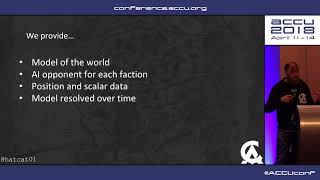
Total War - How AI Can Deliver Entertainment
Explore AI techniques in Total War games, focusing on Monte Carlo Tree Search, profiling, and optimization for complex strategy environments with limited resources.
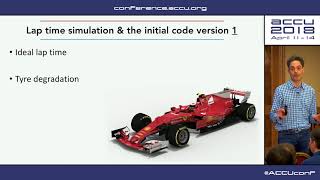
The Fantastic Four Coding Patterns of Continuous Delivery
Discover four Continuous Delivery coding patterns that increase development speed without sacrificing quality or safety, as learned from experiences in Formula 1 racing software development.
Building Modern Native Applications with Gradle
Explore modern native application development using Gradle, covering C/C++, D, Rust, Go, cross-platform builds, and integration with tools like GNU Make, CMake, Doxygen, and Conan.
Turtles! Hill Climbing! Hammers! Paper Bags!
Explore optimization techniques through turtle graphics, from hill climbing to simulated annealing, laying the groundwork for understanding neural networks and machine learning concepts.
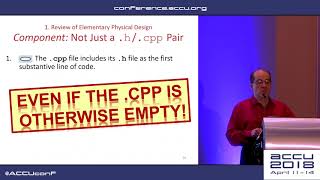
C++ Modules and Large-Scale Development
Explore C++ modules' impact on program architecture, code organization, and large-scale development, covering migration strategies and design principles for improved software structure.