SwiftUI in 25 Minutes
Live demonstration of building a larger SwiftUI app from scratch, showcasing custom UI, gesture-driven animations, and multi-platform development. Ideal for developers seeking practical insights into SwiftUI's capabilities.

It's Probably Fine
Exploring team dynamics, communication layers, and strategies for improvement. Learn to identify and address issues in failing teams, enhance functional teams, and prioritize outcomes over processes.
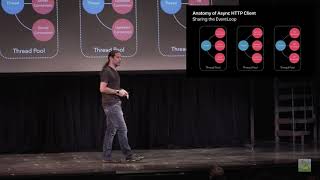
Introduction to AsyncHTTPClient
Introduction to AsyncHTTPClient: Explore a cross-platform, high-performance HTTP client built on SwiftNIO. Learn its functionality, usage, and future developments for efficient networking in Swift applications.
Designing Accessible APIs
Explore fundamental rules for designing powerful, user-friendly APIs that stand the test of time. Learn to create accessible interfaces for developers of all skill levels.

Deep Dive into Custom Directives
Explore advanced techniques for creating custom directives in Angular, including optimization, scope isolation, and compile/link processes for building interactive and efficient web applications.
Going Postal with Angular in Promises
Explore Angular's promise pattern for efficient async programming. Learn to leverage lazy promises in version 1.2 to transform callback spaghetti into streamlined, manageable code.
Why Kubernetes Can't Get Around FinOps – Cost Management Best Practice
Explore FinOps best practices for managing Kubernetes costs, empowering engineers and finance teams to prevent overspending while enabling innovation in cloud-native environments.
Enable Real-time Analytics and Machine Learning with Azure Stream
Explore Azure Stream Analytics for real-time data processing, integrating with Power BI dashboards and Azure ML. Learn to build streaming jobs and implement lambda architecture for data-driven insights.
Power BI CI - CD with Tabular Editor
Automate Power BI Dataset and Analysis Services Tabular model development using Tabular Editor, GIT, and Azure DevOps. Learn to implement continuous integration and delivery for efficient BI solution management.
10 Cloudy Questions to Ask Before Migrating Your SQL Server
Explore key considerations for migrating SQL Server to the cloud, including service selection, availability requirements, dependencies, and migration strategies to ensure a successful transition.
Best Practices for Creating Stunning R Visuals in Power BI
Learn to create stunning data visualizations in Power BI using R programming, enhancing your data storytelling capabilities with the grammar of graphics concept and best practices for R visuals.

Extend SQL Applications to the Edge with Azure SQL Edge
Explore Azure SQL Edge's optimized database engine for IoT workloads, featuring data streaming, timeseries, and ML capabilities. Learn about customer implementations and new features for the Intelligent Edge.

Real World Implications of Bias in Coding & Machine Learning
Explore how unconscious bias affects coding and machine learning, learn to identify and mitigate it, and discover inclusive design practices for creating more equitable and effective applications.
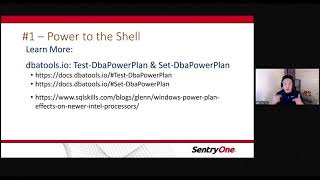
A Beginner's Guide to Becoming a Performance Tuner
Discover common SQL Server performance killers and learn essential tuning techniques for both DBAs and developers. Gain practical insights through demos on server configuration, T-SQL parallelism, and TempDB optimization.
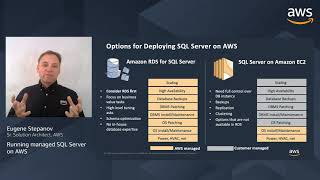
Running Managed SQL Server on AWS
Explore Amazon RDS for SQL Server: automate administration, enhance availability, monitor performance, and scale effortlessly. Learn key features and differences from self-managed deployments on EC2.
Troubleshooting Power BI Report Performance
Optimize Power BI report performance by identifying bottlenecks, addressing DAX measures, modeling issues, and visual overload. Learn techniques to enhance report responsiveness and user experience.
Elevation to the Cloud – How Our Customers Are Using Azure SQL
Explore real-world scenarios of Azure SQL adoption, innovative design patterns, and lessons learned from customers achieving cost efficiency, scalability, and elasticity in their database usage.
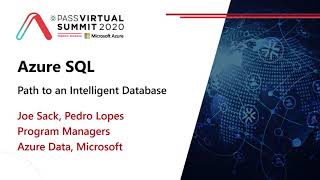
Azure SQL - Path to an Intelligent Database
Explore groundbreaking query performance enhancements in Azure SQL DB and SQL Server 2019, focusing on Intelligent Query Processing for improved parallel workloads at scale.
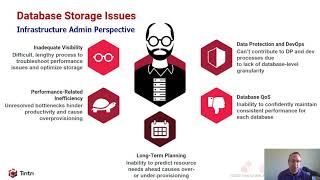
Next Gen - Intelligent Infrastructure
Explore how Intelligent Infrastructure and AIOps can revolutionize SQL Server database management, simplifying tasks and enabling DBAs to focus on high-value activities with less resources.
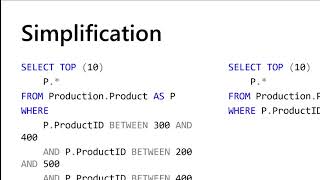
A Query Runs Through It - An Introduction to the SQL Server Engine
Explore SQL Server internals, from data types to query processing, enhancing your ability to write and optimize queries across various platforms. Gain valuable insights into the engine's inner workings.
Data Integrity Demystified
Explore data integrity fundamentals, from table design to constraints, and learn how database constructs enforce it. Understand its importance and implementation for meaningful, reliable data.