I Know Where You've Been - Geo-Inference Attacks Via The Browser Cache
Explore geo-inference attacks via browser cache, revealing how websites can sniff users' locations. Learn about vulnerabilities in popular sites, impact on various browsers, and potential defenses against these privacy threats.
Hiding Behind Android Runtime - ART
Explore techniques for creating user-mode rootkits in Android using ART mechanisms, including file formats, persistence methods, and limitations, with a live demonstration.
Browsers Gone Wild
Unveiling creative browser vulnerabilities and attacks, including confidentiality breaches, login detection, and exploiting HTML5 features, with live demonstrations challenging Same Origin Policy understanding.
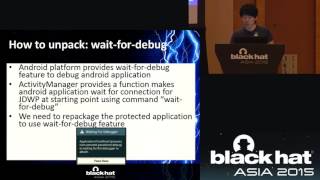
We Can Still Crack You - General Unpacking Method for Android Packer - No Root
Discover a novel method for unpacking protected Android applications without root access. Learn to bypass anti-analysis techniques and reveal hidden code in packed apps.
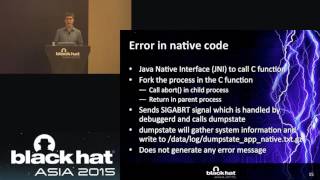
Resurrecting the Read Logs Permission on Samsung Devices
Exploit allowing non-privileged apps to access sensitive log data on Samsung devices, bypassing Android's READ_LOGS permission restrictions. Reveals private information from notifications and system logs.
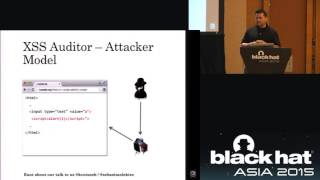
Client-Side Protection Against DOM-Based XSS Done Right
Comprehensive analysis of Chrome's XSS Auditor, revealing vulnerabilities and proposing an improved filter design using client-side taint tracking for robust DOM-XSS protection.
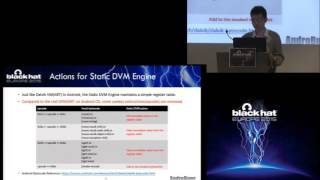
AndroBugs Framework - An Android Application Security Vulnerability Scanner
Explore AndroBugs Framework, a free Android vulnerability analysis system. Learn to identify and mitigate security risks in Android apps before release, enhancing app safety and user protection.

Silently Breaking ASLR in the Cloud
Exploit memory deduplication to defeat ASLR in cloud environments, leaking randomized base addresses of libraries and executables in neighboring VMs using a side-channel attack.
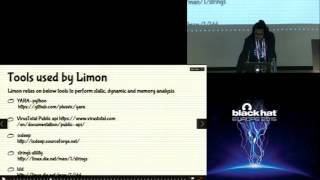
Automating Linux Malware Analysis Using Limon Sandbox
Explore automated Linux malware analysis with Limon sandbox. Learn to collect, analyze, and report runtime indicators using static, dynamic, and memory analysis techniques for comprehensive threat assessment.

Attacking the XNU Kernel in El Capitan
Explore new techniques to bypass XNU kernel exploit mitigations in El Capitan, including KASLR and SMEP, and learn how to overcome System Integrity Protection through a real kernel exploit demonstration.
Untangling the DOM for More Easy-Juicy Bugs
Explore dynamic JavaScript analysis with Hookish!, an open-source Chrome extension for penetration testing. Learn to uncover DOM-based vulnerabilities and enhance web app security assessments.
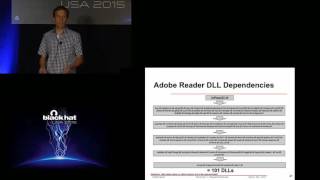
Breaking Payloads With Runtime Code Stripping and Image Freezing
Innovative defensive strategy to break attack payloads by removing unused code and APIs from application processes, enhancing security without runtime overhead or file modifications.
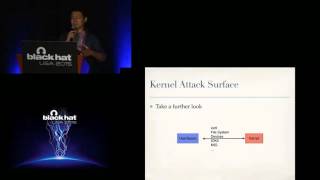
Review and Exploit Neglected Attack Surfaces in iOS 8
Explores overlooked iOS 8 vulnerabilities through fuzzing and code auditing, revealing system daemon crashes and memory corruption errors triggerable via XPC, plus an iOS kernel 0day.
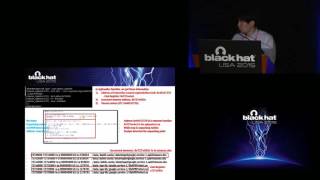
Tracking App Behaviors With - Nothing Changed - Phone For Evasive Android Malware
Explore advanced techniques for tracking and analyzing evasive Android malware behaviors, including obfuscation, dynamic code loading, and native-level monitoring, without modifying the phone's OS.
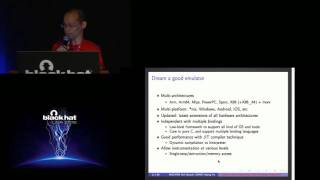
Unicorn - Next Generation CPU Emulator Framework
Versatile CPU emulator framework supporting multiple architectures and platforms. Offers clean API, thread-safety, and language bindings for building advanced security tools and research.
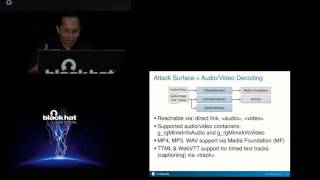
Understanding the Attack Surface and Attack Resilience of Project Spartan's New EdgeHTML Rendering Engine
Explore EdgeHTML's attack surface, compare it with MSHTML, and analyze exploit mitigations in Windows 10's new rendering engine for enhanced web security understanding.

Bypass Surgery - Abusing Content Delivery Networks
Exploring vulnerabilities in CDNs, this talk reveals attack patterns against high-availability websites, demonstrating potential risks and exploit development with far-reaching consequences.
Exploiting XXE Vulnerabilities in File Parsing Functionality
Techniques for exploiting XXE vulnerabilities in file parsing, focusing on XML-supported formats like docx and xlsx. Includes real-world examples and introduces a tool for creating 'XXE backdoored' files.
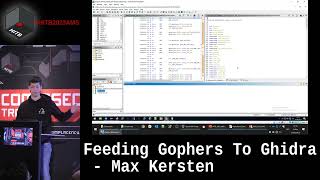
Feeding Gophers to Ghidra
Improve Golang binary analysis in Ghidra with Java-based scripts. Recover strings, functions, and types for efficient malware research and vulnerability detection.

Exploring JARM – An Active TLS Fingerprinting Algorithm
Exploring JARM: An active TLS fingerprinting algorithm for clustering servers, identifying default settings, and detecting malicious servers. Includes C++ implementation, technical analysis, and improvements to enhance fingerprint confidence.

Reverse Engineering a DOS PC FMV Game from 1994
Explore the intricacies of reverse engineering a 1994 DOS PC FMV game, uncovering techniques and challenges in dissecting vintage software architecture.