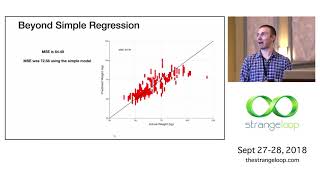
Scala DSLs and Probabilistic Programming
Explore ScalaStan, a type-safe DSL for statistical modeling with Stan, enabling programmatic manipulation and generation of Stan programs within Scala for efficient Bayesian inference and data analysis.
Designing Augmented Reality Systems for Speed
Explore designing AR systems for speed, balancing complex algorithms with resource limitations. Learn trade-offs, concurrency, real-time interactions, and caching in AR development.
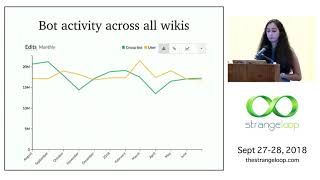
The Bots That Help Run Wikipedia
Explore the fascinating world of Wikipedia bots: their crucial role, diverse functions, and the technology behind them. Learn how to create your own bot and contribute to this unique ecosystem.
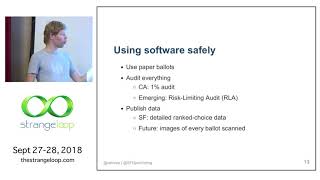
Freeing the Software That Runs Our Elections
Explore open-source software projects for US elections, focusing on San Francisco's initiative. Learn about voting systems, ballot processing, and the advantages of transparent election technology.
A Little Taste of Dependent Types
Explore dependent types, uniting programming and mathematical proofs. Learn about Pie, a tiny dependently typed language, and see a proof that's also a program.
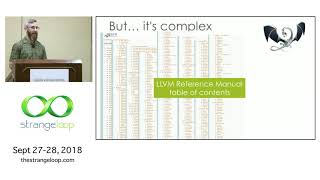
Verifying the LLVM
Explore LLVM's intermediate representation, its complexities, and the Vellvm project's approach to formal verification using Coq, aimed at ensuring compiler reliability and security.
Scalable Anomaly Detection - With Zero Machine Learning
Explore Netflix's innovative approach to detecting anomalies in complex distributed systems using stream processing and simple algorithms, without relying on machine learning.
The Magical Rebalance Protocol of Apache Kafka
Explore Apache Kafka's hidden protocol for managing work assignments, including leader election and task distribution. Learn its internals, applications, and how to extend it for custom implementations.
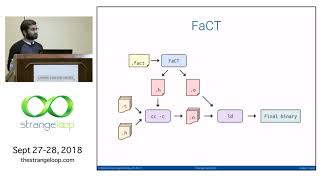
FaCT - A New Language for Constant-Time Programming
FaCT: A new language for writing constant-time cryptographic code, addressing security vulnerabilities in traditional methods. Enables high-level programming constructs while ensuring timing side-channel resistance.
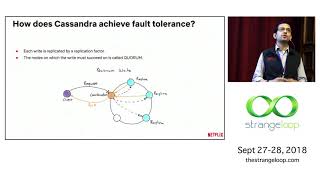
Building Financial Systems on Eventually Consistent DBs
Explore Netflix's innovative approach to building scalable, available, and consistent financial systems using eventually consistent databases, balancing tradeoffs between availability and data integrity.
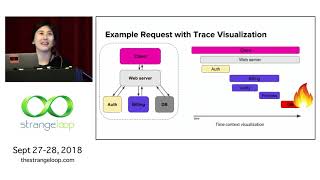
Understanding Microservices with Distributed Tracing
Explore distributed tracing for microservices: visualize request journeys, optimize performance, and gain system-wide insights. Learn implementation strategies and lessons from Lyft's adoption.

PANOPTES - Open Source Exoplanet Discovery
Discover exoplanets using open-source PANOPTES: a distributed network of robotic telescopes combining cloud computing, affordable electronics, and innovative software.
Building a Canary Testing Framework
Learn to build a canary testing framework for distributed systems, covering architecture, implementation in Go, test configurations, and result visualization using Prometheus.
Leverage vs. Autonomy in a Large Software System
Explore the balance between centralization and decentralization in large-scale software development, examining Twitter's strategies and introducing Strato, a new serverless platform for enhanced engineer productivity.
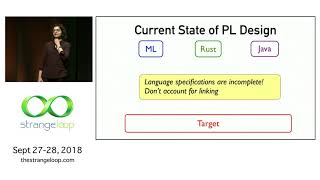
All the Languages Together
Explore the challenges and solutions for building multi-language software systems, focusing on language interoperability, safety, and toolchain improvements for seamless integration.
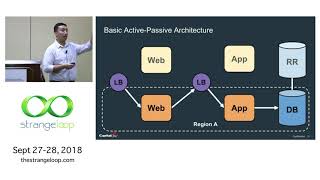
Architecting for Active-Active Resiliency in the Cloud
Explore multi-regional active-active resiliency in cloud architecture, covering data replication, availability calculations, and design patterns for maximizing service uptime and minimizing failures.

Building Secure Systems in Haskell
Explore building secure web applications using Haskell's LIO and Hails framework, focusing on data privacy protection through language-level information flow control and declarative policy specification.
Project Jigsaw in JDK 9 - Modularity Comes To Java
Explore Project Jigsaw in JDK 9, its impact on Java modularity, and how it affects application development, security, and deployment. Learn about module fundamentals and new accessibility rules.
Exploring Conversational Interfaces with Amazon Alexa and Go
Explore conversational interfaces with Amazon Alexa, focusing on platform diversity, best practices, and creating Alexa Skills using Go. Learn about major players and their strengths in this emerging field.
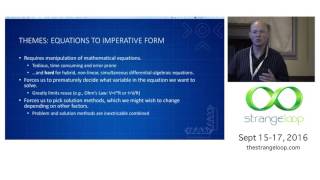
Modelica - Component Oriented Modeling of Physical Systems
Explore component-oriented modeling of physical systems using Modelica, a language for simulating complex devices in various industries. Learn about compilation processes and algorithms.
Designing Cypher - A Graph Query Language
Explore the journey of designing Cypher, a graph query language for Neo4j. Learn about language design principles, implementation challenges, and lessons learned in creating a specialized yet expressive tool.