SIG Instrumentation Introduction and Deep Dive
Explore Kubernetes SIG Instrumentation's efforts to ensure high-quality, consistent instrumentation across the project. Learn about ongoing initiatives and discover opportunities for collaboration.
Saving the Planet One Cluster at a Time - Operationalizing Sustainability in Kubernetes
Explore strategies for reducing carbon footprints in Kubernetes clusters, enhancing regulatory compliance, and making sustainable architectural decisions for a greener future in cloud computing.
What's New in Operator Framework - OLM V1 Rollout and API Revisions
Explore the latest updates in Operator Framework, focusing on OLM V1 rollout. Learn about API revisions for simpler operator management and witness a demo of the newest OLM V1 components.
SIG-Multicluster Introduction and Deep Dive
Explore multi-cluster Kubernetes management, best practices, and current projects. Learn about ClusterSets and how to contribute to SIG-Multicluster's efforts in solving challenges across multiple clusters and cloud providers.
High Performance Multi-Region Messaging with NATS
Explore high-performance messaging with NATS, featuring supercluster and gateway for global data sharing. Learn about implementation in Kubernetes, monitoring, and a real-time connection mapping tool.
Trimaran: Load-Aware Scheduling for Power Efficiency and Performance Stability
Explore load-aware scheduling with Trimaran plugins to optimize resource utilization, minimize power consumption, avoid congestion, and enhance performance stability in Kubernetes clusters.
XRegistry - Looking Beyond CloudEvents
Explore xRegistry's role in enhancing CloudEvents by enabling resource discovery, metadata querying, and automation in distributed systems development.

Fixing Async/Await in JavaScript and TypeScript - Learn With Jason
Explore structured concurrency to solve async/await issues in JavaScript and TypeScript, improving software architecture and enhancing code efficiency.
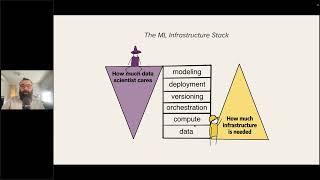
Orchestrating Generative AI Workflows to Deliver Business Value
Explore leveraging Large Language Models in existing software ecosystems using Python. Learn to balance innovation with established practices, applying text-to-image and text-to-speech technologies for robust, production-ready AI systems.
Rapid IDP Capability Development and Automated Testing at Autodesk
Explore IDPBuilder: Autodesk's tool for rapid K8s-native capability development, enabling efficient local iteration and automated testing for internal developer platforms.
Object Storage on Kubernetes - Completed with Provider Ceph
Explore Provider Ceph, an open-source solution for managing multiple Ceph clusters across regions within Kubernetes. Learn about its development using Crossplane and its capabilities as an S3 bucket manager.
Keeping Kubernetes Safe: The Lowdown on Locked Namespaces
Explore Kubernetes namespace security, its impact on cluster features, and strategies for effective lockdown. Learn best practices for secure multi-tenancy and policy enforcement.
eBPF's Abilities and Limitations - The Truth
Explore eBPF's capabilities in cloud native infrastructure, debunking myths about its limitations through demonstrations of looping, state management, and Turing completeness.
How KubeVirt Improves Performance with CI-Driven Benchmarking - and How You Can Too
Discover KubeVirt's CI-driven benchmarking approach for performance evaluation. Learn techniques to assess scalability, leverage CI for data collection, and apply these strategies to your Kubernetes-native components.
Composable Systems in Kubernetes - Enabling Dynamic Resource Allocation
Explore dynamic resource allocation in Kubernetes with composable systems. Learn about Sunfish Management Framework and its integration for enabling composable GPUs in containerized environments.
Observable Feature Rollouts with OpenTelemetry and OpenFeature
Explore dynamic feature rollouts using OpenFeature and OpenTelemetry for cloud-native apps. Learn to instrument, analyze, and make data-driven decisions about feature impacts across user cohorts and environments.
Leveraging OCI 1.1 for Enhanced SBOM Integration and Vulnerability Scanning in Harbor
Explore enhanced SBOM integration and vulnerability scanning in Harbor using OCI 1.1. Learn about auto-generation, auto-association, and streamlined scanning for improved container security management.
Living off the Land Techniques in Managed Kubernetes Clusters
Explore advanced techniques for exploiting managed Kubernetes clusters, including privilege escalation, lateral movement, and security control bypasses using cluster middleware and components.
Mastering GPU Management in Kubernetes Using the Operator Pattern
Learn to manage GPUs in Kubernetes using the operator pattern, covering installation, scaling, lifecycle management, and monitoring. Explore NVIDIA GPU Operator for efficient AI/ML workload handling in Kubernetes clusters.
Kubernetes Is Finally Removing In-Tree Cloud Providers
Explore the removal of in-tree cloud providers in Kubernetes, its challenges, solutions, and impact on the ecosystem. Learn about recent changes and steps for adopting external integrations.
Kubernetes as a Data Platform
Explore Kubernetes as a data platform: scalability, flexibility, and cost-effectiveness for data and AI/ML applications. Learn about ecosystem advances and alignment with data management trends.