Improving UAPI Compatibility Review with Automated Tooling
Explore automated tools for maintaining Linux userspace API compatibility, focusing on libabigail for analyzing UAPI changes and discussing strategies for sysfs and module parameters.

Multi-KVM: Enabling Concurrent KVM Module Management
Proposal for Multi-KVM: enabling concurrent KVM modules on a Linux host for seamless upgrades, rollbacks, and A/B testing without disrupting running VMs. Refactoring KVM code for improved modularity.
Evolution of Direct Server Return Implementation for Containerized Applications
Exploring the evolution of Direct Server Return (DSR) for containerized apps, addressing challenges in multi-tenancy and network namespaces, and discussing solutions for efficient L4 load balancing.

Reporting and Tracking Regressions Across the Linux Ecosystem
Exploring strategies for efficient regression reporting and tracking in Linux kernel development, focusing on collaboration and standardization across the ecosystem.

The Path to Achieve a Bug-Free Build on the Mainline
Exploring strategies to achieve bug-free builds in Linux kernel development, focusing on build issues, community testing efforts, and new practices to improve mainline quality.
Supporting Live Migration of Confidential VMs in KVM
Explores design details of SEV-SNP live migration for confidential VMs in KVM, discussing potential common API across vendors for secure VM migration between hosts.

Towards a Standardized eBPF ISA - Conformance Testing
Explore the BPF Conformance Suite's role in ensuring cross-runtime compatibility for BPF programs. Learn about its components, applications, and impact on the BPF ecosystem's security and collaboration.

Security Features Status Update for Linux Kernel Toolchains
Comprehensive update on Linux kernel security features across GCC and Clang, discussing toolchain parity, open problems, and new features like CFI, LTO, and overflow protection.
Protecting Sensitive Data in Container Checkpoints
Explore built-in encryption for CRIU images to protect container state, ensuring data confidentiality and integrity across cluster nodes without modifying container infrastructure.

Detecting Failed Device Probes - Improving Kernel Stability
Explore a proposed approach for detecting device probe regressions in Linux, improving kernel stability and enabling quicker issue resolution across platforms.
Standardizing CPUID Data for the Open-Source x86 Ecosystem
Proposal to standardize CPUID information for x86 architecture, addressing challenges in feature identification and data redundancy across open-source projects. Aims to improve accuracy and efficiency in CPU feature detection.

Troubles and Tidbits from Datadog's eBPF Journey
Explore Datadog's eBPF journey, uncovering challenges, pitfalls, and lessons learned in observability, security, and networking. Gain insights into eBPF hook points, security bypasses, and networking complexities.

Quality Assurance for Embargoed Kernel Patches
Exploring strategies to improve testing and quality assurance for embargoed kernel patches, addressing challenges in the current process and proposing solutions for enhanced security.
Unifying and Improving Test Regression Reporting and Tracking in Kernel CI Systems
Exploring strategies to enhance kernel CI systems for better regression detection, analysis, and reporting. Discusses standardizing workflows, improving data processing, and addressing challenges in regression tracking.
RISC-V-Based Sandboxing for Secure and Efficient Software Execution
Explore an efficient RISC-V virtual machine for sandboxed environments, featuring reduced memory usage and JIT compilation for secure software execution.
Truly Universal Compute - Using Bacalhau to Deploy Jobs Cross Region, Cross Cloud and to the Edge
Explore Bacalhau, a unified platform for managing distributed compute jobs across regions, clouds, and edge devices, addressing challenges in data availability, scalability, and security.
Simplifying Containers and Kubernetes on Your Laptop with Podman Desktop
Explore Podman Desktop, an open-source GUI tool that simplifies container workflows and bridges local development to Kubernetes deployment, enhancing predictability and security in your container processes.
Delivery and Debugging MariaDB Docker Official Images - Challenges and Solutions
Explore container-specific challenges, CI/CD benefits, and debugging strategies for MariaDB Docker images. Learn to avoid pitfalls and enhance database performance in containerized environments.
Unlocking Kubernetes Intelligence: Deploying AI Foundation Models for K8sGPT Integration
Explore AI-powered Kubernetes management with K8sGPT. Learn to deploy AI foundation models in AWS, enhancing cluster operations through intelligent insights and efficient issue triage.

Docker Extensions - From 0 to 1 Million Installs
Explore Docker Extensions' rapid growth, marketplace offerings, and learn to build custom tools using the Extensions SDK to enhance developer workflows and productivity.
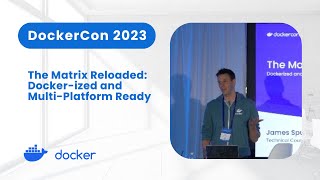
The Matrix Reloaded - Dockerized and Multi-Platform Ready
Explore building, optimizing, and deploying multi-platform Docker containers using cmatrix. Learn to compile code, handle dependencies, and create minimal-size images for various architectures.