Large Language Models Bootcamp Information Session
Comprehensive introduction to building LLM-powered applications, covering foundations, advanced techniques, and hands-on projects. Ideal for AI enthusiasts and professionals seeking practical skills in generative AI.
GPT Function Calling Deep Dive With Streaming Responses
Comprehensive tutorial on GPT function calling, covering streaming responses, basic and advanced implementations, and multi-function agent-like setups with practical Python examples.
Advanced Inheritance and Polymorphism - Example With Array of Objects
Explore advanced OOP concepts through practical examples. Learn to implement inheritance, polymorphism, and efficient memory management in arrays of objects for more robust and reusable code.
How to Incorporate ChatGPT into Your App with Qwik.js - Developing Smarter Apps With Generative AI
Learn to integrate ChatGPT into web apps using Qwik.js and JavaScript's fetch API. Covers OpenAI authentication, HTTP requests, QwikCity actions, environment variables, and response handling for smarter app development.
Sparks of Artificial General Intelligence
Exploring GPT-4's advanced capabilities and the potential for smaller models to exhibit AGI-like properties through high-quality data and efficient training methods.
Chat with Multiple PDFs Using Llama 2 and LangChain - Use Private LLM and Free Embeddings for QA
Learn to build a chatbot using Llama 2 and LangChain to answer questions from multiple PDFs. Explore private LLM integration, vector stores, and efficient document retrieval techniques.
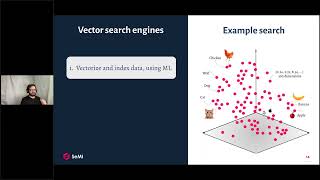
Vector Search - A Gentle Introduction - Zain Hasan
Explore vector search technology, its applications in semantic search and recommendation systems, and learn about implementing real-time vector search with CRUD support for production-scale ML models.

How to Use Self-Play for Language Models to Improve at Solving Programming Puzzles
Explore how language models can generate and solve programming puzzles, improving their own performance through self-play and interpreter-verified solutions.
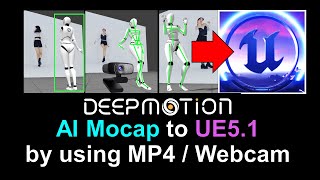
DeepMotion to Unreal Engine 5.1 - Converting MP4 to FBX with Embedded Mocap Animation
Learn to convert MP4 videos into FBX files with embedded mocap data, integrate DeepMotion with iClone 8 and Unreal Engine 5.1, and overcome common challenges in the animation pipeline.
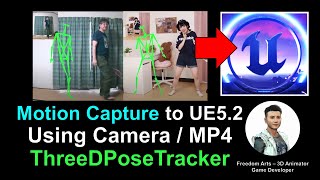
From Webcam to Unreal Engine 5.2: Free Motion Capture Using ThreeDPoseTracker
Learn to create free motion capture animations using a webcam or MP4 video with ThreeDPoseTracker, then import and retarget them onto 3D models in Unreal Engine 5.2 for game development and animation projects.

DeepMotion AI Motion Capture for iClone and Character Creator - Full Tutorial
Step-by-step guide on using DeepMotion AI to convert MP4 videos into body motion for iClone and Character Creator, enhancing 3D animation workflows with AI-powered motion capture technology.

Webcam and MP4 AI Motion Capture for Unreal Engine 5.0.1 - Plask AI Tutorial
Learn to create AI-powered motion capture animations using webcam or MP4 video for Unreal Engine 5.0.1 with Plask. Step-by-step guide covers workflow from capture to import, enhancing 3D animation skills.
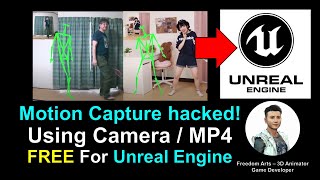
AI Motion Capture for Unreal Engine Using Camera or MP4 Video - Full Tutorial
Learn to create AI-powered motion capture animations for Unreal Engine using a webcam or MP4 video. This tutorial covers the complete workflow from capture to import, enabling free and accessible mocap for game development.
VSM, LSA, & SVD - Introduction to Text Analytics with R
Explore advanced text analytics techniques: VSM, LSA, and SVD. Learn to handle high-dimensional data, uncover latent semantic structures, and efficiently map new data in reduced dimensions.
Building Real-Time Sentiment Pipeline for Live Tweets
Learn to build a real-time predictive analytics pipeline for Twitter sentiment analysis using Azure ML, R, and Python. Covers model creation, cloud deployment, and live dashboarding with PowerBI.
Creating an Article Generator Website Using Langchain and OpenAI - Generative AI Series
Learn to build an AI-powered article generator website using Langchain and OpenAI. Explore generative AI techniques to create dynamic content efficiently.

50 Linux Commands Every Developer Must Know
Comprehensive guide to essential Linux commands for developers, covering file management, system monitoring, networking, and more. Enhance productivity and efficiency in Linux environments.
HarryGPT - An AI-Based Discord Bot - Generative AI Series
Learn to build an AI-powered Discord bot using Python, integrating OpenAI's API for intelligent responses and enhancing server interactions with generative AI capabilities.
Experiment Management for Machine Learning
Explore best practices for managing machine learning experiments, addressing reproducibility, documentation, and code dependency issues to improve workflow efficiency and results.
Model Optimization - Series Conclusion - Introduction to Text Analytics with R
Optimize text analytics models, explore sensitivity/specificity tradeoffs, and discover resources for further study in R. Learn feature engineering and algorithm selection for improved effectiveness.
Introduction to Text Analytics with R - Model Metrics
Explore advanced model evaluation techniques, including sensitivity and specificity, feature engineering, and improving model performance beyond accuracy in text analytics using R.