LLMs for Automated Data Science - Introducing CAAFE for Context-Aware Automated Feature Engineering
Discover how CAAFE leverages large language models to enhance automated feature engineering in data science, improving model performance through context-aware feature generation and semantic understanding.
Hyperparameter Optimization and Algorithm Configuration from a Black-Box Optimization Perspective
Explore dynamic algorithm configuration and hyperparameter optimization approaches, comparing AutoML and black-box optimization methods for efficient, adaptive parameter tuning.
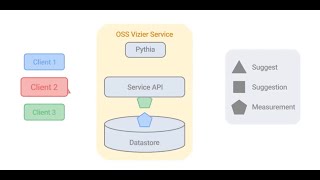
Open Source Vizier: Distributed Infrastructure for Blackbox Optimization and Hyperparameter Tuning
Explore Google's Vizier system for blackbox optimization and hyperparameter tuning, covering its distributed infrastructure, Python implementation, and integration with AutoML ecosystem.
Generating Well-Typed Terms That Are Not "Useless"
Explore a novel algorithm for generating well-typed lambda terms that use their arguments effectively, improving random testing of functional language compilers.
Semantic Code Refactoring for Abstract Data Types
Explore automated semantic code refactoring for Abstract Data Types using a novel method that generates equivalent implementations based on new data representations and relational invariants.
Polymorphic Reachability Types: Tracking Freshness, Aliasing, and Separation in Higher-Order Generic Programs
Explore polymorphic reachability types for tracking freshness, aliasing, and separation in higher-order generic programs. Gain insights into advanced type systems and their applications in programming languages.
Fusing Direct Manipulations into Functional Programs
Explore a novel framework for bidirectional live programming that fuses direct manipulations into functional programs, enabling code-insensitive output modifications and automatic source code updates.
Disentanglement with Futures, State, and Interaction
Explore disentanglement in parallel programs with futures, examining its extension beyond fork/join parallelism and implications for functional, stateful, and non-deterministic code.
Fully Composable and Adequate Verified Compilation with Direct Refinements between Open Modules
Explore a novel approach to verified compositional compilation using Kripke relations and memory protection, enabling direct refinements between open modules for enhanced software verification.
Type-Based Gradual Typing Performance Optimization
Explore discriminative typing for optimizing gradual typing performance. Learn about its implementation in Reticulated Python and Grift, and discover significant speedups across various programs.
CircuitPython with Raspberry Pi Pico - Getting Started
Learn CircuitPython on Raspberry Pi Pico: Create keyboard and mouse emulators, work with microSD cards, and control RGB LEDs. Hands-on projects for beginners using MU Editor and Adafruit libraries.

Raspberry Pi Pico - Control the I-O World
Explore Raspberry Pi Pico's capabilities through hands-on experiments with LEDs, switches, analog inputs, OLED displays, and motors using MicroPython. Learn soldering, setup, and practical coding techniques.
Build a Developer's Linux Workstation - Complete Guide
Comprehensive guide to building a Linux workstation for developers, covering hardware assembly, OS installation, and setup of essential development tools, IDEs, and productivity software.

Ways to Use ChatGPT AI with GTM
Discover 10 innovative ways to leverage ChatGPT AI for enhancing Google Tag Manager efficiency, streamlining tracking processes, and optimizing data collection strategies.

Open Pretrained Transformer - ML Coding Series
Deep dive into OPT-175B codebase, covering setup, training script, model construction, CUDA kernels, and mixed precision training concepts for large language models.

Machine Learning with Flax - From Zero to Hero
Comprehensive guide to Flax, a JAX-based ML library. Learn basics, custom models, optimization, and practical examples like linear regression and CNN on MNIST. Ideal for ML enthusiasts.
Neural Search with Jina AI - Open-Source ML Tool Explained
Explore Jina AI, an open-source neural search engine. Learn core concepts, set up an MNIST fashion example, and understand indexing, encoding, and evaluation processes for efficient machine learning workflows.
How to Do Stable Diffusion Textual Inversion - Text Embeddings by Automatic1111 Web UI Tutorial
Comprehensive guide to Stable Diffusion Textual Inversion: training process, settings optimization, dataset preparation, and embedding usage for personalized AI image generation.

TensorFlow Lite in Android with Google Play Services
Explore TensorFlow Lite integration in Android using Google Play services, enabling efficient ML model deployment, reduced app size, and improved performance without static library bundling.

Generative Adversarial Networks and Stable Diffusion
Explore Stable Diffusion for text-to-image generation using Keras. Learn to create custom images with Python, understand GANs, and dive into neural networks and convolutional computations.
Best Practices for ML Product Decisions - ML Tech Talks
Explore UX considerations for AI/ML products with Senior UX Designer Di Dang. Learn about user needs, mental models, explainability, and trust to enhance your machine learning product decisions.