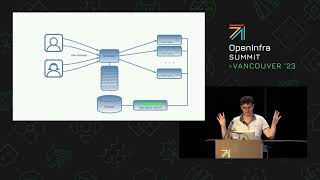
Building a Research Platform with Armada on OpenStack and Kubernetes
Discover how to build a high-throughput research platform combining OpenStack and Kubernetes for managing quantitative research workflows, featuring Armada for efficient job scheduling across multiple clusters.
Kata Containers 3.0 - Virtualization Optimized for Cloud Native Environments
Discover the latest evolution of Kata Containers 3.0, featuring the new Dragonball hypervisor and async rust runtime for enhanced container virtualization and cloud-native performance.
Zero Trust Architecture for Containers with Kata and Confidential Computing
Dive into advanced container security using Kata and Confidential Computing to implement zero-trust architecture, protect sensitive workloads, and achieve attestable pod integrity in Azure environments.
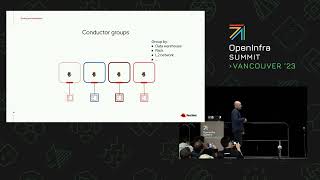
Ironic Bare Metal Deployments - An Architecture Tour of Management Tools and Interfaces
Explore diverse architectures and deployment tools for Ironic bare metal systems, from standard implementations to large-scale deployments like CERN, covering API interfaces and scalability considerations.
Deploying a Production Kubernetes Platform on OpenStack Magnum with Zuul - An Open edX Case Study
Explore the migration journey from Ansible-based Open edX deployment to a Kubernetes platform using OpenStack Magnum and Zuul, covering technical challenges and architectural solutions.
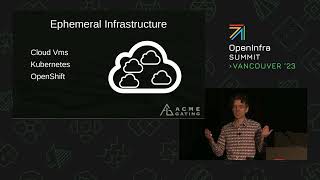
Testing Complete System Deployments with Zuul - Project Gating and Infrastructure Testing
Discover how to implement robust system deployment testing using Zuul, Ansible, and containers for reliable GitOps practices and automated infrastructure validation in enterprise environments.
Sokovan - Container Orchestrator for Accelerated AI/ML Workloads and Massive Scale GPU Computing
Discover how Sokovan optimizes AI/ML workloads through intelligent container orchestration, featuring dual-layer scheduling and hardware acceleration integration for enhanced GPU computing performance.
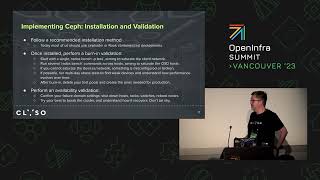
Lessons Learned in Ceph Operations for Science at CERN - From 3PB to 100PB
Discover how CERN scaled Ceph from 3PB to 100PB across data centers, exploring operational challenges, performance improvements, and essential lessons for large-scale storage implementation.
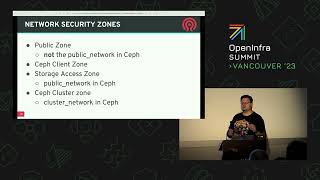
Data Security and Storage Hardening in Rook and Ceph
Explore comprehensive security strategies for Ceph storage systems, from threat modeling and encryption to access controls, focusing on practical hardening techniques for robust data protection.
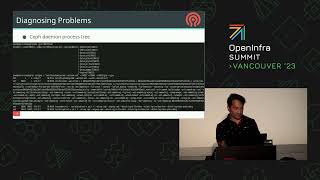
Ceph Troubleshooting in a Containerized Environment
Master essential techniques for troubleshooting Ceph in containerized environments, from diagnosing issues and analyzing logs to resolving daemon problems and memory leaks.
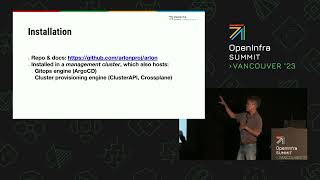
Arlon: Unified and Scalable Deployment of Kubernetes Clusters, Configurations and Applications
Discover how Arlon unifies Kubernetes cluster deployment, configurations, and applications through a single declarative API, enabling efficient large-scale management and standardized production-ready environments.
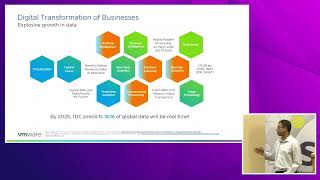
Addressing Capacity and Cost Challenges for Oracle Workloads Using VMware Software Memory Tier
Discover how VMware Software Memory Tiering optimizes Oracle workloads, addressing capacity challenges through memory disaggregation and efficient infrastructure management for enhanced performance and cost savings.
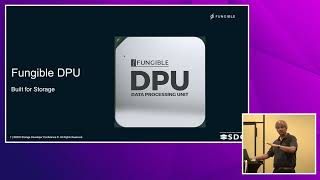
Next-Generation Storage Using DPUs Instead of CPUs
Discover how DPUs revolutionize data center storage systems, offering 3-10x better performance than CPU-based solutions while exploring architectural advantages, implementation examples, and the future of storage technology.

Green Computing with Computational Storage Devices - Energy Efficiency in Data Centers
Discover how computational storage devices revolutionize data center efficiency through Samsung Smart SSD technology, focusing on power reduction and database acceleration through CPU-to-SSD computation offloading.

SPDK and Infrastructure Offload Using NVMe-oF for High Performance Storage
Explore how SPDK NVMe-oF target enables infrastructure offload, combining direct-attached storage performance with shared storage benefits through vendor-agnostic frameworks and libraries.

DPU as a Storage Initiator for Bare Metal Performance and Virtualization
Discover how DPU-based Storage Initiators enhance NVMe/TCP performance, enabling bare-metal speeds for virtualized applications while providing encryption, compression, and seamless integration with orchestration systems.

Disaggregated NVMe/TCP Storage Using an Infrastructure Processing Unit (IPU)
Explore end-to-end Software Defined Storage solutions using Infrastructure Processing Units, focusing on NVMe/TCP integration, Kubernetes CSI plugins, and orchestration frameworks for cloud data centers.
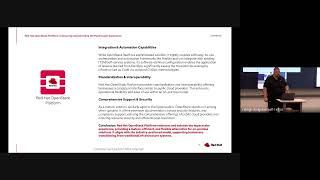
Strategic IT Transformation: SLOs, DevOps, and Software-Defined Datacenter for Cloud Efficiency
Discover how to transform traditional IT into a software-defined datacenter using CI/CD pipelines, cloud-native approaches, and SLOs. Learn strategic frameworks and tools like OpenStack and Ansible for enhanced efficiency.

Accessing Files Remotely with Linux - Recent Progress with SMB3.1.1 Client and Servers
Explore recent advancements in Linux's SMB3.1.1 protocol implementation, including improved performance, security features, and enhanced remote file access capabilities across various server platforms.
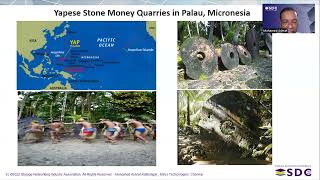
AI and Blockchain: The Emerging Duets in Data Storage and Processing
Explore how federated learning and blockchain technologies combine to solve AI data sharing challenges, enhance security, and optimize decentralized storage systems across industries.
Deploying Stand-alone Ceph and Integrating with K8s/OpenShift and OpenStack
Master the deployment and integration of standalone Ceph storage clusters with OpenStack and Kubernetes/OpenShift, covering components, networking, security, and data protection for efficient multi-platform storage solutions.