
The Personalisation of Cardiovascular Models Using Julia
Innovative workflow for personalizing cardiovascular models using Julia, combining data assimilation, sensitivity analysis, and optimization to enhance clinical decision-making and improve patient outcomes.
NetSurvival.jl - A Glimpse into Relative Survival Analysis
Explore relative survival analysis in cancer studies using NetSurvival.jl, a Julia package offering fast, reliable tools for extracting net survival curves and integrating with StatsModels.jl API.
Cognitive Computational Modeling Made Easy with Julia
Explore cognitive computational modeling using Julia, featuring ActionModels.jl for flexible simulations and HierarchicalGaussianFiltering.jl for advanced learning and perception models.
DiskArrays.jl for Working with Large Disk-Based ND-Arrays
Efficient handling of large disk-based arrays in Julia using DiskArrays.jl. Learn about the AbstractDiskArray interface and its benefits for scientific data formats and downstream packages.
MATLAB to Julia: Practical Examples for MATLAB Developers
Explore practical examples of transitioning from MATLAB to Julia, covering plotting, file handling, control systems, and package development for experienced MATLAB users.
Developing Supercomputing Geoscience Applications Using Julia
Explore modular Julia packages for accelerating geocomputing, enabling high-performance stencil codes that scale from laptops to GPU-accelerated supercomputers for geoscience applications.
What's the Plan? Task Planning for Robots - JuliaCon 2024
Explore task planning for robots using Julia's features to efficiently handle complex knowledge bases and action sequences in goal-oriented scenarios.
JSOSuite.jl - One-Stop Solution for Optimization
Explore JSOSuite.jl, a comprehensive optimization package offering automatic solver selection, research-level algorithms, and flexible modeling interfaces for various problem types in Julia.
Real Time ODEs for Sound Synthesis and Parameter Exploration - JuliaCon 2024
Explore real-time ODEs for sound synthesis and parameter analysis using Julia, combining visual and auditory representations to unveil dynamical system behaviors and control parameters.
Adventures in Julia IR - Plundering Core.Compiler
Explore Julia's typed intermediate representation (IR) and learn to implement custom optimization passes, extending compiler capabilities beyond conventional metaprogramming techniques.
RxEnvironments - Reactive Multi-Agent Environments
Explore reactive programming for multi-agent environments in Julia. Learn to model complex agent-environment interactions using RxEnvironments.jl, overcoming limitations of traditional reinforcement learning frameworks.
Applications of Distributed Task Parallelism
Explore distributed task parallelism in Julia, comparing Dagger with other frameworks and libraries. Learn about unique features for efficient, scalable, and maintainable code.
Robust Calibration of Industrial HVAC and Battery Systems
Explore advanced techniques for robust calibration of industrial HVAC and battery systems using ModelingToolkit.jl, focusing on overcoming challenges in data integration and parameter identification.

OpenAPI.jl for Easy HTTP APIs
Explore OpenAPI.jl for creating HTTP APIs in Julia. Learn to generate clients, define specs, and create server/client code using this powerful tool for API development and management.

Interpretable Hierarchical Calibration of Agent-Based Models
Explore scientific machine learning's fusion of traditional modeling and ML, focusing on neural network surrogates for agent-based models in epidemiology and automated hierarchical calibration.
Workflow for Developing Multiple Interdependent Packages - JuliaCon 2024
Explore efficient workflows for developing interconnected Julia packages, covering version management, testing, and deployment strategies for large-scale projects and team collaboration.
Best Practices for Package Development Using BestieTemplate.jl
Learn best practices for Julia package development using BestieTemplate.jl, including structure, workflows, linting, and formatting. Discover how to apply and update these practices efficiently in new and existing projects.
AppBundler.jl - Bundle Your Julia GUI Application
Learn to package Julia GUI applications for desktop platforms using AppBundler.jl. Explore cross-platform bundling, customization options, and future developments in Julia application deployment.
Geant4.jl - Particle Transport in Julia
Explore Geant4.jl, a Julia wrapper for simulating particle interactions in physics. Learn about its user-friendly interface, performance benefits, and automated generation using WrapIt.
Best of Java Performance - JVM Language Summit 2024 Highlights
Explore cutting-edge JVM advancements: Valhalla, Leyden, Lilliput, and Babylon projects. Discover performance improvements, faster startup, better memory management, and GPU acceleration for Java.
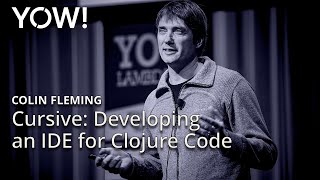
Developing an IDE for Clojure Code - Cursive
Explore Cursive, an IntelliJ-based IDE for Clojure using static analysis. Learn about unique features, challenges, and future plans for enhancing Clojure development workflows.