PEtab.jl - Efficient Parameter Estimation for Dynamic Models
Explore efficient parameter estimation for dynamic models in biology using PEtab.jl. Learn to import problems, set up estimations, and choose optimal gradient computation methods.
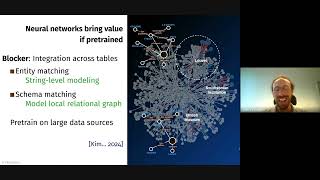
Tabular Learning: Skrub and Foundation Models - Automating Data Wrangling
Explore tabular learning with skrub library, automating data wrangling and simplifying complex pipelines for efficient machine learning on organizational data.

Syntax Directed Definition (SDD) - Types of Attributes and SDDs in Compiler Design
Explore syntax directed definitions, attribute types, and SDD variations in compiler design. Master key concepts for effective language processing and translation.

To GPL or Not to GPL? - Advantages and Disadvantages for WordPress Plugins
Explore the advantages and disadvantages of using General Public Licenses (GPL) for plugins, understanding their impact on your development projects.
Cppless: A Single-Source Programming Model for High-Performance Serverless
Explore Cppless, a single-source programming model enabling high-performance serverless applications in C++. Learn about transparent offloading, common abstraction layers, and composable architectures for efficient cloud computing.
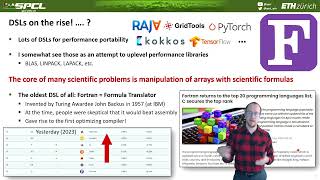
Fortran Optimization for Accelerator Devices - Data-Centric Representation
Explore data-centric optimization techniques for Fortran code on accelerator devices, enhancing high-performance computing capabilities.
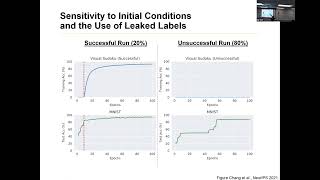
SAT Net: Issues with Symbol Grounding - Part 2 of 3
Explore critiques of SAT Net, focusing on the symbol grounding problem in neurosymbolic reasoning. Gain insights from Paulo Shakarian's lecture on this advanced AI topic.
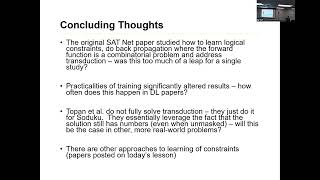
SAT Net: Resolving Symbol Grounding - Part 3
Explore symbol grounding in SAT Net through follow-on work, addressing key challenges in neurosymbolic reasoning and artificial general intelligence.
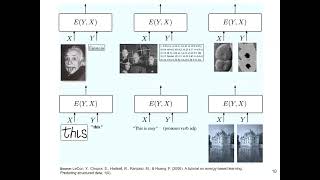
Introduction to NeuPSL - Part 1
Explore NeuPSL, a neurosymbolic framework combining probabilistic soft logic with deep learning for end-to-end training and logical constraint enforcement. Learn its fundamentals and applications in AI.
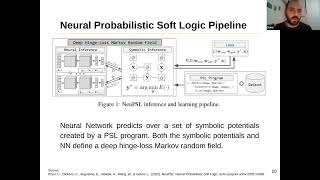
NeuPSL: Training and Inference - Part 2
Explore NeuPSL's training and inference processes, combining probabilistic soft logic with deep learning for end-to-end training and logical constraint enforcement in neurosymbolic AI.
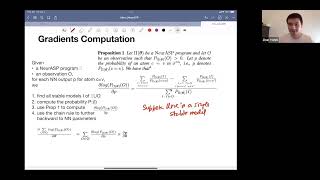
NeurASP: Model Training - Part 2
Explore NeurASP's end-to-end training process, connecting ASP programs to neural architectures for gradient flow. Learn model training techniques in this neuro-symbolic framework.
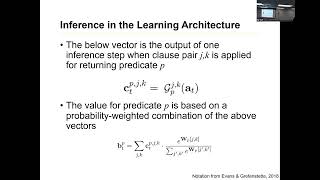
Differentiable Inductive Logic Programming - Part 6: Q&A
Explore Q&A session on differentiable inductive logic programming, discussing key concepts and applications in neuro-symbolic AI with Prof. Paulo Shakarian.
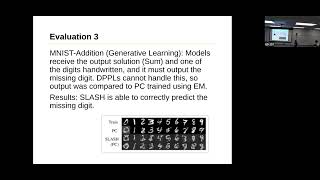
SLASH Framework: Experiments - Part 3
Explore experiments in the SLASH framework for neuro-symbolic AI. Gain insights into cutting-edge research combining symbolic methods and deep learning.
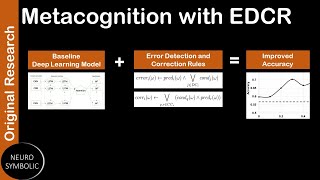
Metacognition with EDCR: Error Detection and Correction in Neurosymbolic AI
Explore metacognition and EDCR, a neurosymbolic method for error detection in AI models. Learn about rule learning, intuitions, and applications in few-shot learning.
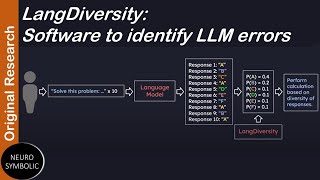
LangDiversity: Software to Identify LLM Errors - Diversity Measures and Prompt Selection
Explore LangDiversity software to identify LLM errors using diversity measures. Learn implementation, code examples, and prompt selection techniques for improving language model outputs.
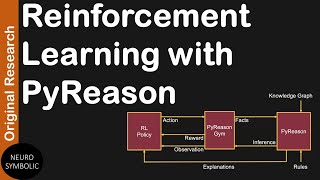
Reinforcement Learning with PyReason as a Semantic Proxy
Explore PyReason as a semantic proxy for simulators in reinforcement learning, featuring a technical discussion on its application and recent research findings.
Decision Trees in Neuro-Symbolic AI
Master decision tree algorithms for effective data classification and prediction in machine learning applications.
Reasoning Shortcuts in Neurosymbolic Systems
Explore reasoning shortcuts in neurosymbolic systems, their impact, and mitigation strategies for effective deployment. Gain insights from recent research papers.

Launching Jupyter and Submitting Homework in ME3255 - Lecture 1
Launch Jupyter and learn how to submit HW_01 in Google Classroom for ME3255, covering essential steps for successful assignment completion.

Using Jupyter and Submitting Your First Homework - ME5180
Learn to use Jupyter Notebooks and submit your first homework assignment in this practical guide for ME5180 students.

Functions, Docstrings, and Working in Jupyter - ME3255 Homework 1
Learn to create functions, write effective docstrings, and navigate Jupyter notebooks for efficient coding and documentation in engineering applications.