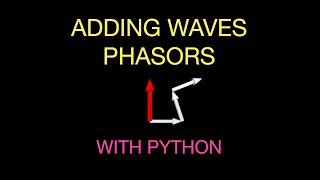
Phasor Addition of Waves with Python
Animate wave interference using phasors and Python, exploring amplitude addition through rotating vectors.
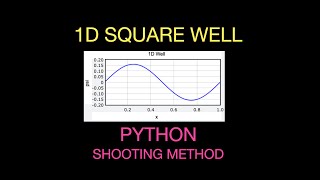
Quantum Mechanics: Using the Shooting Method and Python to Solve the 1D Square Well
Solve the 1D infinite square well numerically using Python and the shooting method, exploring an alternative approach to quantum mechanics problem-solving.
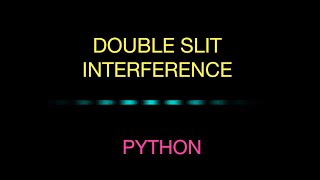
Double Slit Intensity Pattern with Python
Model the intensity pattern of two slits using Web VPython and explore phasors for finding intensity in this hands-on coding tutorial.
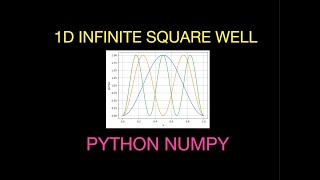
Solving Schrödinger's Equation as an Eigenvalue Problem with Numpy
Explore numerical solutions to the 1D infinite square well using Python's NumPy library and the finite difference method for Schrödinger's equation.
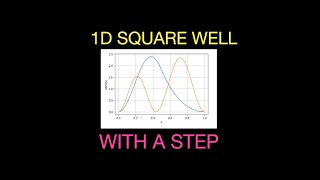
1D Square Well with Step Potential - Finite Difference Solution
Explore numerical solutions for 1D square well with step potential using finite difference method in Python. Learn eigenvalue problem solving and result normalization.
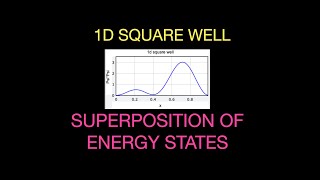
Superposition of Energy States in a 1D Infinite Square Well
Explore superposition of energy eigenstates in a 1D infinite square well through calculations and Python modeling.
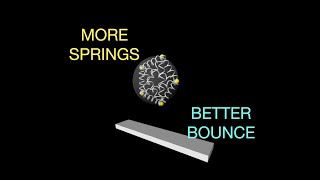
A Better Spring-Ball Model for Bouncing - Now with More Springs
Explore an improved spring-ball model for bouncing, featuring multiple interconnected balls and springs for enhanced simulation accuracy.
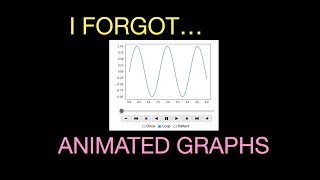
Three Ways to Make Animated Graphs in Python
Learn three simple techniques for creating animated graphs in Python using matplotlib and vpython, from basic to advanced methods.
Quantum Mechanics: Wave Function for a Particle on a Ring
Explore wave functions for particles confined to rings, including normalized solutions and Python plotting code.
Modeling RLC Circuits with Numerical Calculations and Python
Model RLC circuits using numerical calculations and Python, exploring analytical solutions and simulations for capacitor discharge and RLC behavior.
Using a Bunch of Balls to Model the Ideal Gas Law in Python
Model the ideal gas law with bouncing balls in Python and calculate pressure and temperature.
Modeling the Cavendish Experiment with Python
Model the Cavendish experiment using Python to explore gravitational forces between masses. Learn to simulate and analyze this classic physics experiment through coding.
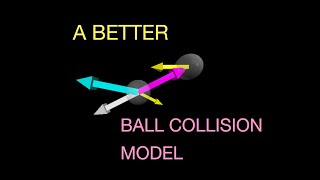
Building a Better Ball Collision Model for Solar System Simulation in Python
Improve ball collision modeling for a flat solar system simulation, focusing on conservation of momentum and angular momentum.
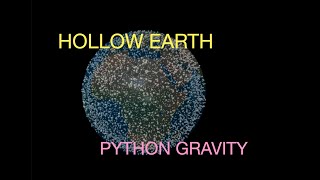
Using Python to Calculate the Gravitational Field for a Hollow Earth
Calculate the gravitational field of a hollow Earth using Python, exploring its effects on surface gravity and comparing to real-world experiments.
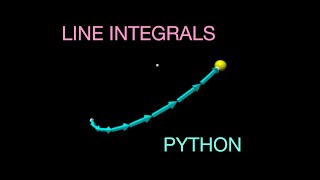
Numerical Line Integrals with Python
Explore numerical line integrals using Python to calculate work done in force fields. Gain practical coding skills for solving complex physics problems.
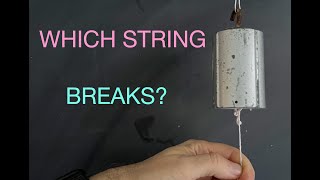
Which String Breaks First? Modeling a Physics Demo with Python
Model a physics demo of two strings supporting a mass using Python to determine which string breaks first when pulled.
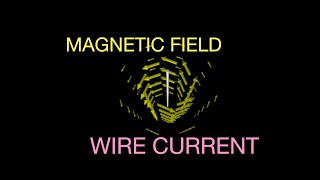
Magnetic Field due to a Wire - Python Calculation and Visualization
Explore magnetic fields created by wires through calculations and Python visualizations. Master theoretical concepts and practical applications in electromagnetism.
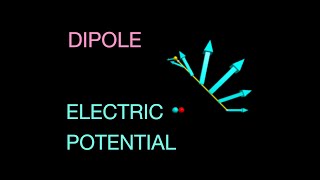
Two Ways to Calculate the Change in Potential Near a Dipole
Explore two methods for calculating potential change near a dipole: using electric field expression and numerical computation with Python.
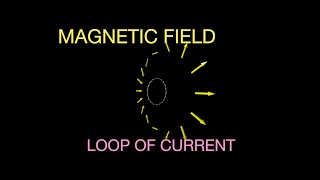
Magnetic Field due to a Loop of Current - Python Calculation Included
Derive the magnetic field from a current loop and perform numerical calculations using Python, enhancing understanding of electromagnetic principles.
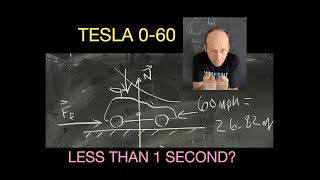
Could a Tesla Really Accelerate from 0-60 mph in Less Than 1 Second?
Explore the physics behind Tesla's ambitious 0-60 mph acceleration claim, analyzing feasibility and engineering challenges.
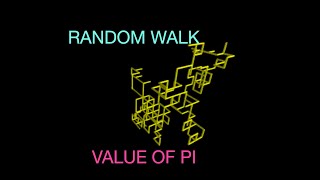
Finding the Value of Pi from a Random Walk Using Python
Explore Python coding to calculate pi using random walks, from 1D to 3D simulations. Enhance mathematical understanding through practical programming.