The Art of KMP: How I Learned Backend Development with Kotlin and Why You Should Too
Explore backend development with Kotlin for web and desktop apps. Learn framework options, resources, and benefits of using Kotlin beyond Android development.

Installing and Using Jackalope Fuzzer on MacOS - Finding Vulnerabilities in Simple Programs
Install and use jackalope fuzzer on MacOS to find vulnerabilities in binary programs. Learn cloning, compilation, command options, and practical fuzzing techniques.

Giving Key a Vocabulary in Dyalog APL - Extending the Key Operator
Explore enhancements to Dyalog APL's key operator, addressing result ordering, missing data, and subset querying for improved data analysis and processing efficiency.

Setting and Getting Variable Values in APL - Proposed System Functions
Explore advanced techniques for dynamic variable handling in APL, focusing on improved readability and performance through proposed system functions ⎕NV, ⎕NG, and ⎕NS.
A YAML Parser in APL - Design and Implementation
Explore YAML parsing in APL, focusing on implementation challenges, design decisions, and APL's potential contributions to YAML development.
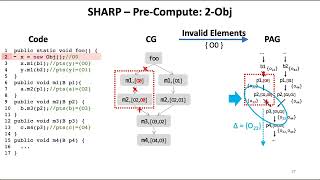
SHARP: Fast Incremental Context-Sensitive Pointer Analysis for Java
Explore SHARP, a groundbreaking incremental context-sensitive pointer analysis algorithm for Java, offering improved performance and scalability for large-scale programs.
Towards Mailbox Typing for Erlang - Lightning Talk
Explore mailbox typing for Erlang: a new technique to detect concurrency errors in actor-based languages, complementing existing tools like Concuerror model checker.
How to Add Dialyzer to an Existing Elixir Project - Lightning Talk
Learn strategies for integrating Dialyzer into existing Elixir projects smoothly, minimizing team friction and maximizing code quality benefits.
Building Web Apps with Haskell and IHP - Lightning Talk
Explore full-stack web app development using Haskell and IHP framework through a quick live demonstration.
Deriving as a Library - Type Classes and Language Features
Explore implementing type class deriving as a library, enhancing Haskell's extensibility without language extensions.
Propagator Networks for Degenerate Computation - Enhancing Software Robustness
Explore propagator networks as a robust architecture for degenerate computation, enabling software evolution, operational feedback, and language mixing, with bioinformatics examples.
Modern DSL Compiler Architecture in OCaml - Experience with Catala
Explore state-of-the-art DSL implementation in OCaml, featuring concrete examples and insights from the Catala compiler for legal algorithms.
Less Power for More Learning - Restricting OCaml Features for Effective Teaching
Explore a framework for sandboxing OCaml features to automate grading of programming exercises, including feature restriction, mock IO system, and security considerations.
Runtime Detection of Data Races in OCaml with ThreadSanitizer
Explore runtime detection of data races in OCaml using ThreadSanitizer. Learn core principles, challenges, adaptations, and practical application for reliable parallel code development.

Greedy Implicit Bounded Quantification in Object-Oriented Programming Languages
Explore greedy implicit bounded quantification in object-oriented programming, focusing on type inference algorithms and a variant of kernel F≤ with implicit polymorphism.

Adventure of a Lifetime: Extract Method Refactoring for Rust
Explore automated 'Extract Method' refactoring for Rust, addressing ownership and lifetime challenges through program transformations and repair procedures. Gain insights into advanced code refactoring techniques.

Gradual Typing for Effect Handlers
Explore gradual typing for effect handlers, integrating effect typing with existing languages. Learn about GrEff language, its semantics, and the graduality theorem through operational logical relations models.

A Grounded Conceptual Model for Ownership Types in Rust
Explore a systematic approach to teaching Rust's ownership types, featuring a new assessment tool, conceptual model, and visualizations to improve learner understanding of memory safety concepts.

A Container-Usage-Pattern-Based Context Debloating Approach for Object-Sensitive Pointer Analysis
Explore DebloaterX, a novel approach for efficient object-sensitive pointer analysis. Learn how container-usage patterns improve context debloating, enhancing performance with minimal precision loss.

Graph IRs for Impure Higher-Order Languages: Making Aggressive Optimizations Affordable - OOPSLA 2023
Explore a novel graph IR for aggressive global optimizations in impure higher-order languages, combining reachability types and effect systems for precise dependency tracking and efficient code optimization.

Bidirectional Object-Oriented Programming: Towards Programmatic and Direct Manipulation of Objects
Explore bidirectional object-oriented programming for programmatic and direct object manipulation, focusing on a novel language extension and its application in HTML document generation through GUI design.