
Python in Prison - How Open Source Can Change a Criminal Justice System
Explore how Python and open-source technology can revolutionize the criminal justice system, addressing societal challenges and promoting positive change through innovative programming initiatives.

An ASGI Server from Scratch
Explore building an HTTP/1 ASGI server using asyncio, from TCP echo server to full implementation. Ideal for those familiar with asyncio and coroutines seeking practical application.
Serverless 2.0 with Cloudstate.io - Stateful Functions with Python
Explore next-generation serverless computing with Cloudstate, addressing challenges in distributed state management and long-lived stateful services for event-driven systems.
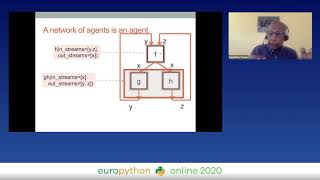
IoTPy - Python + Streams + Agents for Streaming Applications
Explore IoTPy for building concurrent, non-terminating streaming applications in Python, leveraging existing libraries for data analysis and distributed systems.
Practical Optimisations for Pandas
Discover techniques for optimizing Pandas code, including bottleneck identification, computational efficiency, and memory management for improved performance in data processing tasks.

Radio Astronomy with Python
Explore radio astronomy using Python, focusing on redshift studies, galaxy distribution analysis, and machine learning techniques for processing large astronomical datasets.
Bringing Your Python Script to More Users
Learn to transform Python scripts into user-friendly applications using CLI, GUI, and web interfaces. Explore techniques to make your code accessible and useful to a wider audience.
Django Clone From Scratch With Flask
Explore engineering Flask to mimic Django, diving into framework internals and development patterns. Learn to create a Django-like app with Flask, discussing benefits and challenges of both frameworks.
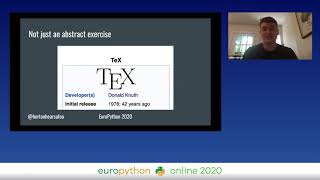
A Brief History of Jupyter Notebooks
Explore the evolution of Jupyter Notebooks, from early computational interfaces to modern collaborative tools. Discover key milestones, current ecosystem, and future developments in scientific programming environments.
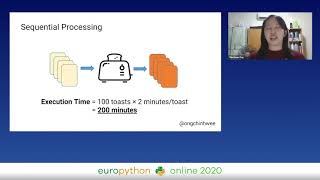
Speed Up Your Data Processing
Explore parallel and asynchronous programming techniques to optimize data processing pipelines, enhancing efficiency in data science workflows and overcoming common bottlenecks.
Train, Serve, Deploy - Story of a NLP Model ft. PyTorch, Docker, Uwsgi and Nginx
Learn to build, train, and deploy NLP translation models using PyTorch, Flask, Docker, uWSGI, and Nginx. Covers data preprocessing, model training, web app creation, containerization, and production serving techniques.
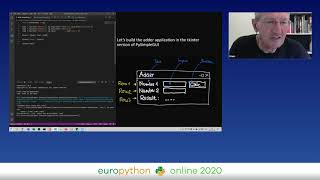
Attractive GUIs with PySimpleGUI
Learn to create attractive and functional GUIs with PySimpleGUI, bridging the gap between complex frameworks and limited design tools. Explore its design philosophy and practical applications.
Docker and Python - Making Them Play Nicely and Securely for Data Science and ML
Learn Docker best practices for data-intensive Python applications, covering image optimization, security, automation, and efficient deployment workflows in Data Science and Machine Learning contexts.

15 Things You Should Know About Spacy
Discover 15 key insights about spaCy, an open-source NLP library for Python. Learn its strengths, limitations, and practical applications for processing and understanding large text corpora.
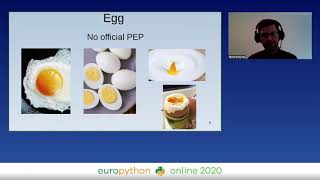
Difficulties of Python Code Development - Packages, Virtualenvs and Package Managers
Explore Python development essentials: packages, virtual environments, and package managers. Learn pros and cons, best practices, and tools for efficient code management and dependency resolution.
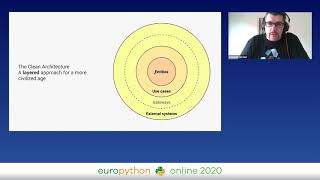
Clean Architectures in Python
Explore clean architecture principles for Python, focusing on layer separation and internal APIs to create maintainable, testable, and loosely coupled systems.
Building Smarter Solutions with No Expertise in Machine Learning
Explore practical ML solutions using existing models and AutoML techniques, with interactive demonstrations and insights for quick implementation without deep expertise.
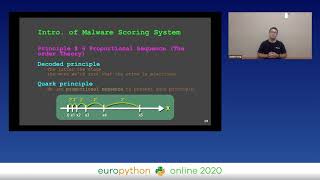
So, You Want to Build an Anti-Virus Engine?
Learn to build an Android malware analysis engine using Python, combining criminal law principles with bytecode analysis to create a robust scoring system that can detect threats even in obfuscated code.
Diffprivlib - Privacy-Preserving Machine Learning with Scikit-Learn
Explore differential privacy in machine learning using Diffprivlib, a tool for training accurate models with robust privacy guarantees, seamlessly integrating with scikit-learn and numpy.
Boosting Simulation Performance with Python
Explore discrete-event simulation for robotics, boosting performance and determinism. Learn to overcome challenges in event-driven systems and distributed simulations for faster development and testing cycles.

Decision Science with Probabilistic Programming
Explore generative models and probabilistic programming for decision-making under uncertainty, integrating with robust optimization techniques to enhance business strategies.