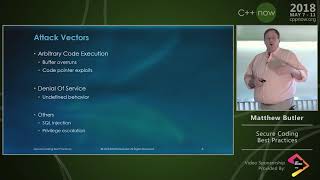
Secure Coding Best Practices
Explore secure coding practices in C++ to protect systems from vulnerabilities. Learn to identify attack surfaces, balance security with performance, and integrate security measures from the design phase.
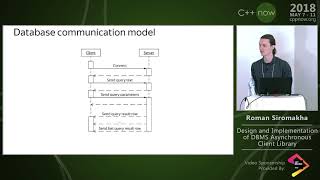
Design and Implementation of DBMS Asynchronous Client Library
Explore design and implementation of an asynchronous DBMS client library, focusing on efficient communication, type-safe queries, and customization. Learn about C++17 features, Boost libraries, and asynchronous programming techniques.

Option - Is Not a Failure
Exploring C++ error handling evolution: from error codes to exceptions, and modern approaches using optional, expected, and outcome types. Discusses trade-offs and future directions.

Git, CMake, Conan - How to Ship and Reuse Our C++ Projects
Explore efficient C++ project management using Git, CMake, and Conan. Learn modern techniques for dependency handling, modular design, and package creation to streamline development and improve code reusability.
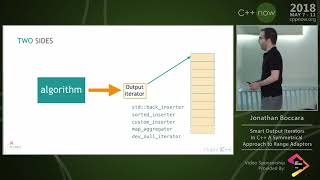
Smart Output Iterators
Explore smart output iterators in C++, their advantages, and how they complement STL algorithms and range libraries. Learn implementation techniques and performance comparisons for efficient collection manipulation.
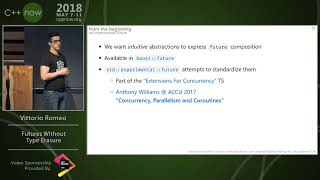
Futures Without Type Erasure
Explore zero-allocation, type-erasure-free futures in C++. Learn design and implementation of an experimental library embedding asynchronous computation graphs into types, with benchmarks and C++17 features.
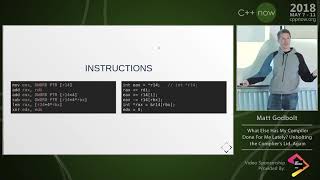
What Else Has My Compiler Done For Me Lately
Explore recent compiler optimizations and features with Matt Godbolt, creator of Compiler Explorer, as he shares insights on efficient code writing and the latest compiler developments.
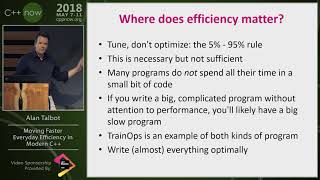
Moving Faster - Everyday Efficiency in Modern C++
Explore modern C++ efficiency techniques, from value semantics to container choice, for writing performant code that meets user expectations in everyday programming scenarios.
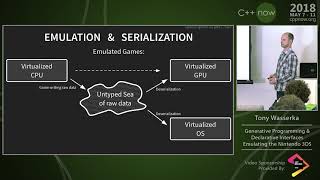
Generative Programming in Action - Emulating the 3DS
Explore generative programming in C++ for console emulation, focusing on the 3DS interprocess communication system. Learn to balance performance, maintainability, and correctness using modern C++ techniques.
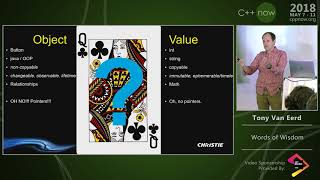
Words of Wisdom
Explore coding wisdom from various sources, covering value semantics, strong types, and API design. Gain insights on naming, consistency, and best practices in C++ programming.
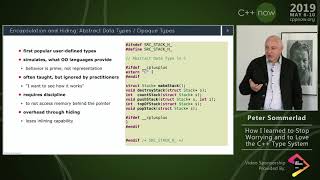
How I Learned to Stop Worrying and Love the C++ Type System
Explore C++ type system benefits, avoiding primitive types for domain values. Learn to implement wrapper types and use a framework for type-safe operators, enhancing code safety and clarity.
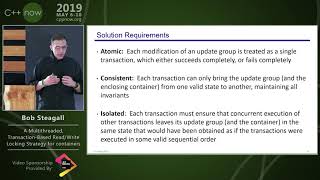
A Multithreaded, Transaction-Based Locking Strategy for Containers
Explore a multithreaded, transaction-based locking strategy for containers in C++, focusing on atomicity, consistency, and isolation. Learn implementation techniques using C++17 standard library and compare performance with other methods.
Property-Based Declarative Containers in C++
Explore declarative containers in C++, offering simplified APIs for complex systems while maintaining efficiency. Learn to design opaque, property-based containers and domain-specific algorithms.
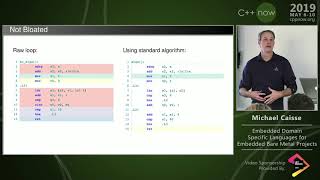
Embedded Domain Specific Languages for Embedded Bare Metal Projects
Exploring embedded domain-specific languages for bare metal projects, focusing on benefits, resource costs, and implementation techniques using C++14/17 features.
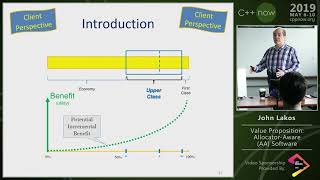
Value Proposition - Allocator-Aware Software
Explores the business case, syntactic styles, and economic imperative of allocator-aware software infrastructure in C++, discussing costs, benefits, and potential language-based approaches for future standards.
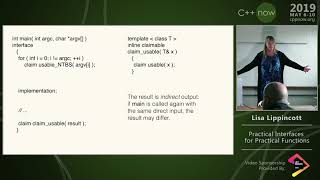
Practical Interfaces for Practical Functions
Explores practical approaches to developing formal interfaces for familiar functions in C++, drawing lessons for effective interface design and building on previous work in software architecture.
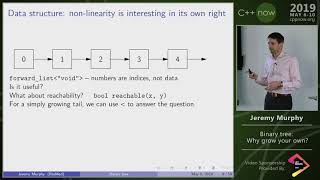
A Generic Binary Tree - Why Grow Your Own?
Explore the design and implementation of a generic binary tree for Boost.Graph, discussing trade-offs, storage options, and performance comparisons while drawing insights from classic computer science texts.
Implementing Physical Units Library for C++
Explore the design and implementation of a Physical Units Library for C++, including challenges, tradeoffs, and C++20 features that enhance usability, maintainability, and extensibility.
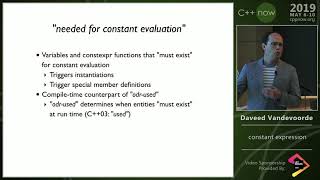
C++ Constants
Explore the evolution of constant expressions in C++, from C++11 to C++20, examining fundamental concepts and new capabilities in modern C++ with expert Daveed Vandevoorde.
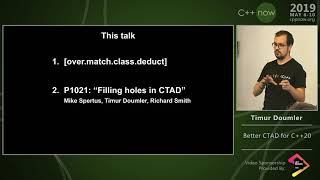
Better CTAD for C++20
Explore improvements to Class Template Argument Deduction in C++20, addressing flaws and pitfalls from C++17 for cleaner, safer, and more intuitive code.
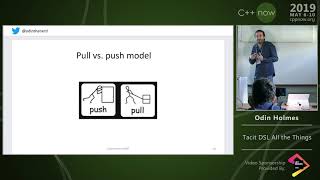
Tacit DSL All the Things
Explore functional programming concepts in C++ through an extended ranges DSL, unifying various paradigms and libraries for more declarative and composable code.