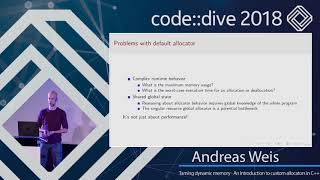
Taming Dynamic Memory - An Introduction to Custom Allocators in C++
Explore custom C++ allocators for enhanced memory management, covering techniques like pooling and monotonic allocation, alignment challenges, and integration with modern codebases.
When You Hit "Error - Memory Is Not Aligned"
Explore memory alignment in C++, covering its importance, default rules, and methods for ensuring alignment across different C++ versions. Learn about attributes, functions, and custom allocators.
Virtual Assembly for Web Application
Explore WebAssembly's potential to boost web app performance using pre-optimized execution code, LLVM, and languages like C++ or Rust. Learn about DOM access, JavaScript integration, and multithreading in WebAssembly.
Bringing Business Logic Back to C++
Exploring techniques to enhance C++ expressiveness for business logic, including polymorphic wrappers, open methods, dynamic mixins, and hotswapping, to improve efficiency and maintainability.
East Const but Constexpr West
Explore C++ declaration syntax, focusing on const and constexpr placement. Learn insights on "East const" and why it differs for constexpr.
Character Encodings Hate Us All
Explore character encoding challenges, common pitfalls, and solutions across programming languages. Learn to handle multilingual text and avoid encoding-related issues in software development.
Basic Web Applications Security
Explore SQL Injection, XSS, and CSRF vulnerabilities through live demonstrations. Learn to detect, exploit, and fix these common web application security issues using Java and Spring Boot examples.
What Are FPGAs and How Do They Work
Comprehensive exploration of FPGA technology, covering architecture, programming, and execution processes. Compares FPGAs to traditional processors and discusses their growing role as accelerators in various computing environments.
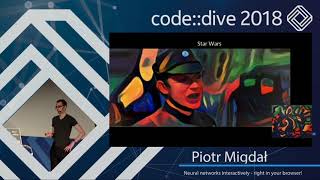
Neural Networks Interactively - Right in Your Browser
Explore neural networks interactively in your browser with TensorFlow.js. Learn about applications, demos, and privacy-focused machine learning projects through hands-on examples and visualizations.
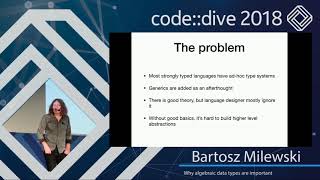
Why Algebraic Data Types Are Important
Explore type theory, category theory, and logic in functional programming, focusing on algebraic data types and their role in enhancing code reliability and expressiveness.
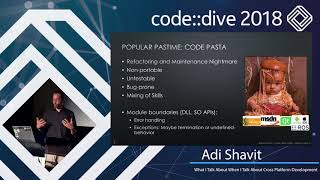
What I Talk About When I Talk About Cross Platform Development
Explore the Salami Method for efficient cross-platform development, focusing on separating platform-specific code from core functionality to create maintainable, testable, and portable systems.
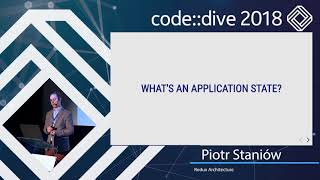
Redux Architecture
Explore Redux architecture through live coding, learning its core concepts and practical implementation for efficient application state management.
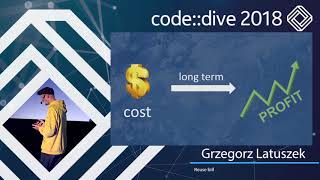
Reuse Bill
Exploring challenges and realities of code reuse in software development, drawing from 25 years of experience in test automation to provide insights on planning, cost, quality, and human factors.
Data-Oriented Design in Practice
Explore data-oriented design as an alternative to OOP in C++, focusing on practical examples from web browsers to demonstrate improved performance, scalability, and maintainability.
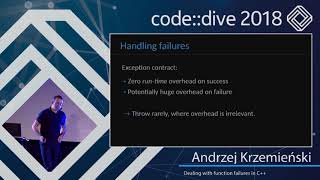
Dealing with Function Failures in C++
Explores C++ function failure reporting methods, comparing exceptions and error codes, and examines how C++17 features and the Outcome library impact failure handling approaches.
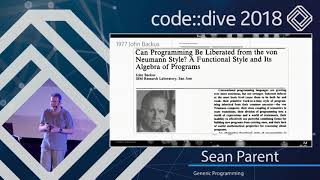
Generic Programming
Explore the origins, concepts, and impact of Generic Programming on software development, featuring insights from industry pioneers and its influence on C++ evolution.
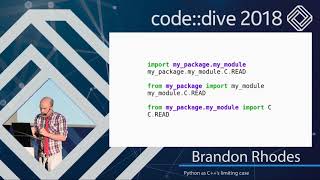
Python as C++’s Limiting Case
Explore Python's memory model as an extension of C++ conventions, examining language design trade-offs, performance considerations, and evolving programming paradigms.

C++ Code Smells
Explore common C++ coding pitfalls and learn to identify "code smells" that may indicate potential issues, with insights from expert Jason Turner.
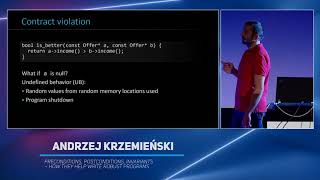
Preconditions, Postconditions, Invariants – How They
Explore Design by Contract principles: preconditions, postconditions, and invariants. Learn their practical applications and benefits for software development and testing.
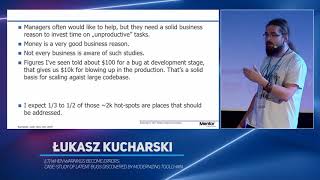
When Warnings Become Errors - A Case-Study of Latent Bugs
Explore real-world examples of latent C++ bugs uncovered during compiler updates and static analysis, highlighting the importance of modern tooling for code quality and maintainability.
Software is Feeding the World
Explore vertical farming technology, IoT infrastructure, and Python-based farm management systems. Learn about edge machine learning in agriculture and innovative solutions to global food challenges.