Hacker’s Guide to Web Assembly
Explore WebAssembly's basics, speed advantages, and applications. Learn how to build web apps using C/C++/Rust, with live demos and coding examples for a hands-on understanding of this powerful technology.
Building Modern Native Applications with Gradle
Explore modern native application development using Gradle, covering C/C++, D, Rust, Go, cross-platform builds, and integration with tools like GNU Make, CMake, Doxygen, and Conan.
Turtles! Hill Climbing! Hammers! Paper Bags!
Explore optimization techniques through turtle graphics, from hill climbing to simulated annealing, laying the groundwork for understanding neural networks and machine learning concepts.
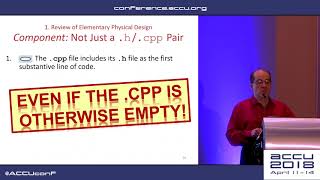
C++ Modules and Large-Scale Development
Explore C++ modules' impact on program architecture, code organization, and large-scale development, covering migration strategies and design principles for improved software structure.
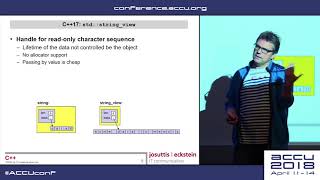
C++ Templates Revised
Explore modern C++ templates, discussing new features, style recommendations, and practical implications for application programmers in generic programming.
Class Template Argument Deduction in C++17
Comprehensive introduction to Class Template Argument Deduction in C++17, covering usage, benefits, pitfalls, and language rules for cleaner, shorter code in both standard library and custom classes.
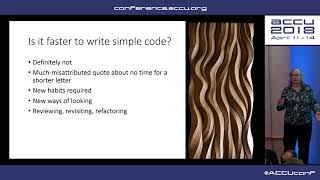
Simplicity - Not Just for Beginners
Explore techniques for writing simpler, more efficient C++ code, focusing on naming conventions, function length, and modern language features to improve readability and performance.
Linux User - Kernel ABI - The Realities of How C and C++ Programs Really Talk to the OS
Explore the intricacies of Linux system calls, signal handlers, pthreads, and ptrace. Gain insights into low-level interactions between C/C++ programs and the operating system for advanced debugging and optimization.
Three Years of Rust - A Look Around
Comprehensive overview of Rust's evolution, features, and industry adoption. Explores current capabilities, future developments, and changes since its inception.
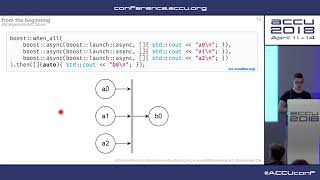
Zero-Allocation & No Type Erasure Futures
Explore composable futures without dynamic allocation and type erasure in C++. Learn design, implementation, and benchmarking of an experimental future library using C++17 features.
Tales of C, the 6502 and the BBC - With Added Python
Explore the journey of creating a C compiler for the BBC Micro using Python, delving into 80s computing, assembly language, and modern programming techniques.

Nothing Is Better Than Copy or Move
Explore C++ move semantics, copy elision, and temporary materialization through practical examples, focusing on efficient object creation and optimization techniques.
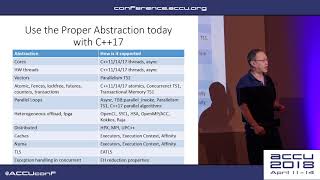
Heterogeneous Programming in C++ Today
Explore the evolving landscape of heterogeneous parallelism in C++, including standards, specifications, and future applications in IoT, self-driving cars, and machine learning.
C++ Today - The Beast is Back
Explore C++'s resurgence, its historical significance, and why it remains the top choice for performance-driven software engineering in modern computing environments.
Grill the C++ Committee
Panel discussion with C++ Standards Committee members on upcoming changes, decision-making processes, and addressing common misconceptions about C++ standardization.

STL Algorithms in Less Than an Hour
Comprehensive overview of STL algorithms, their groupings, and applications in C++, enhancing code expressiveness and robustness through practical examples and patterns.
Swift Driven Development
Explore Swift-specific TDD techniques, leveraging language features and tooling to maximize productivity and code quality. Live demo showcases practical application.
A Quantum Data Structure For Classical Computers
Explore quantum data structures for classical computers, covering quantum interference, entanglement, and coherence. Learn C++ implementations and new design approaches for emerging hardware.

Emotional Code
Explore how emotions influence coding practices and their impact on software development. Learn to recognize emotional traces in code and strategies for creating more effective, neutral code.
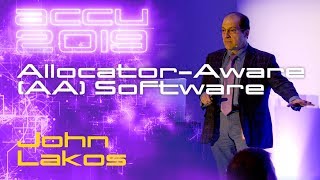
Allocator-Aware Software
Explore allocator-aware software benefits, costs, and implementation styles in C++. Learn about performance gains, integration challenges, and future language-based approaches for efficient memory management.
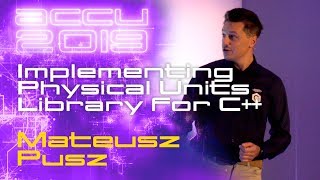
Implementing Physical Units Library for C++
Explore challenges and solutions in designing a Physical Units Library for C++, leveraging C++20 features for improved usability, maintainability, and extensibility.