
Tulip - A Language for Humans
Explore Tulip, a new programming language with ML-like syntax and Erlang-inspired runtime, designed for REPL ergonomics and emphasizing minority language designers.
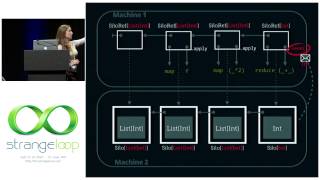
Function Passing Style - Typed, Distributed Functional Programming
Explore function-passing style for distributed programming, leveraging Scala's type system and language features to enable safe, asynchronous computation on immutable data across distributed environments.
Concurrency Options on the JVM
Explore JVM concurrency options, from Java's ExecutorService to Scala's akka actors and Clojure's core.async. Learn design strategies for deadlock-free, efficient concurrent applications.
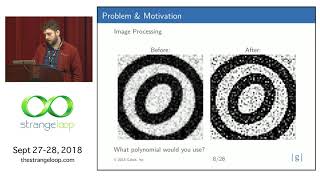
Your Secrets Are Safe with Julia - A Compiler for Secure Computation
Explore Ramparts, a compiler translating Julia code for homomorphic encryption, enabling secure computation on encrypted data without cryptography expertise.
Hackett - A Metaprogrammable Haskell
Explore Hackett, a language combining Haskell's type system with Racket's macro system. Learn about interleaved macroexpansion and typechecking, and discover new possibilities for metaprogramming and DSLs.
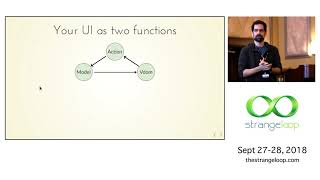
Data Driven UIs, Incrementally
Explore efficient data-driven UI development using Incremental, an OCaml library for dynamic computations. Learn techniques for building responsive applications that handle large data streams in real-time.
Running With Scissors - Live Coding With Data
Explore Clojure's unique features for effective programming and development processes through live coding demonstrations and practical examples.
Reactive Programming - A Better Way To Write Frontend Applications
Explore functional reactive programming for simplified frontend development, treating data as asynchronous streams and transforming values over time to handle events more effectively.
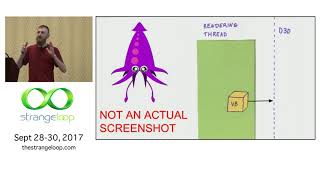
Level Up Your Concurrency Skills With Rust
Explore Rust's approach to safe concurrent programming, learning how it catches errors at compile time and enhances your skills across languages. Gain insights into race conditions and memory safety.
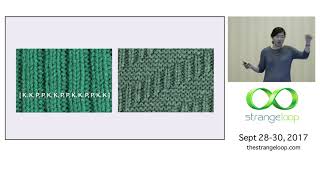
How to Be a Compiler
Explore how compiling code parallels language learning and creative practices, revealing insights into software engineering and fostering an inclusive tech environment.
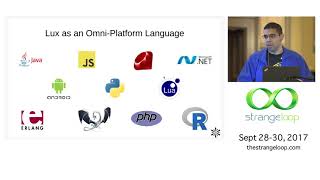
The Lux Programming Language
Explore Lux: a functional, statically-typed Lisp for multiple platforms. Learn about its features, philosophy, and potential impact on programming paradigms and meta-programming.
Propositions as Types
Explore the profound connection between logic and computation, delving into the Propositions as Types principle and its impact on theorem provers, programming languages, and computing frontiers.

Unconventional Programming with Chemical Computing
Explore unconventional programming through chemical computing metaphors. Learn artificial chemical computing basics, high-order concepts, and innovative problem-solving approaches using Clojure for demonstrations.
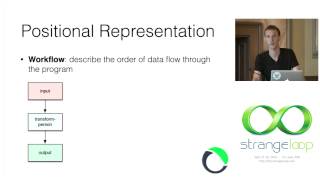
Onyx - Distributed Workflows for Dynamic Systems
Explore Onyx, a distributed computation system addressing workflow complexities in modern frameworks. Learn about its innovative approach to simplify processing and leverage hardware advancements.
Towards Annex - A Fact Based Dependency System
Explore a novel approach to dependency management using fact-based systems, functional programming, and datalog principles for improved flexibility, reproducibility, and context-aware artifact queries.

Svelte, Cybernetically Enhanced Web Apps
Explore Svelte's unique approach to building fast, reactive web apps without complex state management or virtual DOM, offering a fresh alternative to React and Vue.js.
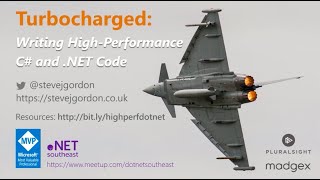
Turbocharged - Writing High-Performance C# and .NET Code
Learn to write faster, more efficient C# code using high-performance APIs and language features. Practical examples cover Span, Memory, System.IO.Pipelines, ArrayPool, and new JSON APIs in .NET Core 3.0.

Blazor in More Depth
Explore advanced Blazor features with its architects, covering server-side streaming, Razor Class Libraries, APIs, build systems, and compiler internals for a deeper understanding of the framework.

Change Your Habits - Modern Techniques for Modern C#
Explore modern C# techniques to enhance coding practices, improve productivity, and enforce better design principles through practical examples and everyday applications.
Frontend in F# - Hold My Beer
Discover how a backend developer tackles frontend development using F# and functional programming, exploring the MVU pattern and Fable for efficient web development.
Modernizing the Enterprise Desktop Application
Modernize WPF and Windows Forms apps: migrate to .NET Core 3, implement CI/CD, switch to MSIX, add telemetry, and incorporate modern Windows controls for enhanced desktop applications.