How to Implement Autoencoders in Python and Keras - The Encoder
Learn to implement autoencoders in Python and Keras, focusing on building the encoder component. Covers autoencoder class construction, convolutional layers, bottleneck creation, and practical implementation.

Build a Spotify-Like Music Recommender System in Python
Create a Spotify-like music recommender system using Python, collaborative filtering, and Alternating Least Squares. Learn about music recommendation types, Spotify's architecture, and implement artist suggestions with the 'implicit' library.
Implementing and Training a Neural Network with PyTorch
Build and train a feed-forward neural network using PyTorch to classify MNIST digits. Learn data management, network implementation, and training loop creation in this hands-on tutorial.
Preprocessing Audio Datasets for Machine Learning
Build an audio preprocessing pipeline for AI in Python, covering STFT, zero-padding, and min-max normalization. Learn to batch process audio files efficiently for machine learning applications.
How to Implement a Variational Autoencoder in Python and Keras
Implement a Variational Autoencoder using Python, TensorFlow, and Keras. Learn to modify the encoder, update loss functions, train the model, and visualize the latent space for data generation.
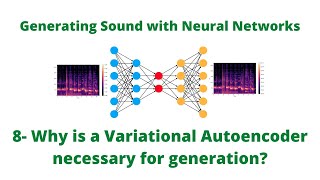
Generation with AutoEncoders - Results and Limitations
Explore image generation using autoencoders, analyze latent space representations, and understand limitations in generative tasks. Learn why variational autoencoders are necessary for improved generation.
RAPIDS - The Platform Inside and Outside - Joshua Patterson - ODSC East 2019
Accelerating data science with GPUs using RAPIDS: open-source libraries for GPU-powered data manipulation, machine learning, and graph analytics, scaling across multiple GPUs and integrating with existing Python ecosystems.
Boston Data Mining - A High-Performance Implementation of Bayesian Clustering
Explore Bayesian nonparametric methods and probabilistic machine learning, focusing on the Chinese Restaurant Process for clustering. Learn optimization strategies for applying these models to big data.
Implementing Exercise Wearables Analysis with Spark and Akka
Explore designing and implementing distributed systems with Scala, Akka, and Spark. Learn about cluster-sharded domains, REST APIs, and DevOps considerations for wearable and mobile applications.
Physical Computing: How Software Meets Hardware - From Christmas Trees to Connected Devices
Explore physical computing and connected devices, from microcontrollers to digital fabrication. Learn how diverse creators use open-source hardware and software to build interactive technologies and shape our connected world.
Managing Reference Data with Sirius - Not-So-Big Data After All
Explore managing reference data with Sirius, an open-source library for efficient data access and distributed systems management. Learn architecture, use cases, and real-world applications.
Building a Recommender: Best Practices with Apache Mahout and Solr - Emerging Technologies 2014
Building a recommender system using Apache Mahout and Solr: best practices, data selection, co-occurrence analysis, and deployment techniques for rapid, production-ready recommendations.
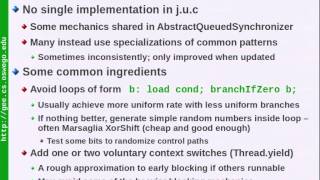
Engineering Concurrent Library Components
Explore concurrent algorithms, hardware trends, and Java Memory Model intricacies for engineering robust library components in multi-threaded environments.
Introduction to Rust Operators for Kubernetes
Explore Rust for Kubernetes operators: write a concise operator in under 100 lines, compare with Golang, and learn about custom resources and data fetching in this quick introduction.
Unterminating Kubernetes Resources - Avoiding Unintentional Data Loss
Learn to build a Golang program interfacing with ETCD to prevent data loss by reversing termination of bound PVCs in Kubernetes, with step-by-step guidance on implementation and key concepts.
Writing Your Own Kubernetes Operator from Scratch - Part 1
Comprehensive tutorial on creating a Kubernetes Operator from scratch, covering key concepts, libraries, and implementation steps with practical coding examples and explanations.
From Rails to Elm and Haskell - Transitioning to a Purely Functional Stack
Explore the journey from Ruby on Rails to Elm and Haskell at NoRedInk, discussing adoption strategies, challenges, and benefits of transitioning to functional programming languages.
Free as in Monads - Understanding and Applying Free Monads - Lecture 44
Explore the Free monad concept through live coding, understanding its origins, applications, and powerful impact on software development. Learn how to derive and utilize this abstraction for solving complex problems.
Tools for Building the Real-Time Organization
Explore tools and architectures for processing real-time data streams, enabling organizations to make faster, better decisions through event-based systems and reactive platforms.

How CPUs Read Machine Code - 6502 Part 2
Explore the inner workings of CPUs and machine code interpretation, focusing on the 6502 processor. Gain insights into low-level computer architecture and assembly language programming.

Building a Basic Computer with 6502 Microprocessor - Part 1: "Hello, World" from Scratch
Explore computer fundamentals by building and programming a basic 6502 microprocessor-based computer, starting with the first steps towards creating a "Hello, world" program from scratch.