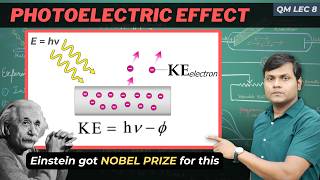
The Photoelectric Effect - Dual Nature of Light and Photons
Explore the photoelectric effect's role in quantum mechanics, its experimental observations, and Einstein's groundbreaking theory, revealing light's dual nature as waves and particles.
Physics 4A - SageMath Mini Tutorial
Learn to use SageMath for physics calculations and problem-solving in this concise tutorial designed for PHYS 4A students.
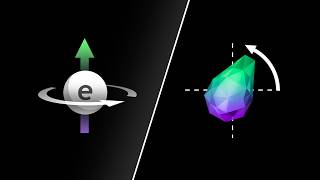
What is Spin? A Geometric Explanation of Particle Spin
Explore the geometric origin of particle spin, its significance in quantum mechanics, and the meaning of electron up/down states in this concise 20-minute explanation.
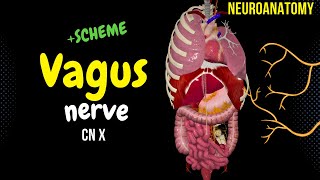
Vagus Nerve: Anatomy, Function, and Course - Cranial Nerve 10
Explore the vagus nerve's anatomy, function, and extensive distribution from head to abdomen. Learn about its components, nuclei, course, and branches in various body regions.
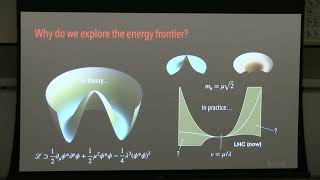
Muon Colliders: The Next Generation of Particle Accelerators
Explore the potential of muon colliders as next-generation particle accelerators, examining challenges, possibilities, and recent progress in overcoming limitations of proton and electron colliders.
Integrability of Box-Ball Systems and Randomized Box-Ball Systems - Part 1
Explorez l'intégrabilité des systèmes de boîtes à boules et leurs versions aléatoires. Découvrez les liens avec la théorie des cristaux, l'ansatz de Bethe et l'ultradiscrétisation dans ce domaine fascinant des mathématiques.
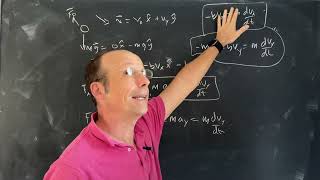
Classical Mechanics: Comparing Fall Times of Dropped and Launched Balls
Explore the impact of air resistance on falling objects through a comparative analysis of dropped and horizontally launched balls using various drag models.
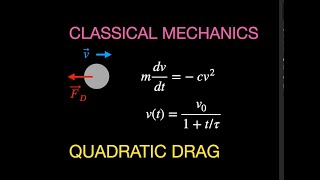
Classical Mechanics: Linear Motion with Quadratic Drag
Explore linear motion with quadratic drag in classical mechanics, deriving velocity and position functions over time using Python simulations.
Classical Mechanics: 2D Projectile Motion with Linear Drag
Explore 2D projectile motion with linear drag, analyzing range and velocity for specific scenarios like a tiny ice ball launch. Includes Python code demonstration.
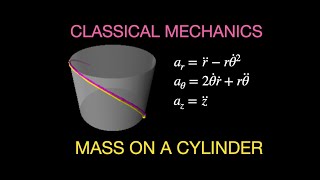
Classical Mechanics: Cylindrical Coordinates - Mass on a Cylinder
Explore cylindrical coordinates in classical mechanics, analyzing particle motion on a vertical cylinder surface using Newton's second law.
Classical Mechanics: Pendulum in Polar Coordinates - Python Modeling
Explore pendulum motion using polar coordinates and Newton's second law, with Python implementation for practical modeling.
Classical Mechanics: Jump Start with Simple Harmonic Motion - Mass on a Spring
Explore simple harmonic motion through mass-spring systems, including realistic scenarios and numerical calculations using Python.
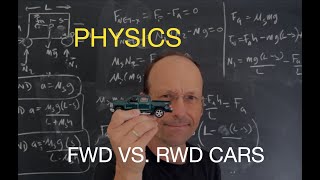
Physics: Front Wheel vs. Rear Wheel Drive Car Acceleration
Explore the physics behind front-wheel vs. rear-wheel drive car acceleration through calculations and Python code analysis.
Physics Lecture: Force and Motion II - Chapter 6
Explore advanced concepts in force and motion, including friction, air drag, terminal velocity, and circular motion. Learn to model projectile motion with air drag using Python.
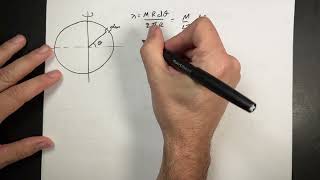
Moment of Inertia for a Ring About an Axis in the Plane of the Ring
Derive the moment of inertia for a ring rotating about an axis in its plane, with Python code implementation included.
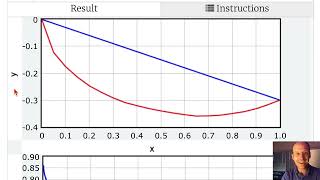
Solving the Brachistochrone Problem with Random Numbers
Discover the fastest path for a frictionless bead using random numbers to solve the Brachistochrone problem in physics.
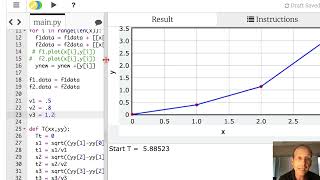
Finding the Path of Shortest Time for Three Different Velocities
Explore optimal path-finding across surfaces with varying travel speeds using Python and random number generation.
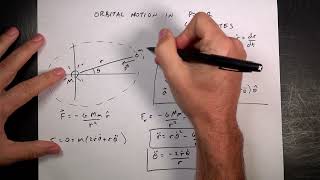
Orbital Motion in Polar Coordinates - Differential Equations and Numerical Solutions
Explore orbital motion using polar coordinates, deriving equations and implementing numerical calculations in Python to visualize and analyze celestial mechanics.
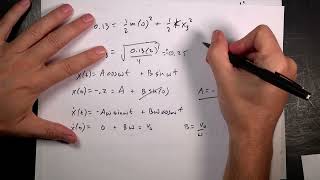
Sketching a Phase Space Plot for a Simple Harmonic Oscillator
Explore phase space plots for simple harmonic oscillators through hands-on coding and visualization techniques.
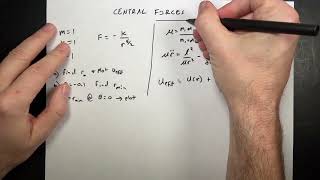
Classical Mechanics: Central Force Problem with Python - Problem 25
Solve a central force problem in classical mechanics using Python, focusing on effective potential, energy analysis, and trajectory plotting.
Physics Problem: Spacecraft Deflection due to an Asteroid
Explore spacecraft deflection by an asteroid using physics principles and Python code to calculate momentum changes.